CloudNC Raises $20M to Expand AI Automation Across the Machine Shop
CloudNC, a UK-based manufacturing software startup, announced a $20 million Series B extension round on September 8, 2026, bringing the company's lifetime total funding to $128 million. The round was led by Nimble Ventures, with participation from Calculus Venture Capital, Entrepreneur First, LM Capital, and Lockheed Martin's venture arm. TechCrunch
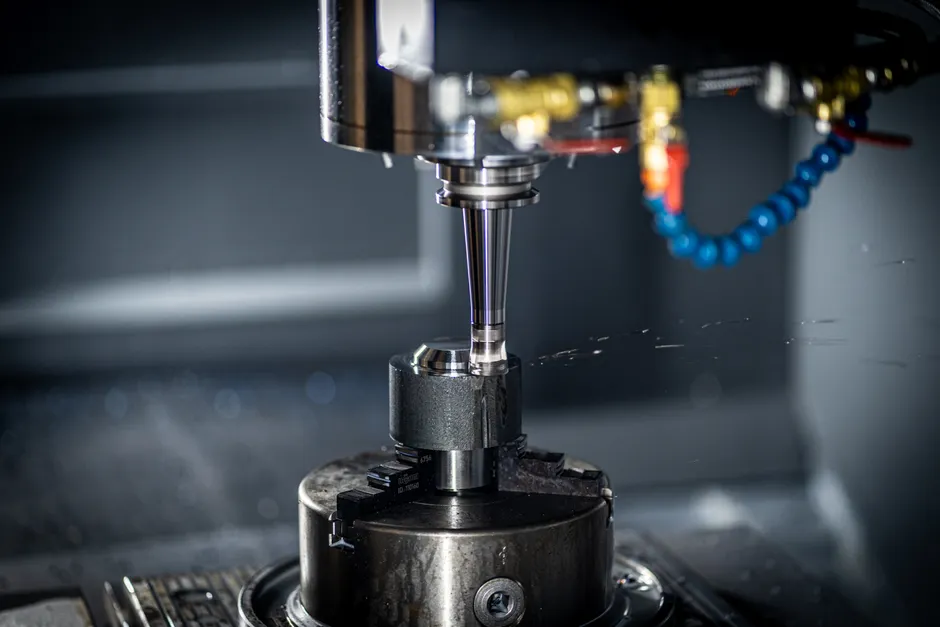
Founded in 2015 by Theo Saville (co-founder and CEO) and Chris Emery (chief science officer), CloudNC builds AI-powered software called CAM Assist that automates parts of CNC machining. CNC machining — Computer Numerical Control — is the backbone of precision parts manufacturing, used across aerospace, defense, automotive, and medical device production. Think of it as a robotic cutting tool guided by a computer program: the machine carves metal or other materials into exact shapes based on digital instructions. CAM Assist targets the programming step that translates a 3D design (a CAD model) into the paths the cutting tool will follow, a process that traditionally requires skilled specialists and can take hours per part.
More than 1,000 machine shops worldwide now use the software, according to the company. About 80% of CloudNC's customer base is in the United States, a notable concentration for a UK-founded company and one that aligns with the depth of America's precision manufacturing sector. CloudNC operates with a team of 80 employees.
The extension round arrives four years after CloudNC's last major raise, a gap CEO Theo Saville acknowledged. A four-year interval between funding events is uncommon for venture-backed startups, particularly in the AI segment, where capital deployment has been aggressive and rounds have clustered tightly. The fact that CloudNC returned to market now, rather than during the 2023–2025 AI funding surge, invites a few plausible readings. The company may have extended its runway through revenue growth from its existing customer base, making external capital optional rather than urgent. Or the intervening years may have been spent proving product-market fit in a sector where sales cycles are long and procurement decisions are risk-averse. Saville's framing of the gap, as reported, does not elaborate beyond the acknowledgment itself.
CloudNC plans to use the new capital to develop additional products beyond CAM Assist. One such product, Quote Agent, is designed to help machine shops estimate the cost and risk of new projects. It is set to launch in October 2026. The move from toolpath automation into quoting and estimation suggests CloudNC is building toward a broader operating system for machine shops, covering the workflow from initial customer inquiry through to production programming.
The adjacency is a sensible one. Quoting in contract manufacturing is notoriously imprecise, often relying on the gut estimates of experienced shop managers. If a software tool can take in a design file and produce a defensible cost and risk assessment, it addresses a real bottleneck that precedes the machining itself.
The investor roster is worth noting. Lockheed Martin's venture arm participating alongside conventional VC funds signals that CloudNC's technology has crossed into defense-adjacent manufacturing, where CNC machining is critical and where supply chain constraints have become a strategic concern for Western governments. Precision-machined components are essential to defense platforms, and any tool that compresses the time from design to finished part has procurement implications that extend beyond commercial efficiency.
CloudNC's core technical proposition is straightforward: apply machine learning to the CAM programming step, reducing the time and expertise required to generate toolpaths for CNC machines. The company has not disclosed specific metrics on programming time reduction or cost savings per part. What is verifiable is the adoption figure: over 1,000 shops, predominantly in the US, running the software in production environments.
The manufacturing automation space has attracted a growing field of AI-driven entrants over the past several years, but most have targeted factory-floor robotics, quality inspection, or predictive maintenance. CloudNC's focus on CAM programming is comparatively narrow, which may be a strength rather than a limitation. CAM programming is a well-defined problem with measurable inputs and outputs, and the stakes of getting it wrong are concrete: a bad toolpath can crash a machine, scrap an expensive part, or damage tooling. Narrow, high-stakes automation problems are where AI tends to deliver value fastest, because the cost of the status quo is quantifiable and the return on automation is immediately measurable.
For the machine shops already using CAM Assist, the expansion into quoting tools could consolidate more of their workflow into a single vendor. For CloudNC, the $20 million extension provides runway to prove that the CAM Assist adoption curve can be replicated in adjacent product categories. The company has built a credible foothold; the question now is whether that foothold extends beyond toolpaths into the commercial decisions that precede them.