Nine New Deep-Sea Sponges Found Off Alaska
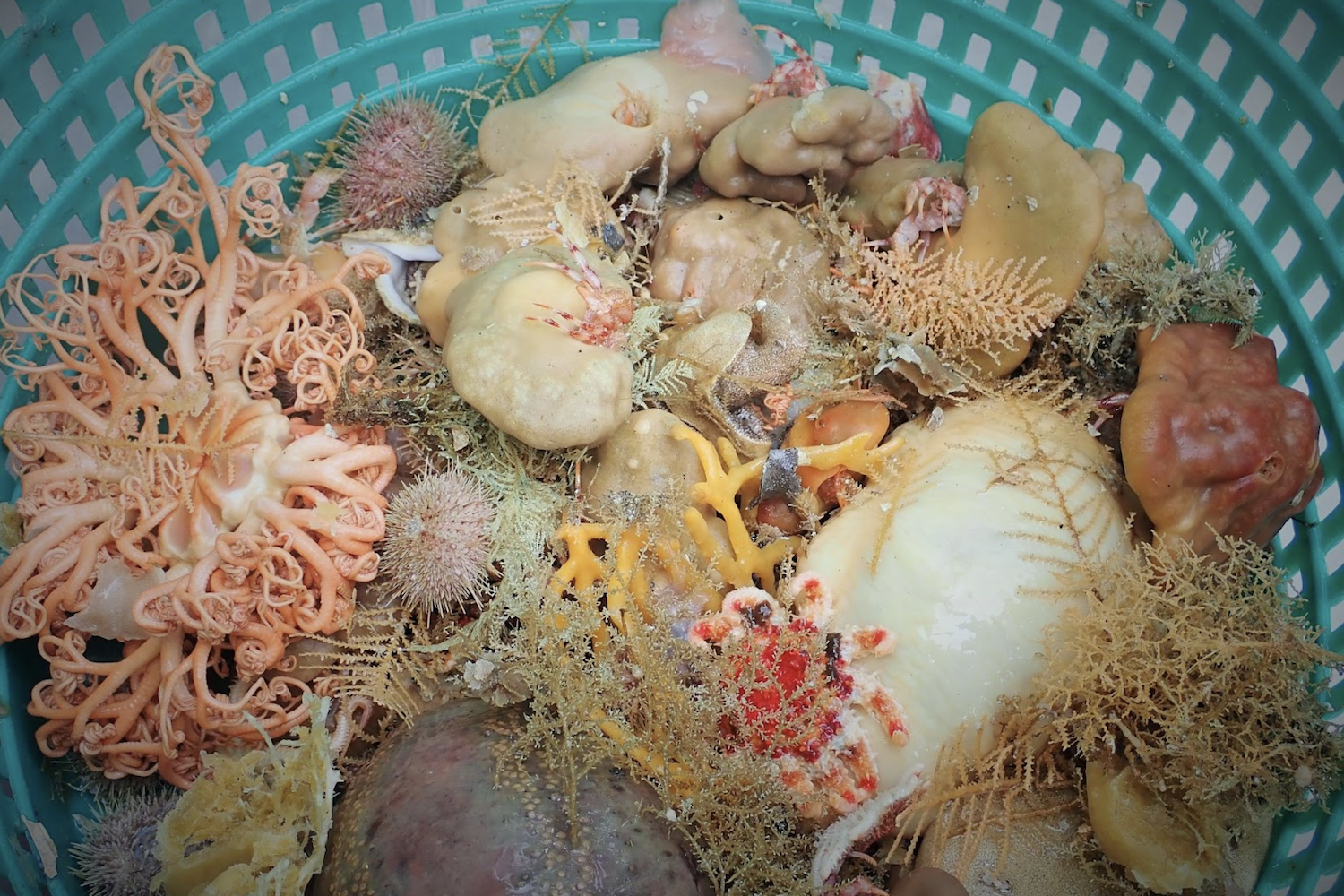
NOAA scientists have identified nine new deep-sea sponge species off Alaska. The animals were collected in the Gulf of Alaska and the Aleutian Islands, and their formal description brings the total number of known sponge species in Alaska to 232. The Guardian
The specimens did not come from a dedicated trip to find new species. They were collected during NOAA Fisheries' annual bottom-trawl surveys, in which nets are dragged along the seafloor to monitor groundfish and shellfish stocks. Researchers analyzed material gathered as far back as 2012 to separate the new taxa, the technical term for distinct named groups.
The nine descriptions were published in two recent scientific papers. Four species were described in one paper and five in the other. NOAA Fisheries
Sean Rooney, a fisheries biologist at the Alaska Fisheries Science Center, is a co-author of the studies. Meredith Everett, a biologist at NOAA's Northwest Fisheries Science Center, worked on DNA barcodes for Alaskan sponge species. Like product barcodes, those short genetic codes help tell species apart and contributed to a marine genetic library. The catalog improves NOAA's ability to detect species and estimate population abundances using non-invasive environmental DNA sampling, which reads DNA traces in�vaswater without catching animals.
Taxonomic knowledge is still uneven across the region. Scientists have identified 52 sponge species in the Gulf of Alaska and more than 125 in the Aleutian Islands. NOAA Fisheries The studies describe the Aleutian Islands as a global hotspot for sponge biodiversity. One of the newly discovered animals is a deep-sea glass sponge placed in an entirely new genus, identified from an area of the North Pacific seafloor. NOAA Fisheries Alaska
Sponges date back more than 600 million years. They are among Earth's earliest multicellular animals. They survive and reproduce without a brain, organs, or complex tissue systems. On the seafloor they build complex structure that creates habitat and refuge for commercially important fish and crabs.
NOAA considers dense sponge communities essential fish habitat because they provide shelter supporting fish survival, growth and population recovery. Northern rockfish forage in open water by day and descend into sponge fields for cover at night. Juvenile red king crabs in Bristol Bay rely on glove sponge fields for concealment during early growth and after molting.
The broader context here is management utility rather than novelty alone. A trawl survey built for stock assessment doubles as a biodiversity inventory when bycatch is retained, curated, and sequenced over more than a decade. Habitat protection in federal waters depends on named taxa and mapped distributions, not on undifferentiated sponge bycatch. Once reference sequences exist, presence can be inferred from water samples without further trawling, and abundance estimates can be refined without additional physical collection. Nine additions to a regional fauna of 232 change survey baselines, voucher collections, and sequence libraries at once, giving managers firmer units to track where sponge grounds shape fish and crab behavior.


