The UK-France Migration Deal: What £660 Million Buys

The United Kingdom will pay France £660 million — roughly $892 million — under a new bilateral security agreement aimed at reducing illegal migrant crossings of the English Channel, according to Reuters.
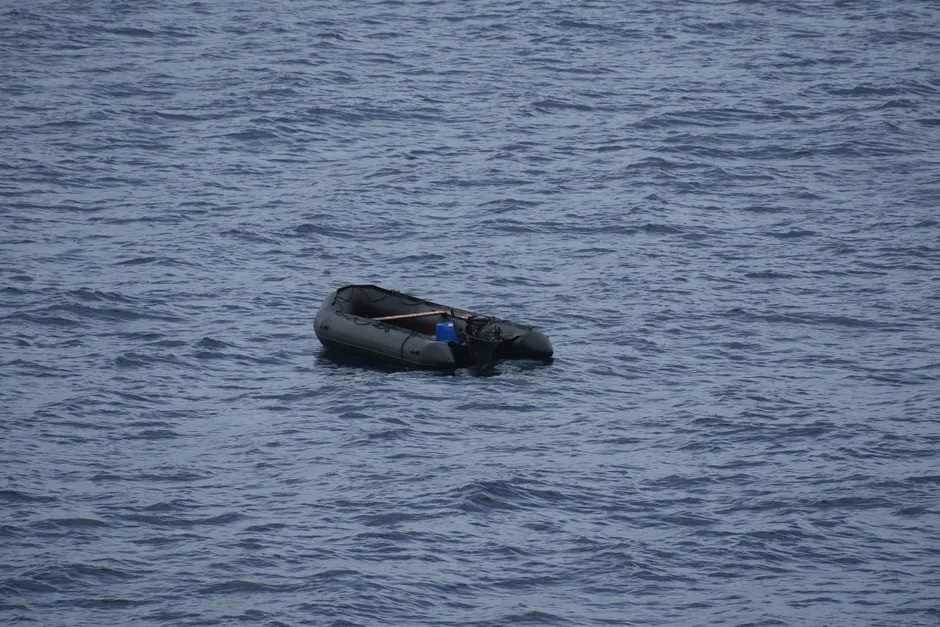
The agreement is operationally detailed. France will deploy a 50-strong riot police unit with authorisation to use water cannon, alongside expanded intelligence units and judicial police teams, plus additional maritime patrols in the Channel and along the northern French coastline. This signals a deliberate shift from watching and reporting to active interdiction — using enforcement tools directly at cross-border points.
The money matters strategically. The £660 million represents a direct payment from the UK to fund French police operations that the UK cannot conduct on French soil. Britain's core constraint — the jurisdictional boundary established by the Le Touquet Treaty of 2003 — means successive UK governments have had to negotiate and finance French enforcement rather than act alone. This agreement extends that logic to its most expensive iteration.
Water cannon use against asylum seekers carries the most immediate political risk. Asylum seekers fall under protections established by the 1951 Refugee Convention and its 1967 Protocol. Human rights organisations will scrutinise the deployment, and French administrative courts have previously blocked certain push-back tactics. How French authorities apply this tool — whether to violent confrontations at embarkation points or more broadly — will shape the agreement's legitimacy in practice.
The less visible but potentially more substantial component is the judicial police expansion. By embedding investigative teams alongside enforcement, both governments are targeting the smuggling networks that operate behind individual crossing attempts — the criminal organisations that treat enforcement as a manageable cost and simply adapt routes. Intelligence-sharing upgrades supporting these investigations suggest the aim is building prosecutable cases, not only deterring individual attempts.
The maritime patrol expansion addresses a concrete enforcement gap. Interception in French territorial waters requires French assets, and French political incentives to deploy them have historically lagged behind British pressure. A near-£700 million transfer shifts that calculation substantially.
The broader context matters here. This deal reflects political alignment between Paris and London that has been inconsistent in the past. Both governments face comparable domestic pressures — high public concern about irregular migration, electoral vulnerability on the right — and the agreement reflects that convergence. Its durability depends on two unresolved questions: whether it survives a government change in either capital, and whether it actually reduces crossings at the scale both sides need to justify the cost.
The £660 million also invites comparison with the Rwanda deportation scheme that consumed significant political and legal effort under the previous UK government without reaching operational scale. This agreement takes a contrasting approach — paying a partner state to enforce, rather than attempting to deter migrants through a third-country deterrence model. Enforcement at source differs strategically from deterrence by destination, though its lasting effect depends on factors beyond government control: how flexibly smuggling networks adapt, conditions in countries where migrants originate, and whether French courts ultimately sustain water-cannon use against a legally protected population.