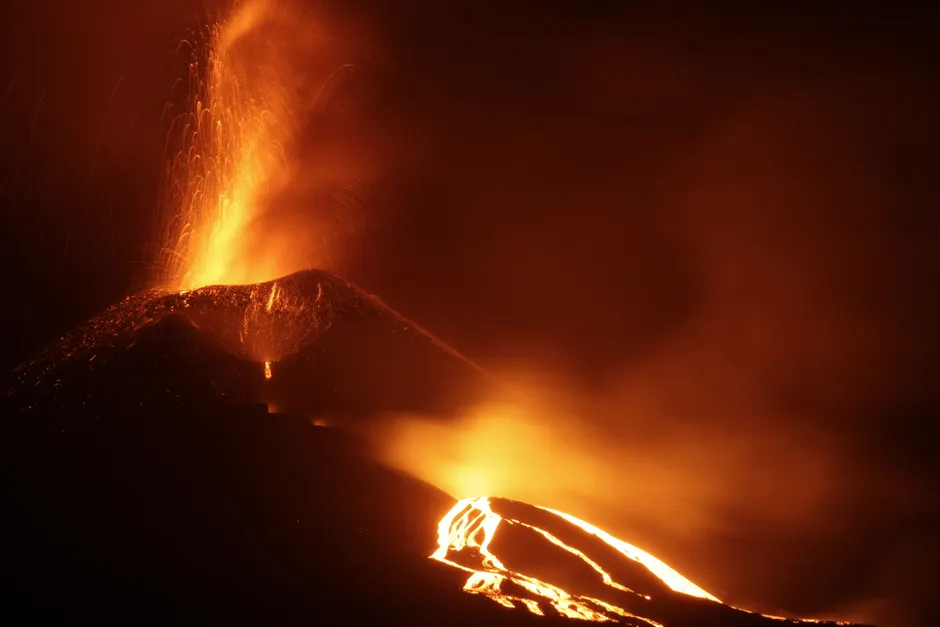
Etna Ash Halts Catania Flights Again: What to Know

All flights from Catania International Airport were suspended until 22:00 local time (20:00 GMT) on Tuesday after volcanic ash from Mount Etna drifted over eastern Sicily. Arrivals and departures were first halted on Monday. BBC
The closure followed a red aviation alert issued on Monday by the INGV Etneo Observatory for Etna activity. Red is the highest level in the warning scale for pilots. It means ash is in the air at levels unsafe for jet engines, acting like fine grit that wears down moving parts. Etna, Europe's tallest active volcano at 3,324 metres (10,906 feet), sits about 40km (25 miles) from the airport. BBC
Catania, on the island of Sicily, operates Italy's fifth-busiest airport by passenger traffic. The airport serves about 12 million passengers each year. Etna itself draws about 1.5 million visitors annually, with both sites in close proximity. BBC
Operational postings reflected the evolving stoppage. The airport's official website listed SAC Etna notices timed at 13:15 on 14 September and at 12:00 on 15 September. The INGV Osservatorio Etneo site displayed an Aviation Color Code of RED for ash emission activity, with a volcanic activity update for Etna dated 08-09-2026. Its archive also carried a 26-08-2026 entry noting weak ash emission was still ongoing. Catania Airport INGV Osservatorio Etneo
An earlier advisory on Monday had set the suspension until 4 p.m. local time because of ongoing ash. Reuters The Tuesday 22:00 limit extended that halt. The current suspension is the second time in recent months that emissions from Etna have stopped flights at Catania. BBC
The precedent was August. Flights were to remain suspended until early Friday because of Etna ash, then the closure was extended until Saturday afternoon as activity continued. Reuters Reuters A separate advisory during that episode set suspension until at least 2 p.m. local time (1200 GMT). Hundreds of travellers were stranded by that August suspension. Al Jazeera
The broader context here is recurrence. A single ash closure can be absorbed through delays and rerouting. Two closures in quick succession test scheduling, crew positioning and aircraft rotation. For an airport handling 12 million passengers a year, even a halt extending into a second day cascades beyond Sicily.
Looking at what this means for operators and passengers, the pattern points to short-notice disruption as a planning assumption rather than an exception. Airlines must manage stranded aircraft and crews. Passengers face rebooking pressure. Coordination with alternate airports and ground transport becomes central. Tourism flows around Etna add further complexity. The record of extensions in August and again from Monday into Tuesday suggests initial return-to-service times should be read as provisional.