Most Voters Oppose AI Data Centers, but Few Rank It as a Top Vote

Sixty-one percent of likely voters oppose construction of data centers to power AI. That result comes from a New York Times/Siena University poll of 1,503 likely voters conducted September 8 to September 13, 2026, with toplines published September 15 under the title "Toplines: September 2026 Times/Siena Poll of Registered Voters" The New York Times.
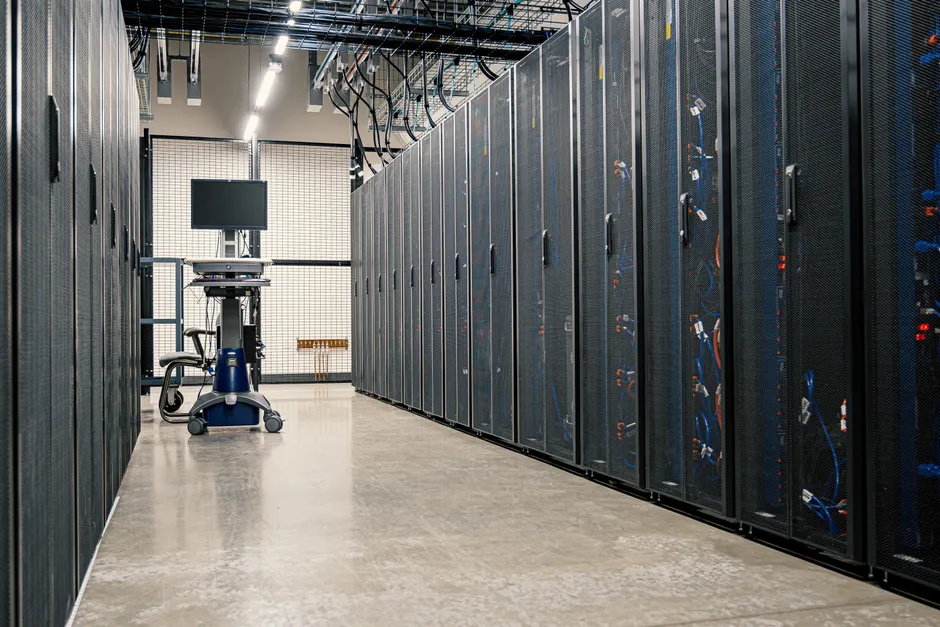
Data centers are the large buildings packed with servers that train AI models and run them for users. Only 14% said they strongly supported construction, according to reporting on the poll The Verge. Opposition was broad but not uniform. Among voters who backed Donald Trump in 2024, 49% supported construction and 45% opposed it. Among voters who backed Kamala Harris in 2024, 74% were opposed. Among those who did not vote in 2024, 67% were opposed.
Even among opponents, outright prohibition was the minority view. About 56% of opponents supported limits on data centers, while 38% preferred a total ban. Asked for reasons, 32% cited environment and water usage, 21% cited impact on local communities, 18% cited distrust or dislike of AI, 10% cited regulation concerns, and 9% cited the economy.
The issue carries little weight as a voting question. AI and data centers were named as the most important issue in deciding a midterm vote by less than 1% in most demographics. The exception was voters aged 18 to 29, where 3% picked it. On the narrower question of handling AI and data centers, 40% favored Democrats, 42% favored Republicans, and 18% did not know or refused, among the 554 respondents asked that question.
Other recent polls have reported similar opposition. A May Gallup poll found 71% opposed to an AI data center being built in their local area, including 48% strongly opposed. A June 11 Reuters/Ipsos poll found a majority opposed to local data center construction, with 14% saying they were comfortable with a data center being built. A Fox News Poll put opposition to building data centers in respondents' area at 30% favor to 70% oppose. In Pennsylvania, six in 10 likely voters said they did not want the U.S. to construct data centers to house artificial intelligence Philadelphia Inquirer.
New York state polling adds texture. In an August Siena poll of 811 New York likely voters conducted August 3 to 6, voters gave AI a 29% to 52% favorability rating, and said by 52% to 25% that New York's one-year moratorium on new large data centers was the right decision. That same poll had Hochul leading Blakeman 49% to 39%. In an April Siena poll, New Yorkers said by 43% to 37% that the disadvantages of AI were too great, even as 67% reported using AI chatbots, 44% reported using AI at least weekly, and 48% said their AI usage had increased since the prior year.
The New York Times also published an article on the September national findings titled "A.I. Is Unpopular With Voters, a New York Times/Siena Poll Finds." The September national survey follows earlier Times/Siena national polls, including a May poll of 1,507 registered voters conducted May 11 to 15 and a January poll of 1,625 registered voters conducted January 12 to 17.
The broader context here will be familiar to anyone who has followed infrastructure builds. Demand for capacity to train AI models and to run them for users, a step known as inference, keeps rising, much like a factory needing steady power and water. The physical needs behind that capacity, for power procurement, water for cooling, and land use, face concentrated local resistance and wider national skepticism. Voters will use chatbots weekly and still oppose the facility three counties over. In my view the low salience number matters most, since less than 1% naming AI as the top midterm issue points away from federal elections and toward zoning boards, utility dockets, water permits, and state moratoria, which are harder to plan around than a single national rule. That still leaves room for progress, through more efficient cooling and power management, clearer disclosure of water and grid impact, and siting that shares tangible local benefit, the same practical steps that eased previous infrastructure disputes. More compute is likely over time, but permission to build it will have to be negotiated, not assumed.