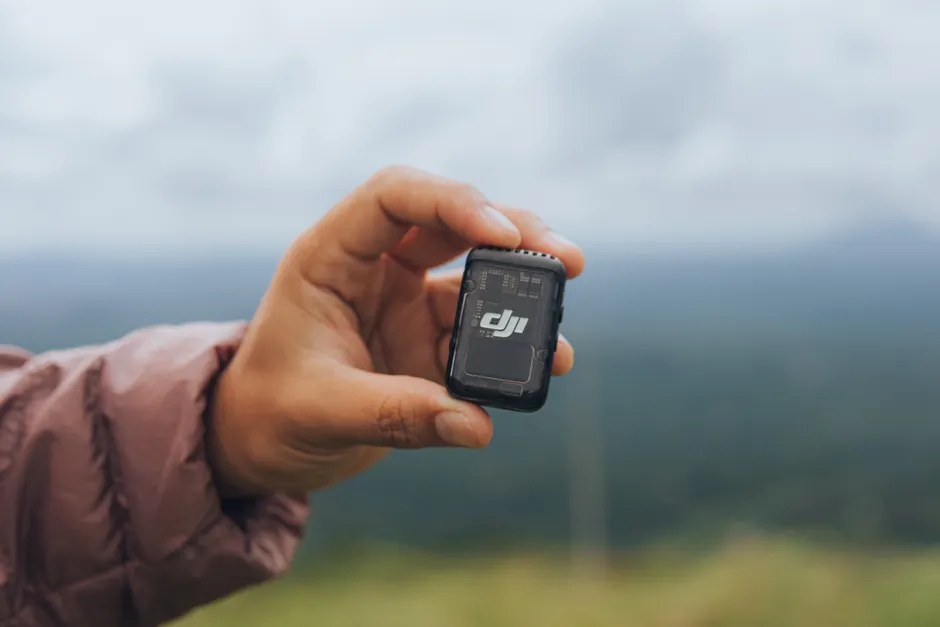
DJI SDR Transmission II Beams 4K HDR Video Up to 2.5 Miles

DJI has launched the SDR Transmission II, a software-defined-radio system for professional wireless video. In transmitter mode it sends 4K video at 60 frames per second with HDR at 50 megabits per second to receivers up to 2.5 miles (4 km) away. Engadget
That throughput and reach are higher than the first-generation SDR Transmission system, which was limited to 1080p video at 20 megabits per second and 1.8 miles (3 km). The new link keeps resolution, frame rate and HDR intact, so crews do not need a lower-quality proxy or downscaled feed for monitoring.
The system uses identical transceivers that can act as a transmitter or a receiver. One unit can connect to up to eight others, each with remote control. Larger setups support up to five transmitters and 40 receivers at the same time. Delay is as low as 35 milliseconds.
DJI lists DCI 4K at 60 frames per second with 10-bit HDR, sent with H.265 encoding. H.265, a common compression method, packs that detail into a 50-megabit stream without the capacity needed for uncompressed video, like fitting more clothes in the same suitcase. DCI is the 4096-pixel-wide cinema format, for crews delivering in that container rather than 3840-pixel UHD.
Output depends on the connector. HDMI/DP supports DCI 4K at 60 frames per second, while SDI supports 1080p at 60 frames per second. DJI SDI needs the DJI SDR Transmission 2 Expansion Plate, sold separately. Crews on SDI monitors and switchers rig differently than crews feeding HDMI from mirrorless and cinema cameras.
The system supports smartphone monitoring with assist tools including LUTs, or preset color looks, focus peaking and waveforms. It also supports PTP control to change capture, aperture, shutter speed and ISO on compatible cameras. Video and camera control share the same transceiver, which is meant to reduce separate boxes on set.
DJI describes the system as ideal for small to medium-sized film and video production teams. DJI The company showed the hardware at IBC 2026, with launch scheduled for 17 September 2026 at 12 PM GMT.
Transceivers start at 349 euros or 309 pounds, with a two-unit Combo at 629 euros (559 pounds). In China the system launched September 1 at 1,999 yuan for one unit and 3,499 yuan for two. DroneXL There is no US availability yet.
The broader context here goes beyond resolution. A low-latency 4K HDR picture shared over a 4 km link to many receivers lets a director, focus puller, DIT and client monitor work from the same signal without running fiber or accepting a soft 1080p proxy.
In my view, small crews gain the most, since they rarely have RF coordinators or truck-based receive sites. Anyone evaluating it should remember maximum range, transmitter count and lowest latency rarely line up together in real conditions, and SDI crews need to budget for the separate plate. If the link holds its stated latency and stability at working distances, it removes one more reason to tether the camera to video village.