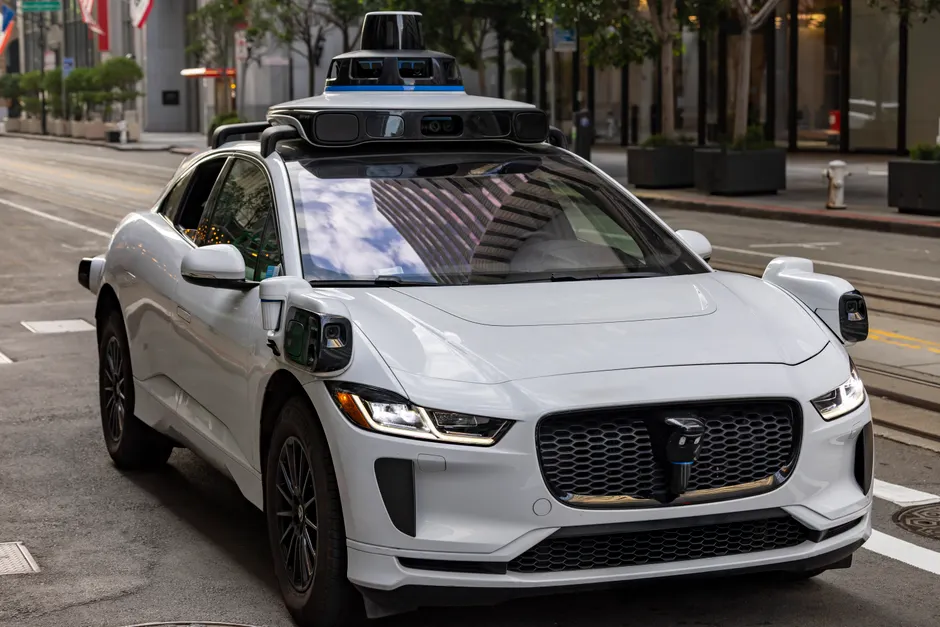
Lucid and Bolt Plan 25,000 Robotaxis for Europe

Lucid and Bolt are partnering to develop self-driving vehicles for use in Europe. Bolt plans to deploy at least 25,000 fully autonomous Lucid vehicles in major European cities. Engadget Reuters
Bolt is an Estonian car-sharing platform. U.S. News It plans to own and operate the Lucid fleet itself. Bolt places that commitment inside a wider target of 100,000 autonomous vehicles on its platform by 2035.
Bolt has not said when the Lucid-based robotaxis will enter service. Reuters reported the 25,000-vehicle plan on September 17, 2026.
The car and the schedule
The vehicle is being designed for Level 4 automation, which means it can drive itself without a human driver but only inside set boundaries such as approved city zones. It will be based on Lucid's midsize platform, the shared chassis and engineering underneath several future models, and will likely use NVIDIA's Hyperion autonomous vehicle architecture, the combination of computers, sensors and software that handles driving. Engadget Lucid previously showed a two-seater robotaxi prototype based on that midsize platform.
That platform is still pre-volume, meaning it is not yet being built in large numbers. Lucid delayed its Cosmos SUV, the first EV based on the midsize platform, to early 2027. Lucid also laid off around 18 percent of its workforce.
The US project for comparison
Lucid has a separate robotaxi partnership in the United States with Uber and Nuro. Under that arrangement, Uber plans to deploy 35,000 Lucid robotaxis in the US. Nuro has started testing the Lucid Gravity robotaxi with a safety driver in Houston and the San Francisco Bay Area.
The broader context here is how Lucid is using one foundation for several jobs. The company is trying to spread one midsize architecture across a consumer SUV, a two-seater robotaxi concept, a US program built around Uber and Nuro and the Gravity, and now a European program with Bolt. That spreads engineering cost across more variants. It also links the programs together. A delay to the base vehicle, as with Cosmos to early 2027, affects timing confidence for autonomy derivatives even when the autonomy stack comes from partners.
Looking at what this means for deployment, ownership changes the job. Bolt owning and operating removes resale from the equation and puts utilization, charging, cleaning, servicing and availability on a single fleet operator. In my view, that is the more workable structure for Level 4 services in defined urban areas, where daily uptime and operational discipline decide unit economics. No service date was given. That absence is material. Fleet counts at this stage are procurement intent, not deployed capacity.
In my view, the encouraging part is reuse across places and partners. Twenty-five thousand vehicles implies depot capacity, parts supply, maintenance staffing and city-by-city approval. Bolt's 2035 target of 100,000 autonomous vehicles frames the Lucid allocation as an initial tranche rather than a ceiling. Testing precedents are still at the safety-driver stage in the US program, which indicates how much validation remains before driverless operation at volume. If the same midsize platform and Hyperion architecture can support US operation with Uber and Nuro and European operation with Bolt, development cost spreads across more vehicles and more miles. That is how automated transport gets cheaper to build and to run. The work ahead is integration and validation inside defined boundaries, not invention of another vehicle.