Open or Closed AI? What Nvidia Will Tell Startups at Disrupt 2026

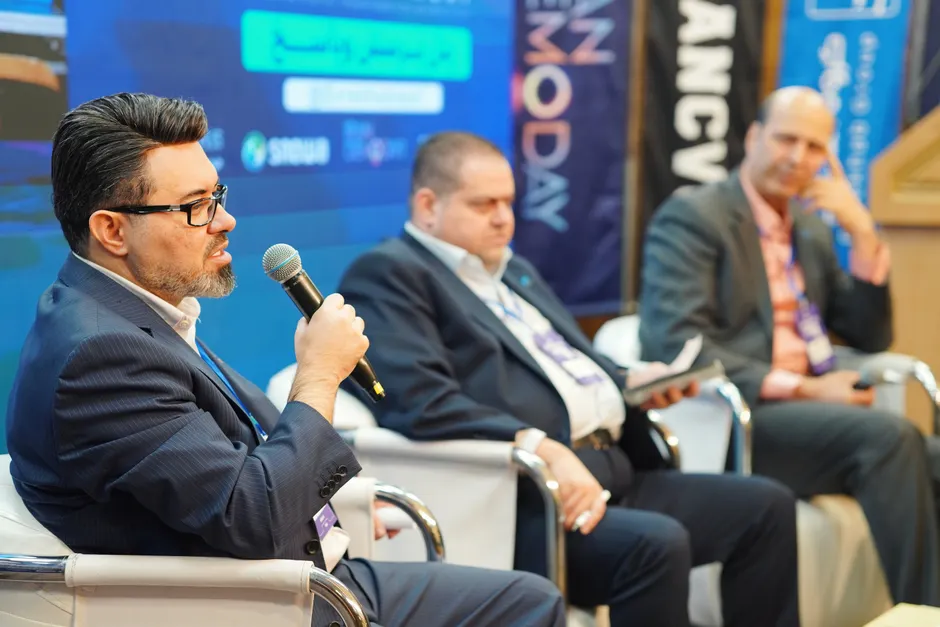
Nvidia's Nader Khalil, Director of Developer Tech, and Sydney Sykes, Global Head of VC Partnerships, will speak at TechCrunch Disrupt 2026 in San Francisco. The conference is scheduled for October 13-15, 2026. Their session addresses a practical decision now facing AI startups. TechCrunch
The session is titled 'The Open vs. Closed AI Debate Is Just Getting Started' and will be held on the Builders Stage. It will discuss trade-offs between open and proprietary AI and whether either approach can provide a lasting competitive advantage. That scope links model licensing and deployment choice directly to startup strategy. TechCrunch
Disrupt 2026 is expected to bring together 10,000 founders, VCs and operators, according to TechCrunch Events. The Builders Stage placement puts the discussion in the implementation track of the program.
The broader context here is that open versus closed is no longer an abstract licensing argument. For builders it comes down to specific control points. Access to weights, the core settings of a model, decides whether a team can inspect, fine-tune, distill, shrink through quantization and self-host. API-only access hands that control to the provider, in return for managed updates, hosted scale and less operational work. Data governance, auditability, portability and incident response follow from that first choice. The question affects inference architecture, testing systems and cost structure from day one.
In my view, the pairing of speakers is as informative as the topic. Developer technology and venture partnerships look at the same stack from opposite ends. One side sees integration friction, tooling gaps, debugging workflows and migration pain. The other sees patterns repeat across portfolios, where early speed gives way to margin pressure, compliance review and differentiation problems. Together they should keep the moat question honest. Open weights can shorten time to prototype and allow deep customization. Proprietary systems can offer frontier capability and managed reliability. Neither quality alone creates defensibility.
Looking at what this means for founders, the durable lesson is to treat model choice as revisable infrastructure, not identity. Separation at the prompt, retrieval and evaluation layers preserves optionality. Teams that own their tests, own their data pipelines and understand their latency and cost limits can move between open and closed parts as needs change. Licensing is strategy. So is exit cost. Startups that handle this well will mix approaches by workload, keeping sensitive or latency-critical work under direct control while buying managed capability where it is cheaper to rent than to run.
That pragmatism is worth flagging for readers tired of binary debates. We have seen this pattern before, when the industry argued over operating systems, virtualization and cloud APIs. Each cycle rewarded teams that separated interface from implementation and kept measurement in-house. The same discipline applies here. A clearer shared view of where openness creates leverage, and where managed closure reduces drag, makes more ambitious systems possible to ship and sustain.