Bobby Prince: The PC Game Composer Who Built the Soundtrack for Early FPS
Bobby Prince, born Robert Caskin Prince III on March 12, 1945, died at age 81, according to Shacknews. He composed the music for some of the most influential first-person shooters of the early 1990s: id Software's Wolfenstein 3D and Doom, as well as 3D Realms titles including Duke Nukem 3D and Rise of the Triad.
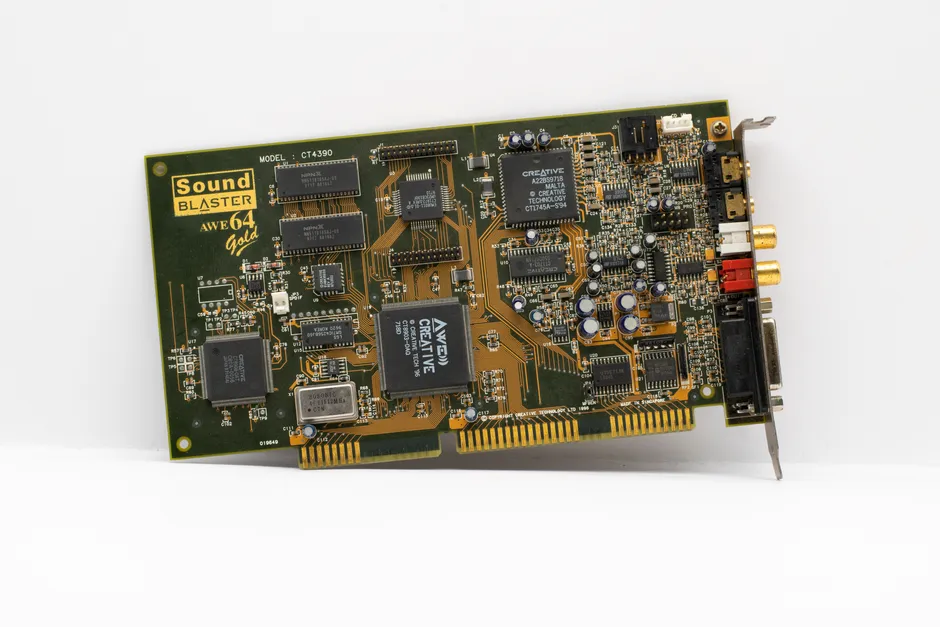
Prince arrived at a crucial moment in PC gaming history. The early 1990s saw a rapid shift in audio hardware — from the limited AdLib and OPL2 sound cards of the late 1980s to General MIDI and then to the Sound Blaster AWE32. Game composers faced an unusual constraint: their music had to work across radically different hardware configurations, degrading gracefully on older cards while taking advantage of better ones when available. Prince managed this without formal training in interactive audio. His background was in blues and rock guitar, and that sensibility defined his approach. The Doom soundtrack draws heavily on metal — Black Sabbath and Alice in Chains are recognizable reference points — arranged through MIDI sequencing that had to function whether a player's system used basic synthesis or a more advanced wavetable card.
Wolfenstein 3D, released in 1992, relied on the PC speaker and OPL2, which offered minimal polyphony. Prince's cues were short, looping, and rhythmically aggressive — designed for hardware with strict limitations. By the time Doom shipped in December 1993, the audio landscape had expanded significantly. His compositions grew with it: longer structures, more dynamic range, arrangements that sustained repeated listening and matched the game's own level-design philosophy.
Duke Nukem 3D, released in 1996 by 3D Realms, arrived as the MIDI era was ending. CD audio was becoming practical for game soundtracks, and the industry was shifting toward recorded, streamed music. Prince's Duke score occupied that transition — MIDI-composed but tonally aware of what was coming next.
A copyright dispute clouded part of his legacy. Prince sued id Software in 1996, claiming that certain Doom and Doom II tracks reproduced existing compositions without authorization — the argument being that he had licensed underlying works but had not cleared them for the game. The case settled out of court with sealed terms. The legal episode has continued to surface in discussions of his work, though it did not diminish the cultural reach of the music itself.
The soundtracks Prince created have proven remarkably durable. The Doom music in particular generated an ongoing subculture of covers, reinterpretations, and demoscene arrangements that extended well beyond the game's commercial life. Mick Gordon's score for the 2016 Doom reboot was explicitly shaped by the industrial-metal vocabulary Prince established in 1993 — a traceable lineage, not conjecture.
Wikipedia lists his birth date as March 12, 1945, which means his peak creative output came in his late 40s — an unusual trajectory for someone whose work became foundational to a medium dominated by much younger designers. John Carmack was 23 when Wolfenstein 3D shipped. Prince was 47.
The games Prince scored were not marginal to the history of video games. Doom is widely credited with establishing the FPS as a commercially viable genre, driving PC hardware sales through its performance demands, and proving the shareware distribution model as a mass-market path. The music was integral to that story — not decoration, but part of what made players return.
Prince belonged to a small cohort of composers who shaped what game audio could be before the discipline had formal structures around it. Koji Kondo and Nobuo Uematsu worked similar territory on console hardware; Prince occupied the PC side of that divide, navigating all the competing audio standards that entailed. He did not have the luxury of a fixed sound chip. He worked with whatever audio hardware shipped in the player's machine.
He was 81.