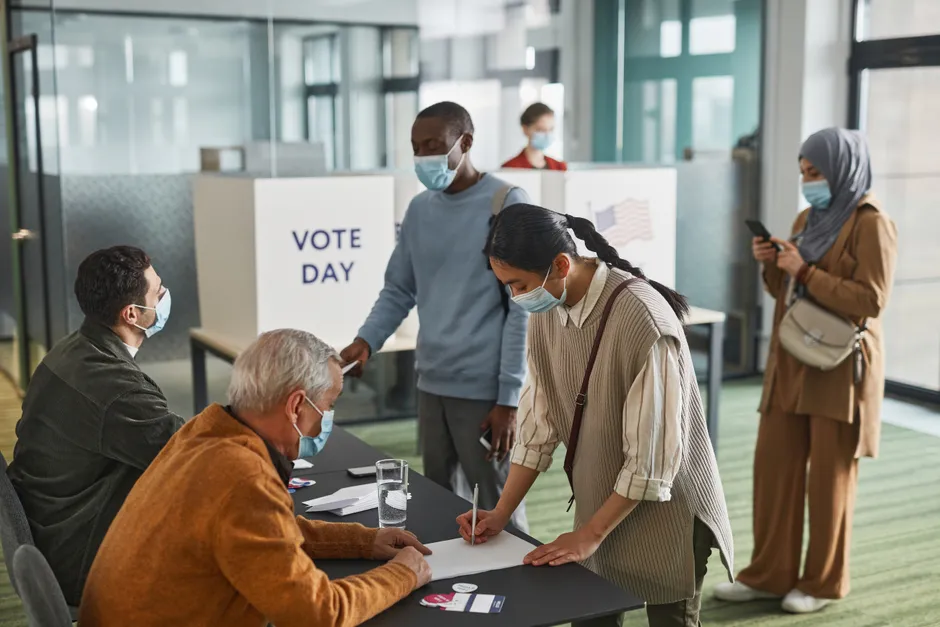
Virginia Opens Early Voting for the 2026 Midterms

Virginia opened early in-person voting on Friday, September 18, 2026, for the November 3 general election. The start begins a 44-day voting window documented for the 2026 U.S. midterms by Al Jazeera. Midterms are the congressional elections held halfway through a presidential term.
State officials set the end of early in-person voting for 5:00 p.m. on Saturday, October 31, 2026, according to the Virginia Department of Elections. Voters can cast an early ballot at their local general registrar's office, the local office that runs elections, or at a designated early voting location. All localities in the state are offering early voting, with extra satellite locations possible.
In Fairfax County, early voting opened September 18 at the Fairfax County Government Center and the Mt. Vernon Governmental Center, according to Fairfax County. Statewide, all localities are offering early voting on the second and third Sundays before Election Day, in addition to two Saturdays.
Virginia has also dropped its absentee witness requirement, the rule that once required another person to sign a mail ballot envelope. Mail-in ballots postmarked by Election Day can arrive by noon three days after Election Day and still be counted, as reported by Al Jazeera. Those rules are set by states.
Nationally, options to vote before Election Day are now widespread. The number of states offering such options grew from 24 in 2000 to 47 in 2026, plus Washington, D.C. North Carolina began mailing absentee ballots on September 4, 2026, to voters who requested them. Voters in Minnesota and South Dakota can cast absentee ballots in person at a local election office or voting center.
In June 2026, the U.S. Supreme Court ruled that federal law does not override state laws allowing certain postmarked absentee ballots to arrive after Election Day. The Court separately blocked President Donald Trump's attempt to impose new federal restrictions on mail voting, leaving state laws in place for the 2026 midterms. Trump's proposed changes included standardized ballot envelopes and a federal system for verifying voter eligibility.
The broader context here is a midterm conducted under settled but decentralized rules, with power spread across states and counties. With litigation over post-Election Day receipt deadlines and federal authority resolved for this cycle, administration now turns to counties and registrars. Specialists will be watching how uniform access proves across localities, how voters use the expanded Sunday hours and the witness-free absentee process, and how the staggered start dates for mail and in-person voting shape the flow of ballots toward November 3.