Israeli Advance in South Lebanon Strains June Withdrawal Plan

Israeli forces advanced in several parts of southern Lebanon on Sept. 18, 2026, wounding two people in artillery shelling in Chaqra and halting opposite Lebanese army vehicles at the entrance to Deir Mimas.
The two wounded in Chaqra, in Bint Jbeil district of Nabatieh governorate, were taken to Tebnin hospital. Israeli artillery shells also fell in Wadi Nahla on the outskirts of Shuqra. Artillery fire also struck the municipalities of al-Mansouri and Majdal Zoun, according to reporting on the day's operations. Al Jazeera
A separate Israeli advance moved from the municipality of al-Tiri toward the outskirts of Hadatha, also in Bint Jbeil district. Lebanese state media reported that Israeli forces set fire to the public hospital in Meiss el-Jabal.
At Deir Mimas in Marjayoun, two Israeli tanks moved along a road toward the town and stopped in front of a dirt barricade. Lebanese army vehicles were on the other side. Israeli forces later withdrew from the outskirts. The encounter ended without fire.
The Lebanese military said its patrol had set up a temporary observation post, a small lookout position, on the outskirts of Deir Mimas on September 10. It did so in coordination with the military coordination group for Lebanon. That group is a U.S.-backed trilateral body, meaning it has three sides, that handles deconfliction between Israel and Lebanon. Deconfliction means direct communication to prevent accidental fighting. According to the army account, an Israeli force approached the new post inside the so-called security zone and threw sound bombs nearby. The army said it reinforced the post, and both sides went on alert.
De-escalation, or calming the situation, went through the same channel. After the standoff, Israeli forces returned to their position in neighboring Tell en-Nhas. The Lebanese army said its troops returned to their main base in Deir Mimas after contacting the deconfliction group.
The incidents took place under a U.S.-brokered framework agreement between Lebanon and Israel from June 2026. The agreement calls for gradual Israeli withdrawal from Lebanese territory and deployment of the Lebanese army in the vacated areas. Lebanon and Israel agreed in June to a plan in which Israeli troops would withdraw step by step as Lebanese troops disarm Hezbollah. Reuters
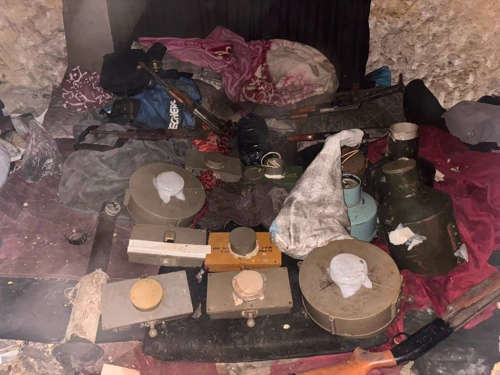
Lebanon's Health Ministry reports large casualty counts. It says Israeli attacks have killed at least 4,386 people and wounded 12,407 others since March 2, when the current Hezbollah-Israel war erupted. It says total casualties from Israeli attacks since October 2023 reached 8,953 killed and 30,643 injured. Strikes have been reported almost daily. Reuters reported on Sept. 6 that four people were killed and 23 injured across southern Lebanon, according to the ministry. On Aug. 15, at least 11 people were killed in Israeli strikes in southern Lebanon, according to the ministry. On Aug. 5, Israeli strikes killed at least one Lebanese person in southern Lebanon, while two Israeli soldiers were killed in an explosion inside a booby-trapped building in southern Lebanon.
The broader context here is the tight space for keeping forces apart under the June arrangement. Deir Mimas produced no exchange of fire. But it placed armor and regular army vehicles on opposite sides of a makeshift barrier in a contested zone, required reinforcements, and needed a trilateral call to separate them. That sequence suggests that forward deployment by the Lebanese army, the core of the withdrawal formula, can create friction where Israeli units remain.
Looking at what this means for the deconfliction system, the mechanism worked as intended on Sept. 18. Both sides stepped back after contact. The question is capacity. Repeated alerts at new observation posts, combined with continued artillery fire on border towns and damage to civilian buildings, shrink the political room for phased withdrawal and disarmament. If outposts become flashpoints rather than markers of handover, each deployment risks a standoff the coordination group must then defuse.