HIDIZS AP30 Music Boy Raises $504K: A Pocket Hi-Res Player With Buttons
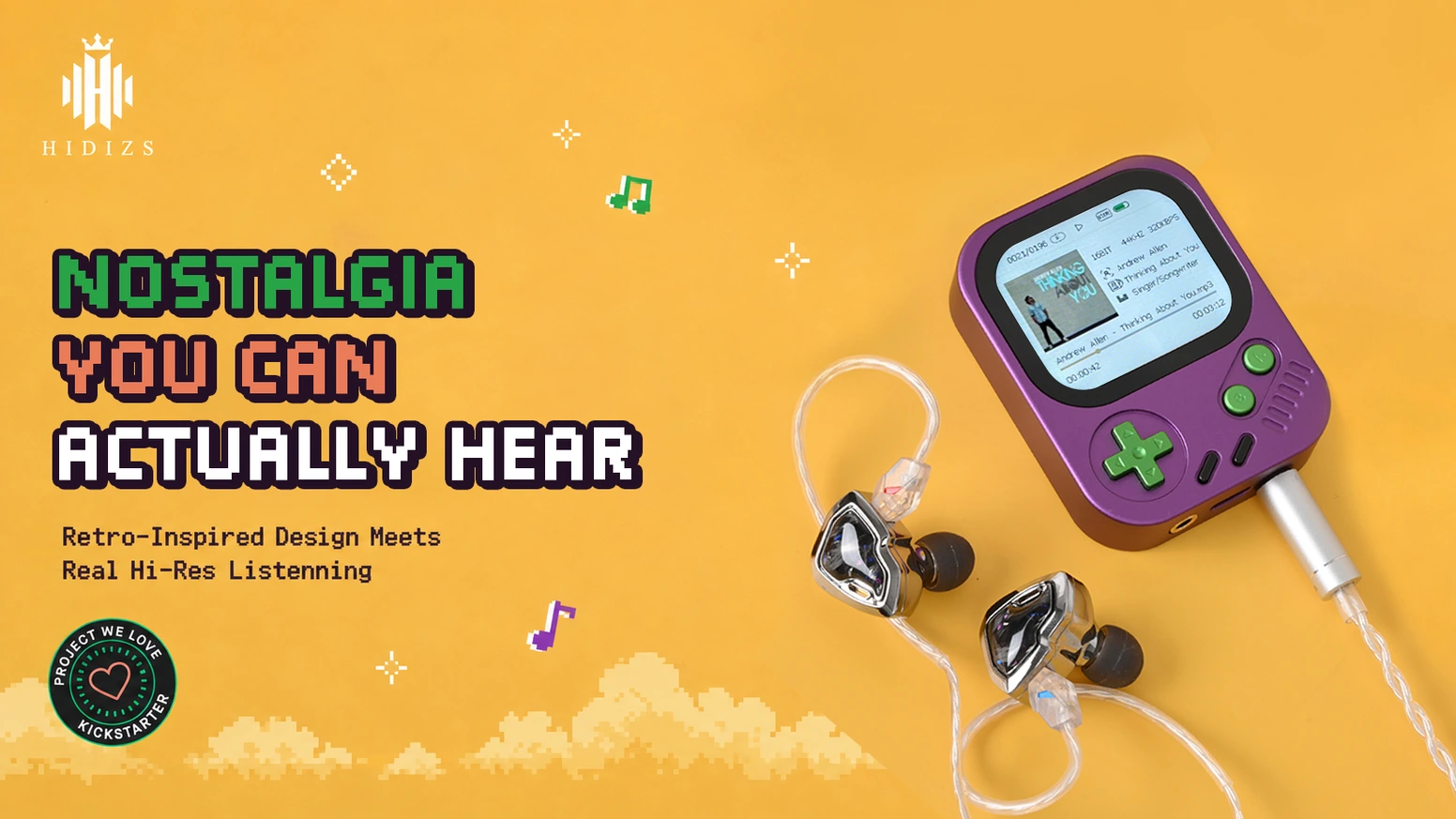
HIDIZS has closed its Kickstarter for the AP30 Music Boy at HK$3,954,885, about $504,311, more than 98 times its HK$40,000 goal of about $5,100, as reported on Sept. 19, 2026. Engadget
The Game Boy-inspired hi-res music player was built for high-resolution listening, meaning audio files that retain more detail than standard streaming. Shipping is slated to begin in October. The formal campaign has concluded but the page remains open to late backers, a standard Kickstarter option that lets makers keep taking orders after funding ends.
HIDIZS has run several successful crowdfunding campaigns for audio players and equipment before, and the AP30 campaign was published under the HIDIZS creator account. The official campaign page titles the device "AP30 Music Boy: The First Truly Wearable Hi-Res Music Player." Kickstarter
Pocket hardware built around buttons
The AP30 Music Boy is a palm-sized player with physical buttons on the front and a scroll wheel on the side. There is no touchscreen. A 2.0-inch 296x240 HD IPS screen handles menus and now-playing information.
It comes in two chassis options. The aluminum version weighs 80g. The plastic version weighs 56g.
HIDIZS describes a whale-inspired backplate, a design detail that nods to retro handheld consoles without changing the control layout. The company FAQ describes the product as a palm-sized Hi-Res music player designed to bring back the feeling of a dedicated music device. Kickstarter
Inside are three core chips. The RKNanoD serves as the master chip that runs the device. The CS43198 DAC chip converts digital music files into analog sound for headphones, and the RT6863 AMP chip boosts that signal to drive them. Output is through both 3.5mm and 4.4mm jacks, which cover standard single-ended headphones and balanced wired headphones that use separate signal paths to reduce noise, alongside Bluetooth 5.3 for wireless use.
There is no built-in storage. The player supports up to a 256GB microSD card, so owners load a selected library onto cards and rotate them to change what they carry.
Power comes from a 1,200mAh battery. HIDIZS rates it for 8 to 10 hours wired and 6 to 8 hours wireless.
Format support is broad for the category. The player handles MP3, WAV, APE, FLAC, ALAC, OGG, WMA, DSF and DFF, with PCM up to 192kHz/24-bit and native DSD256, two high-resolution formats that store more sound detail than MP3. Tuning is through 6 EQ presets plus customizable EQ, which adjusts bass, treble, and other frequency balance.
DAC mode, books and games
The AP30 Music Boy can connect via USB-C to a phone or computer to function as a portable DAC. In that mode it bypasses the host device audio path and handles conversion and amplification itself. It works as a standalone player on a walk and as a wired audio add-on at a desk.
Two non-audio functions are included. The device can function as an e-book reader, showing text on the small IPS display, and it contains 6 retro-inspired games, including a Tetris-like game and Snake.
HIDIZS offers three carrying options: a magnetic phone-attaching case, a lanyard, and a bag clip.
HIDIZS lists the AP30 Music Boy on its hidizs.net website, where the product page titles it "The Truly Wearable Palm-Sized Hi-Res Music Player." HIDIZS In the Kickstarter comments, HIDIZS promised every eligible backer an exclusive 15% OFF HIDIZS.net voucher if the campaign reached US$500,000, a threshold the final HK$3,954,885 total clears on a dollar conversion basis.
The broader context here helps explain why a dedicated player can still find buyers. The phone consolidated music for the mass market and left a smaller niche for listeners who want physical controls, wired outputs, and a separate battery for music.
In my view, the AP30 is best understood as a deliberate second device. With no internal storage, a 256GB card limit, and 8 to 10 hours of wired playback, it does not compete with a phone on convenience or endurance. With a 4.4mm balanced output, native DSD256 support, USB-C DAC mode, and sub-80g weight, it competes on focus. It can clip to a bag, magnet to a phone, keep the phone in a pocket, and keep transport controls under a thumb.
Looking toward October shipments, what this enables is limited but useful. If HIDIZS ships on schedule, buyers get a low-cost, highly portable hi-res endpoint with modern wired and wireless outputs, physical ergonomics, and just enough extra function to earn space in a bag. The campaign total suggests that proposition still has an audience. That separation also keeps listening free from phone notifications in a social sense, preserves phone battery, and gives developers, QA testers, and mastering engineers a cheap reference endpoint for checking mixes on constrained hardware and low-power amplification.


