Human Chain Circles Kennedy Center After Closure Vote

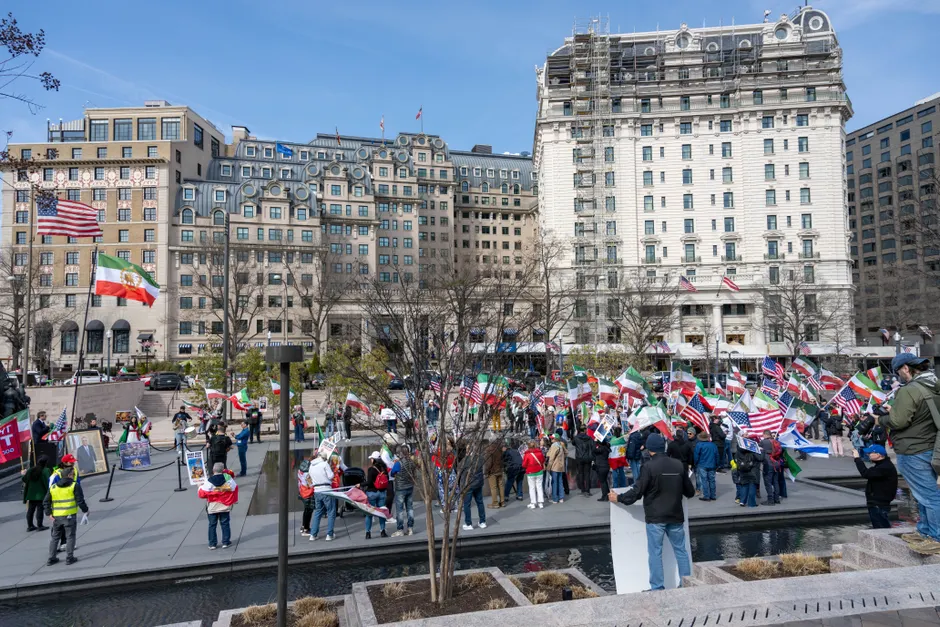
Thousands of demonstrators formed a human chain around the Kennedy Center for the Performing Arts in Washington, DC, on the evening of September 18, 2026, to protest a board vote to close the venue.
The action was billed as the "Hands Around the Kennedy Center" rally. It was organized by Hands Off the Arts, a group co-founded by Chris Raleigh, and took place outside the venue on Friday evening, according to organizers and contemporaneous reports Al Jazeera.
Organizers said more than 6,400 people attended. Participants linked arms around the building perimeter. Some demanded that Donald Trump be removed as chairman. Organizers described the demonstration as opposition to political interference in the arts.
The immediate trigger was a vote by the Trump-installed board to close the center for repairs expected to last up to two years. That vote came hours after District Judge Christopher Cooper quashed the board's attempt to restore Trump's name to the building.
Trump replaced the Kennedy Center board with his own appointees and installed himself as chairman. The board then voted in December 2025 to rename the institution in his honor, and added his name to the facade.
A federal judge blocked that renaming in May. The ruling said the board exceeded its statutory authority \u2014 its legal power under federal law \u2014 by renaming the Kennedy Center without congressional approval. Congress designated the venue as a memorial to former U.S. President John F. Kennedy, the 35th president.
The naming dispute continued through the summer. In August 2026, the board tried to inscribe "The John F. Kennedy Center for the Performing Arts Restored and Renovated By President Donald J. Trump" on the building. In September 2026, a federal judge ruled that inscription attempt violated his May injunction, a court order barring further renaming.
The closure plan itself has shifted in public statements. Trump had said he would move to close the center for two years starting in July for construction. The Kennedy Center later said its building would be closed temporarily for at least seven days to assess existing safety risks in portions of the main building AP. The most recent account, published Sept. 19, describes a board vote for a closure tied to repairs lasting up to two years.
The broader context here is a clash between day-to-day control and legal limits. The board holds operational authority over programming and facilities. The courts have so far treated the name and memorial status as a separate matter, one that requires Congress. That distinction will shape what happens next. If the closure proceeds on safety or renovation grounds, scrutiny will focus on scope, duration, and oversight. If further naming efforts follow, they will likely return to the same legal question decided in May and revisited in September: who has the power to rename a congressional memorial.