Yemen's Battle for the High Ground Above a Vital Sea Lane
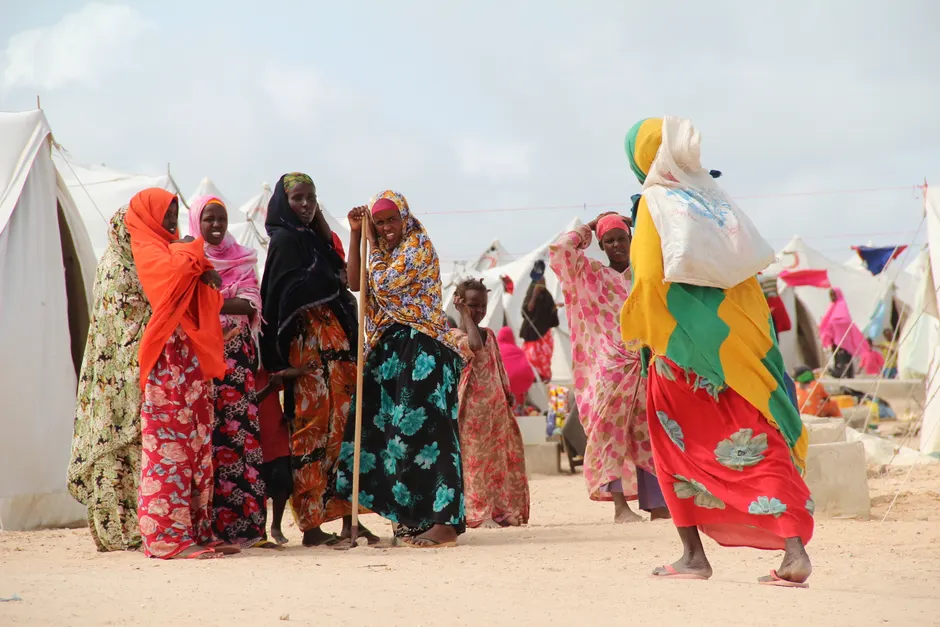
Houthi rebels battled Saudi-backed government forces for the Kahboub Mountains overlooking the Red Sea on Sept. 22, 2026, after renewed fighting that had killed at least 674 people and displaced more than 158,000.
The fighting centered on high ground in Taiz and Lahj provinces, with both sides reporting clashes around supply lines and coastal approaches, according to Al Jazeera.
Fight for the chokepoint
The Kahboub Mountains overlook the Bab al-Mandeb Strait and Mayyun Island. A chokepoint is a narrow sea passage that ships must use. This one connects the Red Sea to the Gulf of Aden. Think of it like a balcony over a narrow doorway.
Control there would give artillery and observation coverage over the strait's northern approaches. Artillery means long-range heavy guns. Seizure of the heights would cut the Red Sea coast off from areas held by Saudi-backed forces, according to The Guardian.
The battle followed a Houthi seizure of Yemen's Red Sea coast, including the port of Mocha, during September 2026. Reuters reported that Iran-aligned Houthi forces took Mocha on Sept. 10 and reached the strategic island of Perim in the Bab el-Mandeb Strait on Sept. 11. The operation in the week before Sept. 22 was described as their biggest offensive in years, according to Al-Monitor.
Hostilities escalated on Sept. 3, 2026. Yemeni government forces said they struck Houthi fighters and supply lines near the Bab al-Mandeb Strait and in al-Bayda governorate and shot down a Houthi drone in southwestern Taiz. The Houthis claimed an attack on Riyadh on the Saturday before Sept. 22, their first such claim since the recent escalation.
There were also cross-border strikes. On Sept. 17, Saudi Arabia and Yemen's Iran-backed Houthis exchanged fresh strikes across their border. On Sept. 16, Saudi warplanes pounded Yemen while Houthi fighters launched drones and missiles at Saudi cities, according to Reuters.
Displacement and shelter strain
The UN humanitarian coordination office OCHA recorded 11,442 households newly displaced across Yemen since hostilities escalated on Sept. 3, according to ReliefWeb. More than 57,000 children were displaced in the two weeks before Sept. 16. Thousands of families forced to flee during June 7 to Sept. 18 did so for the second or third time.
Earlier reports gave these counts. An estimated 125,000 people fled as Houthi rebels advanced down Yemen's Red Sea coast toward the maritime chokepoint, in reporting published Sept. 18. Reuters reported on Sept. 18 that bombardment around a camp reignited the long-paused civil war, forcing families including Rawya Hassan's to flee. A shelter crisis was emerging as of Sept. 15, with entire communities homeless.
The coastal plain offers few defensible towns. Civilians move between front lines, mine-affected roads and overcrowded sites. Aid agencies face restricted access.
Washington's aborted strikes
U.S. President Donald Trump had prepared air attacks against the Houthis for the Sunday before Sept. 22, then called them off at the last minute while troops were loading bombs onto aircraft, as reported by The New York Times and relayed by Al Jazeera. Military commanders had approved the strikes by midday Sunday, according to Yeni Safak. Trump reversed course before combat sorties — planned flights by fighter jets — were launched, suspending planned strikes for the immediate future.
Houthi leader Abdel-Malik al-Houthi said the United States was considering a joint escalation with Saudi Arabia against Houthi forces. The Guardian reported on Sept. 21 that Houthi fighters were moving to seize strategic terrain after Trump called off U.S. strikes at the last minute.
To put the pause in context, the pause is tactical. It leaves airpower calibrated but uncommitted.
The broader context here is leverage over terrain that shapes interdiction, or efforts to block the movement of weapons and supplies. Whoever holds Kahboub can observe movement between Mocha, the strait and inland routes into Taiz and Lahj. That affects resupply, coastal artillery placement and drone launch corridors. For Riyadh and the Yemeni government, loss of the heights complicates defense of the coast. For the Houthis, retention of Mocha plus pressure on Kahboub creates depth.
In my view, the casualty and displacement curves point to a protracted contest rather than a raid. At least 674 dead and more than 158,000 displaced in under three weeks indicate combined-arms engagements and sustained bombardment, not sporadic skirmishes. Repeated displacement erodes coping capacity. Children comprise a large share of the newly displaced. Shelter pipelines will lag.
Looking at what this means for diplomacy and deterrence, the aborted U.S. strikes introduce uncertainty. A last-minute reversal signals internal debate over escalation control, Red Sea shipping risk and coordination with Saudi operations. It may encourage both sides to test limits on the ground while air intervention stays ambiguous. The Riyadh claim, the first since the escalation, and the Sept. 16-17 exchanges suggest the air and missile war will track the ground war. The next phase likely turns on whether government forces can hold resupply routes west of Kahboub and whether external airpower re-enters the equation.


