Trump at the UN Calls for Full Economic Isolation of Iran

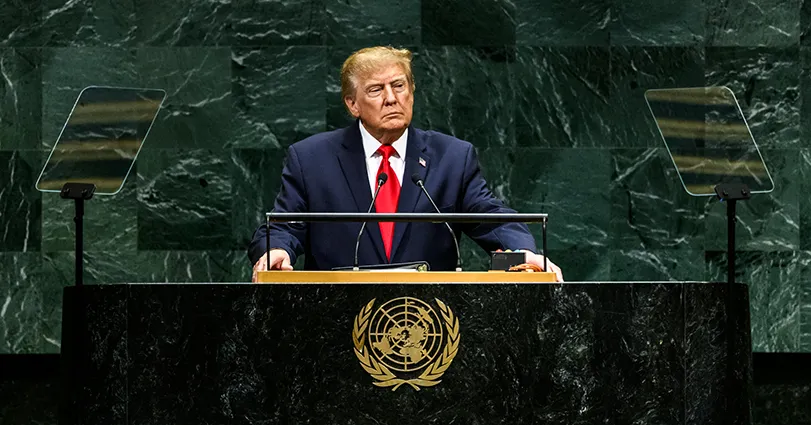
On September 22, 2026, Donald Trump used his speech to the UN General Assembly in New York to urge all nations to help enforce the complete economic isolation of Iran.
Speaking on the first day of high-level week, Trump said joint action would bring a world free of what he called the 51-year menace of Iranian terror and oil prices falling lower than at the start of the conflict. He threatened to annihilate Iran if no deal is reached. The Guardian
The threat was stated plainly. The diplomacy was less clear. Trump gave no sign at the Assembly that he plans to resume talks with Iran, but he also said he expects a deal after the election in connection with Iran. Reuters
He added that midterm elections would have no influence on his decision-making around the Iran conflict. That statement sits alongside separate reporting that top aides want to keep the Iran war contained and sought 'quiet' ahead of the November elections, with aides saying attacks on Iran may intensify after the November elections. Reuters
Coercion, blockade and Council action
The address followed months of direct confrontation. The United States and Israel launched joint strikes on Iran in February 2026. On August 24, 2026, the Trump administration announced an expansion of sanctions, penalties that restrict trade and financial ties, it can impose on entities and countries that maintain business ties with Iran.
Iran imposed a blockade on the Strait of Hormuz, the narrow waterway that carries much of the world's shipped oil, and fuel prices rose globally. Trump thanked the UN Security Council for condemning Iranian attacks on shipping in the Strait of Hormuz.
Council diplomacy has moved in parallel. The Security Council adopted resolution 2817 (2026) condemning Iran's "egregious" attacks against neighbouring Gulf States. At a Council meeting on the situation in the Middle East, the President of the United States warned of additional escalation should Iran fail to comply with the ceasefire, an agreement to stop fighting. The Secretary-General is deeply alarmed by reports of civilian casualties, including in a strike that reportedly hit a wedding ceremony in Iran.
Secretary-General António Guterres held a press conference ahead of the 81st session on 16 September 2026, setting the institutional frame for a high-level week dominated by the Middle East.
Greenland, Ukraine and the wider docket
Trump also announced the United States would build two new major military bases in Greenland under an agreement with Denmark. On September 22, 2026, the White House published a briefing-room statement titled "AGREEMENT BETWEEN THE GOVERNMENT OF THE UNITED STATES OF AMERICA AND THE GOVERNMENT OF THE KINGDOM OF DENMARK TOGETHER WITH THE GOVERNMENT OF GREENLAND". On the same day, the White House published a briefing-room release titled "President Trump at the United Nations: “While Others Have Talked, I Have Acted”".
Beyond Iran and Greenland, Trump claimed he was close to settling the war in Ukraine. He denied the United States was running short of critical munitions. He called the International Criminal Court a rogue organisation.
On technology, Trump said the United States would not stifle AI growth, called warnings about out-of-control AI a hoax, and referred to AI as superintelligence. On the Western Hemisphere, he predicted the demise of Cuba's government, saying Cuba "will fall".
The broader context here is a dual-track pressure campaign. Economic isolation is presented as collective enforcement, not sanctions by the United States alone. The August expansion to cover entities and countries maintaining business ties with Iran widens that net. The appeal at the Assembly was for other states to implement it.
In my view, the sequencing language is what practitioners will track. No talks now, a deal after the election, no electoral influence on decisions, yet staff preference for containment until November. That combination points to a holding pattern in public diplomacy while economic and military tools stay ready. The Council record, with condemnation of attacks on Gulf States and shipping alongside warnings over ceasefire compliance, provides language Washington can cite if escalation resumes.
Looking at what this means for energy and alliance management, the Hormuz blockade and the pledge of lower oil prices pull in opposite directions. Prices rose after the blockade. Trump promised they would fall below start-of-conflict levels if his isolation strategy is adopted. European and Asian importers, Gulf producers, and insurers of Hormuz transit will weigh that pledge against physical risk to shipping. Greenland adds a second alliance test, this time inside NATO, where basing, sovereignty, and Arctic posture meet Denmark and Greenland authorities.