U.S. and Iran Hold 3-Hour U.N. Talks as Hormuz Offer Emerges

Iranian officials held three hours of talks with U.S. special envoy Steve Witkoff on the sidelines of the U.N. General Assembly on Tuesday, Sept. 22. President Donald Trump disclosed the contact after his address. The Guardian
Trump said another U.S.-Iran meeting would come in the very near future. Witkoff said he felt very good about the session. It was the first such contact since Vice President JD Vance met an Iranian delegation in Switzerland in June to agree a memorandum of understanding, a written outline of intentions.
Iranian officials confirmed Foreign Minister Abbas Araghchi took part, with diplomats from Qatar mediating. Qatari diplomats had been talking with Araghchi to test if U.S.-Iran talks were possible. Witkoff and Jared Kushner also met mediators working on a U.S.-Iran agreement on the Strait of Hormuz, the narrow waterway for much of the world's oil shipments. The Jerusalem Post
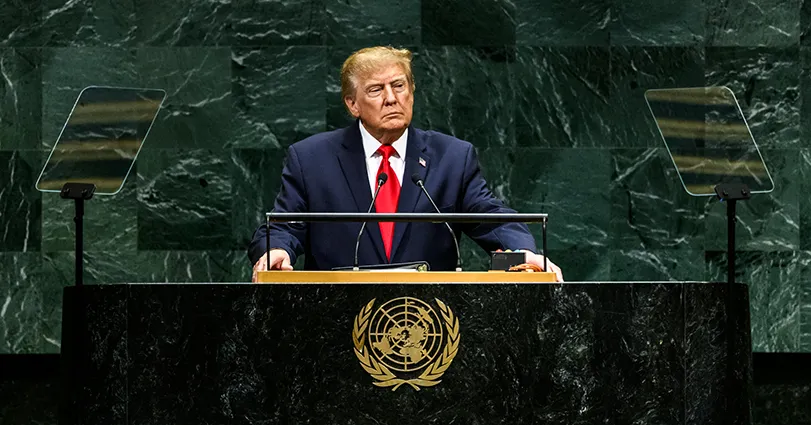
A meeting between Trump and Iranian President Masoud Pezeshkian had largely been ruled out as too combustible. Pezeshkian is due to address the General Assembly on Wednesday. Most of the Iranian delegation left the hall during Trump's speech Tuesday after he called Iran "the bully of the Middle East" and "the number one terror organisation on Earth."
Trump used the speech to argue for his war on Iran. Reuters He said a deal with Iran is possible after the midterm elections. CNN He also said he faces a choice between making a deal and action he described as "annihilate."
The talks came with a new Iranian signal on the strait. A senior official said Iran would reopen it within a week if the U.S. took reciprocal steps to ease military and economic pressure. Tehran framed the ask as signs Washington was ready to return to negotiations, end its military blockade of Iranian ports, and halt military operations around the strait. Iran said if so, it would reopen within seven days and return to talks. Iran has submitted terms for reopening.
An official in Tehran gave the position first to Japan's Kyodo news agency and then to Reuters during backstage talks in New York. Some Iranian media close to the Islamic Revolutionary Guard Corps denied any new position was adopted. The IRGC said there was no contradiction between negotiating and waging war at the same time.
Iran had earlier set seven preconditions to lift its blockade, including an end to the U.S. war "on all fronts" and a U.S. pledge to end all aggressive actions against Iran, including sanctions, or economic penalties.
The broader context here is talks keep narrowing to Hormuz while wider disputes stall. On Sept. 15, TIME reported meaningful talks remained stalled despite pressure for a way out of the war. On April 27, Axios reported Iran offered to reopen the strait but postpone nuclear talks to break the stalemate and bypass splits in Iran's leadership. Axios
Looking at what this means for diplomats, the issues are verification, sequencing and authority. A seven-day pledge tied to U.S. easing needs shared definitions and checks. The denial from IRGC-linked outlets does not by itself undo the Araghchi channel, but it flags a contest over who speaks for Tehran. Qatar's role and the Witkoff-Kushner track suggest Washington is testing if a Hormuz-first deal can stay separate from the nuclear file. The near-term test is procedural. A follow-on meeting happens, or it does not.