Meta Puts VR in Glasses, With the Computer in Your Pocket

Meta announced a four-device wearables lineup at its annual Meta Connect showcase, led by VR Glasses that move processing into a pocket puck for a spring 2027 launch. The Verge
Connect 2026 ran as a two-day livestream on September 23 to 24, focused on AI technologies, AI glasses and VR. Mark Zuckerberg delivered the keynote covering AI glasses, VR and more. Meta Engadget
VR Glasses push compute into the pocket
Meta VR Glasses pack virtual reality into a smart glasses-style frame with a wired puck. There are no straps. The glasses weigh 100g, described as five times lighter than Meta Quest 3.
The puck is pocket-sized and carries a Qualcomm Snapdragon Reality Elite chip, 128GB of storage and 12GB of RAM. Splitting the system keeps heat and weight off the face while keeping local processing and storage for standalone use.
The display is a 5K micro OLED Infinite Display with 2412 x 2288 pixels per eye and up to 120Hz refresh rate. Refresh rate is how often the image updates each second. Meta says the device is the first IMAX Enhanced certified VR device. That certification applies to playback, not capture. Meta positions it for film viewing as well as interactive content.
Software support is broad. The glasses have access to the full Meta Quest catalog of apps and games and support Xbox Cloud Gaming. They can connect to a Mac or Windows laptop as a virtual external display, with an optional virtual surface keyboard and touchpad. For calls, Meta includes a hologram feature that creates a photorealistic digital version of the wearer's face.
Pricing is set at $1,299. Launch is planned for spring 2027. The Verge
For enterprise and developer buyers, the details to note are resolution per eye, refresh ceiling, tethered chip, memory and storage, and the virtual monitor path to macOS and Windows. With 12GB of RAM and 128GB of storage, the puck is in the same class as a mid-tier phone for caching files and multitasking. The 120Hz mode lowers the delay between movement and display, which helps comfort during extended desktop use.
Camera-free tier and a Gen 3 refresh
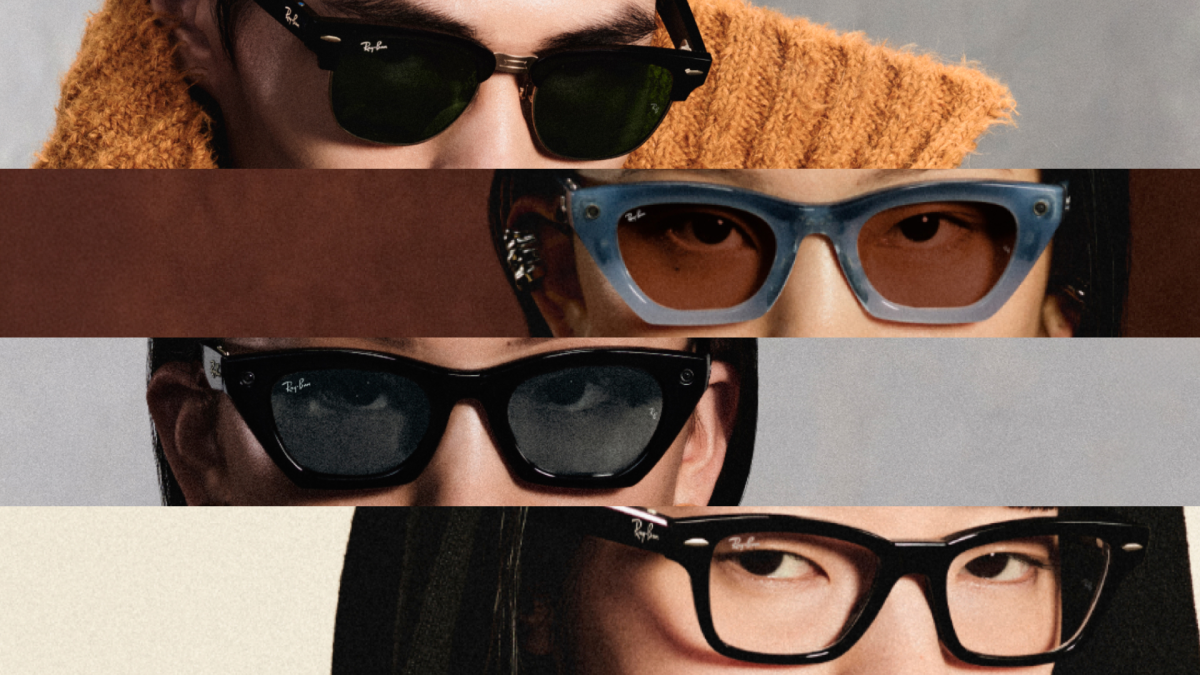
Alongside VR, Meta announced Ray-Ban Meta Audio, camera-free smart glasses with no built-in cameras for photos or video. They weigh 43g and are described as Meta's lightest, slimmest AI glasses yet. Battery life is rated up to 12 hours per charge, or 48 hours with the charging case. They launch October 13 starting at $349 with 23 color and lens combinations.
Shipping without cameras changes hardware design, not only price. It changes power use, heat, board layout and privacy posture at once. It also creates a clear split between audio plus AI interaction and full photo and video capture.
Ray-Ban Meta Gen 3 retains cameras and starts at $449 with up to nine hours of battery life. It includes a customizable action button for Meta AI and a six-mic array that cuts more than 90% of background noise. Meta lists 27 color and lens combinations, including new Zena and Aviator frame styles.
At the low end, Meta will launch Meta Adventurer starting at $249 with black frames and gray lenses on October 23rd. Existing Ray-Ban Meta and Oakley Meta AI glasses are listed starting at $224. Meta
Some context was public before Connect. Reuters reported on September 15 that Meta planned to release camera-free smart glasses internally code-named Luna in fall 2026. Meta introduced Meta One on September 15, 2026, a subscription service with more features and AI to create, connect, and stand out. In May, Meta launched Muse Spark, described as the first step toward personal superintelligence and the start of a new series of models purpose-built for its products. Reuters Meta Meta
The broader context here is product choice. Meta now has a camera-free audio path for extended wear and restricted environments, a camera-equipped Gen 3 for capture and visual AI, a $249 entry frame to lower trial cost, and a $1,299 tethered VR system for immersive display and compute. Each tier trades weight, battery life, sensors and price.
In my view, the puck is the technical bet to watch. Phone-tethered and PC-tethered VR reduced head load but added friction around cables, ports and host compatibility. A dedicated puck with a known chip, memory size and software target gives developers a fixed spec to build for. Virtual monitors with virtual input surfaces could see more daily hours than gaming if text stays sharp and delay stays low at 2412 x 2288 per eye.
Looking at what will decide use, everyday fit will count more than launch specs. Fit without straps, heat from micro OLED at high brightness, mic performance in real rooms beyond the 90% claim, and stability of the tether link will matter. My kids took to earbuds and light glasses faster than any headset I brought home, because those devices faded into routine. The 43g Audio frame and the 100g VR frame aim at that same point, which would leave light glasses for steady AI and audio and the puck system for cinema, desk expansion and Quest content.