Copper's New Charlie Range Runs on 120V or 240V With Built-In Backup
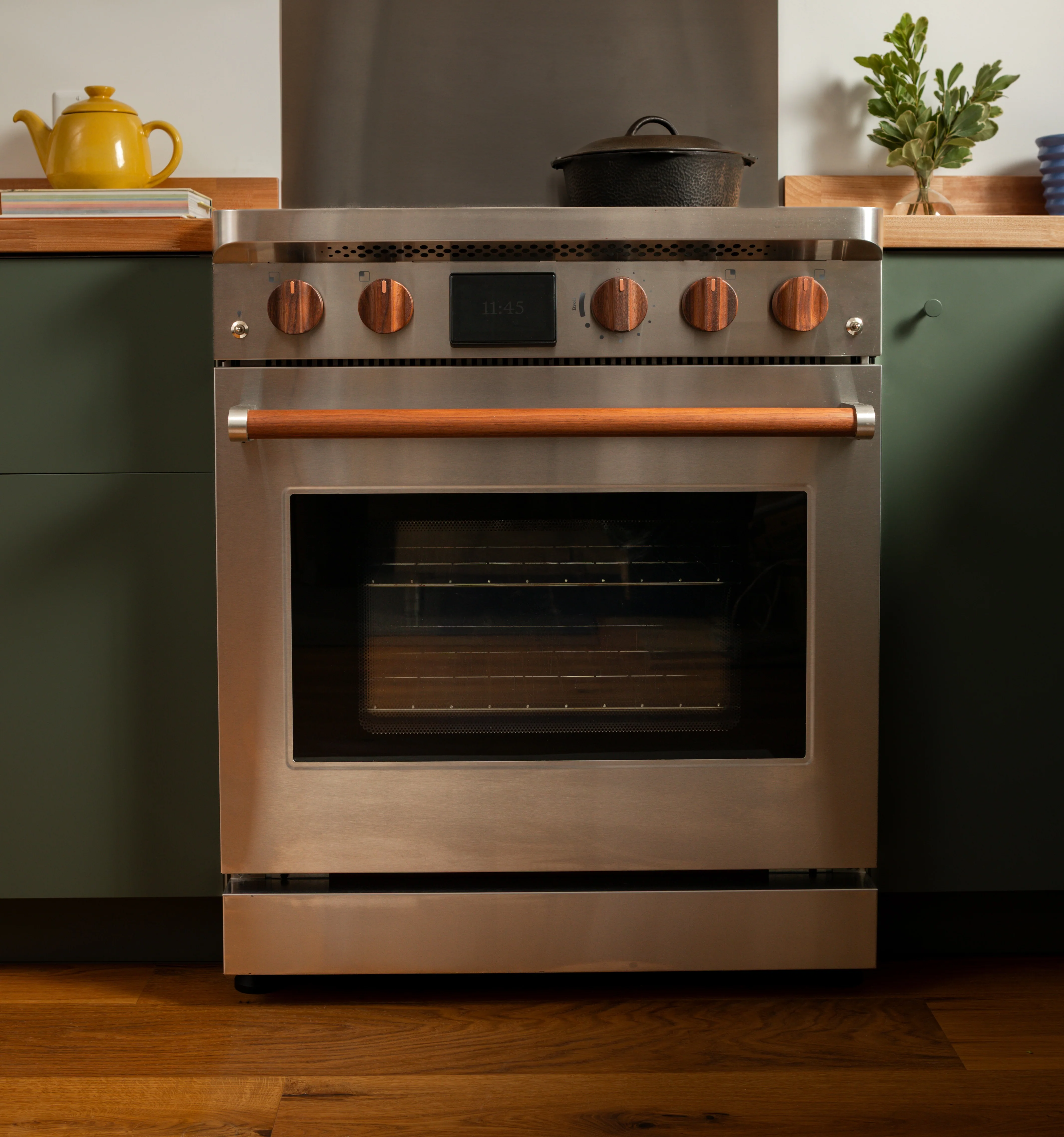
Copper has released an updated Charlie induction range, called the new Charlie, with dual-voltage support and higher output from the oven and cooktop.
Details reported Sept. 24, 2026 center on electrical flexibility. The new Charlie works with both 120-volt outlets, the standard wall socket, and 240-volt outlets, the higher-power connection used for large appliances. The previous Charlie worked only with 120-volt outlets, according to Engadget. The broiler now reaches 3,000 watts, up from 2,700 watts. The burners are 3kW induction zones, which heat cookware directly with magnetic energy, compared with 2.8kW zones on the original model.
The range is a 30-inch slide-in induction range, built to fit between cabinets, as documented in a Wirecutter review. It includes a 5 kWh integrated battery, a measure of stored energy, using lithium iron phosphate chemistry, a type common in home storage. The battery allows cooking during power outages. Copper lists the battery-equipped range at $5,999, offers a 2-year warranty, and states that installation requires no rewiring. The company states that the range cooks 3-4x faster than gas and describes it as installed in thousands of kitchens across America.
The range weighs 354 pounds, with the battery accounting for 130 pounds, according to company FAQ material. Copper says the battery can be charged when electricity is cheapest to avoid use during peak load times, when demand is highest, functioning as a grid asset. Copper was selected to supply 10,000 stoves to the New York City Housing Authority.
The broader context here is the retrofit problem that has slowed conversion from gas to induction. The power increase is small on paper. The operational change is that one SKU, or single product version, now covers two electrical setups. A kitchen with only a standard 120-volt receptacle can take the range without pulling a new circuit, and a kitchen already wired for 240 volts can run it there as well. For housing owners and installers, that consolidation simplifies specification, inventory and scheduling.
In my view, the durability question is now the one to watch. LFP is a known quantity in stationary storage, with well understood behavior around cycle life and thermal stability. A cooking appliance creates a different load profile, with short high-power discharges clustered around meals and heat, grease and vibration as constant neighbors. A 130-pound pack inside the cabinet also changes service logistics. The 10,000-unit New York City Housing Authority deployment will generate field data at a scale lab cycling cannot match. If capacity retention and serviceability hold up there, battery-buffered ranges could give older buildings a practical electrification path without panel upgrades. That outcome would expand choice for residents while giving utilities a distributed set of shiftable loads.