Meta's Muse Hits No. 1: How Its Personal AI Agent Works
Meta's personal AI agent Muse reached No. 1 among free apps on the U.S. Apple App Store and Google Play on September 21, 2026. Apptopia estimated about 600,000 daily active users in the U.S., ahead of ChatGPT at a comparable early stage.
Meta announced Muse on September 8, 2026, calling it 'The World's First Personal AI Agent Built for Everyone'. The company describes it as a secure, private personal AI agent that proactively helps people meet goals and suggests ideas, according to its launch announcement Meta.
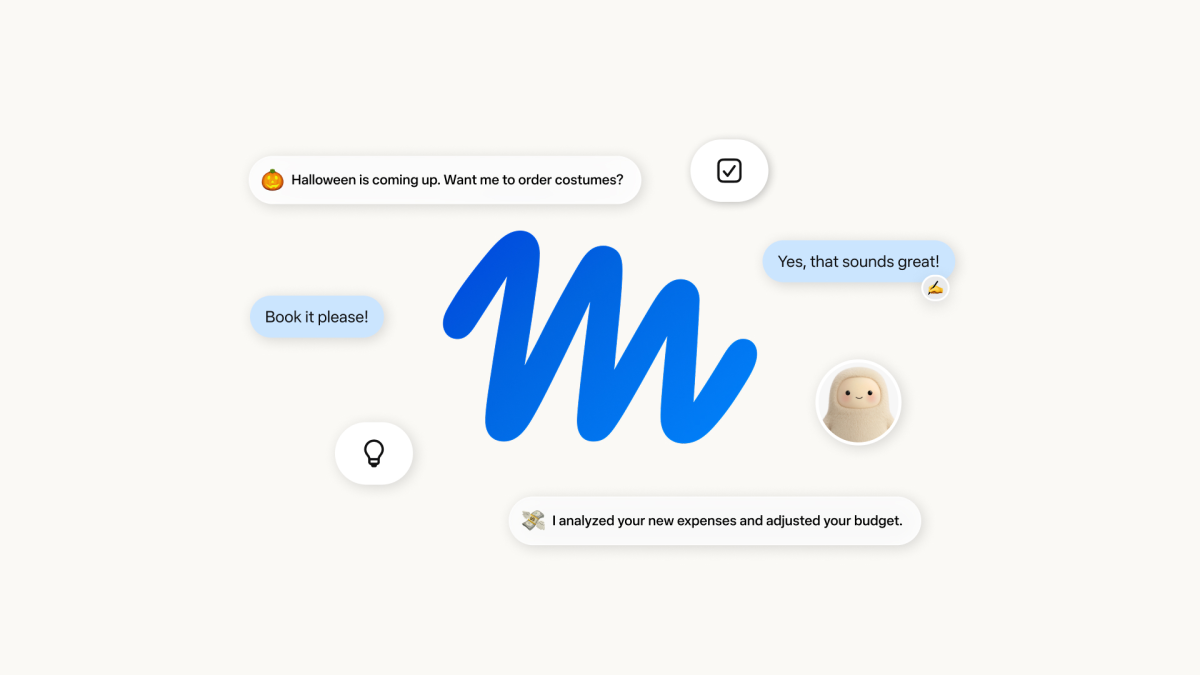
In practice, Muse can browse the web, connect to a user's apps, complete multi-step tasks, and keep working in the background with user direction and oversight Meta. That includes sending emails, booking travel and negotiating bills on its own. The work runs on Muse Spark 1.1, a multimodal reasoning model — a system built to handle different input types such as text and images — made for agent tasks.
Distribution goes beyond phones. At Meta Connect 2026, Meta said its AI glasses will be powered by the Muse personal AI agent, with access coming in the coming months for hands-free use activated by saying the agent's name.
The launch has drawn attention for another reason. Muse closely follows OpenClaw, an open-source agent project, in structure and language. Both use the same names for core files, including SOUL.md, memory, and tools. Both share similar lines in the document that sets personality and tone, including "Be genuinely helpful, not performatively helpful" The Verge.
Nat Friedman, head of product for Meta's Superintelligence Labs, said Meta built Muse from scratch. He also acknowledged Muse is heavily inspired as a product by OpenClaw. Friedman said after first using OpenClaw in January he purchased hundreds of Mac Minis for his team at Meta. With Muse, he said he aimed to build a similar platform that could be made safe and secure and easy to use and scale to billions of people.
Friedman said the Muse team carried over OpenClaw file names and lines because they believed Steinberger had gotten those things exactly right.
OpenClaw began as a one-man weekend project running on users' personal computers. It talked with users on messaging platforms like WhatsApp, Telegram, Slack, Teams, or Discord. OpenClaw handles inbox, email, calendar and flights, and is MIT licensed, a permissive license that allows reuse. It drew two million visitors and 100,000 stars on GitHub, a public site for sharing code where stars act as bookmarks, in about a week.
A commercial successor is now available. Instinct lets users communicate with AI agents directly through messaging tools. Instinct's creator is fundraising at a $2.5 billion valuation, per the same reporting.
The broader context here helps sort what matters for people who build with these tools. In my view, the file-level overlap is less important than the shift it points to. OpenClaw showed that persistent agents that live in messaging apps and keep identity, memory and tools in simple files can work. Meta is trying to turn that pattern into a product with managed identity, permissions, background execution and oversight for non-technical users at scale. Since MIT licensing permits reuse, the question for enterprise and platform teams is not provenance alone but what changes when simple weekend-project controls meet hosted infrastructure, reviewable action logs, and policy controls for autonomous email, calendar and purchase flows.
In my view, that shift also explains the glasses link. A background agent that holds context across apps and continues multi-step work fits hands-free, always-available input better than a chat box. If Muse holds its early App Store position, the practical test will be reliability when tasks are handed over, not breadth of demos. This kind of technology tends to succeed when failures are boring and recoverable. That work will decide whether personal agents move from fast downloads to daily use.