Feather Robotics Wants to Be the Android for Robot Developers
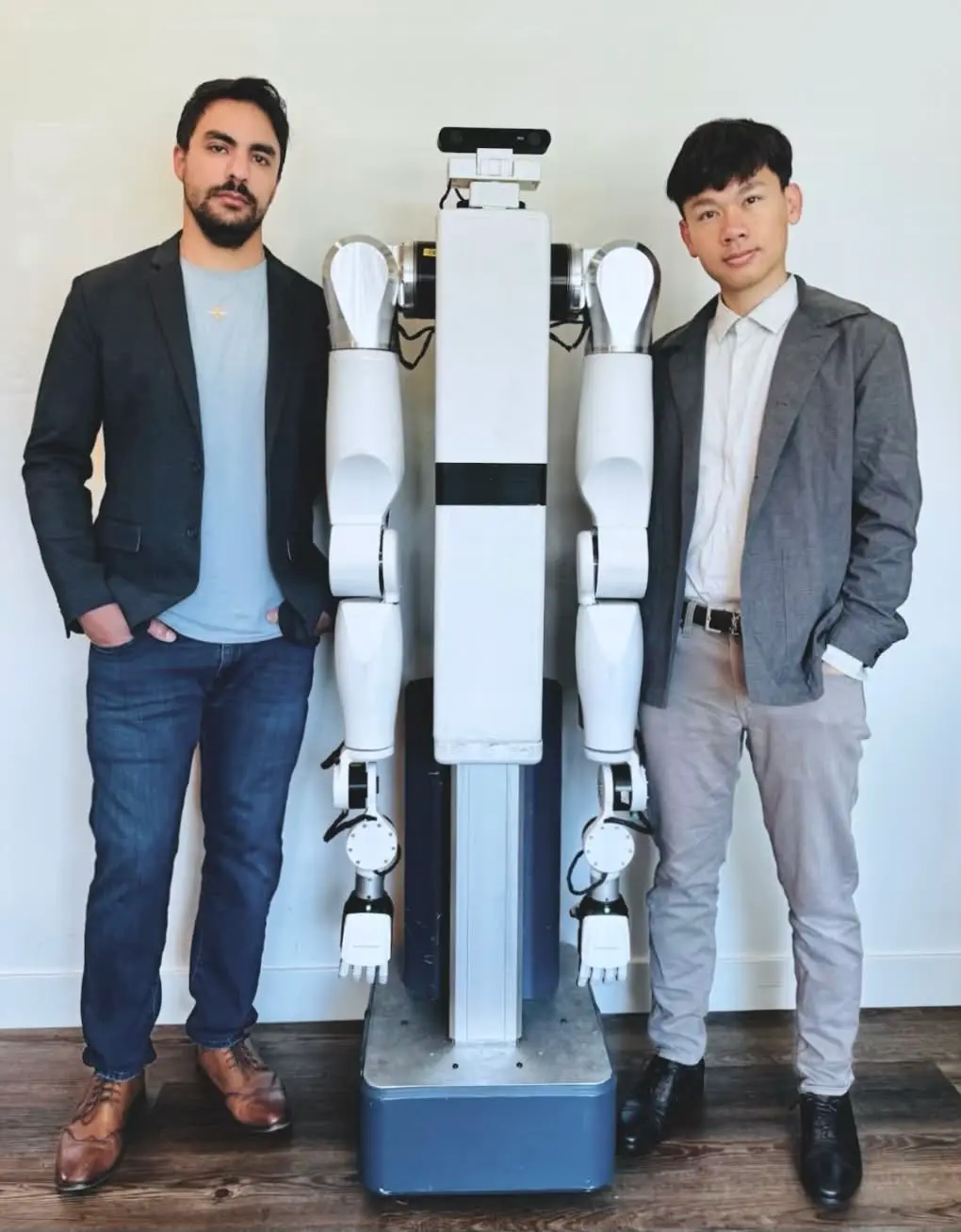
Feather Robotics wants to be the "Android of robotics," selling a hardware and software toolkit for developers rather than a single fixed-purpose machine. TechCrunch
The company was founded in 2025 by Hoa Mai and Parsa Bakhtiari. Mai had sold his previous humanoid startup to 1X. Bakhtiari is a former Tesla Model 3 engineer who at one point reported directly to Elon Musk.
Gradient Ventures backed Feather at inception, leading its $7.6 million pre-seed round. That gave the two-person founding team runway to iterate on hardware while keeping developers as the customer.
The approach centers on modularity. Feather built a system developers can reconfigure for different jobs, such as adjusting arm lengths. Body shape is treated as a configuration choice, while the onboard computer is left open to run third-party control software.
That openness is explicit. The hardware can run models from robotics AI providers including Generalist, Skild, or Physical Intelligence. Those vision-language-action stacks take camera input and language instructions and output movement. A lab can buy the body once and test competing AI systems without rebuilding mechanics, drivers, and calibration.
The robot costs $30,000, about half the price of Unitree's H2 Edu. Feather has passed $1 million in revenue from selling small quantities of robots.
Those early units are in field use. Feather said its robots are working as cooks in restaurants in Japan and cleaning up science labs. Mai said the startup resolved almost all issues over a year of field testing and is getting ready for a big product launch. The company states its goal on its own site as building robust, affordable robots in the USA. Feather To industry customers, it describes itself as building a general-purpose robotics platform for Physical AI companies and manufacturing integrators. Feather Robotics on LinkedIn
In my view, the bet is that value moves up the stack. If foundation models for manipulation keep improving, the limit shifts from training control software to having low-cost, easy-to-modify bodies with clean interfaces for perception, control, and safety. A $30,000 body that allows arm-length changes and task-specific end effectors, while staying neutral on model providers, would sit between closed humanoids and lab-built arms. The year in kitchens and labs matters more than the slogan, because contact tasks punish loose tolerances, poor cable routing, and brittle teleoperation pipelines. Early sales point to research demand for a hackable base. Open work remains on fleet management, failure logging, and long-horizon autonomy.
The broader context here is what a successful launch would enable. Small teams could prototype embodied applications without first building a robot company, then carry the same software investment across hardware revisions. That lowers the cost of trying, which over time has mattered more than any single robot demo.


