Senate Blocks Bid to End Iran War as Costs and Casualties Mount
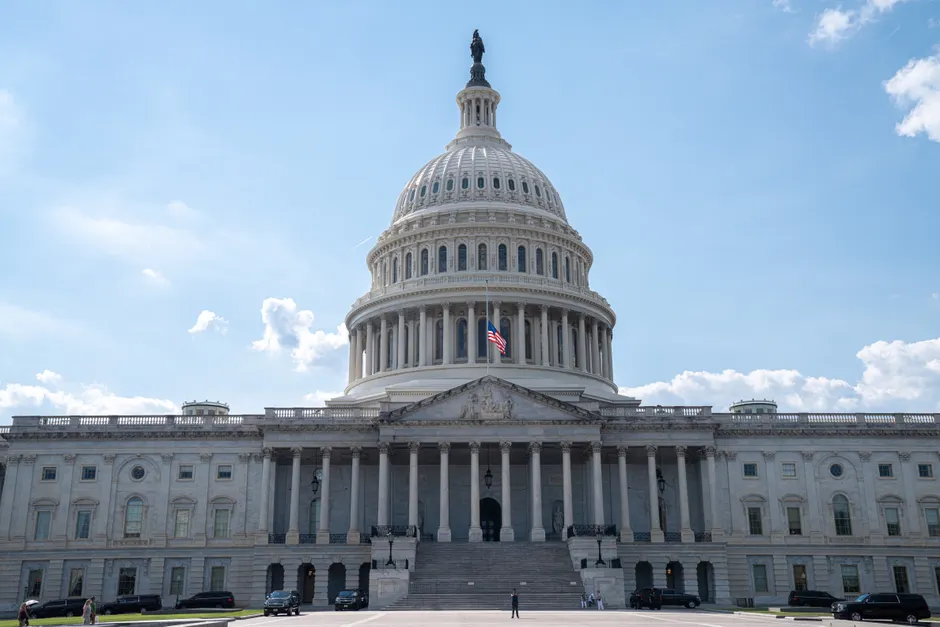
The U.S. Senate voted 49-50 on September 24, 2026, to block a House-passed measure to remove U.S. forces from the war with Iran. U.S. troops stayed under existing orders as the conflict passed the 200-day mark. Nineteen American service members had been killed by that date. The Guardian
The vote was listed as Vote No. 234 in the 119th Congress, 2nd Session, 49-50, Rejected, on cloture on the motion tied to the War Powers Resolution to remove forces from hostilities with Iran. Cloture is the Senate procedure to move past debate and toward a vote. The Senate met at 10:00 a.m. that day, with two votes set for 10:45 a.m. and more votes expected.
The measure started in the House, which had passed it earlier with support from both parties. On September 16, the House voted to end the Iran war with seven Republicans voting in favor. Al Jazeera The vehicle was H.Con.Res. 93, which directs the President, under section 5(c) of the War Powers Resolution, to remove U.S. Armed Forces from hostilities with Iran. Congress.gov Two related measures used parallel language. H.Con.Res. 86 directs removal unless Congress explicitly authorizes the mission, while H.Con.Res. 38 directs termination of the use of forces in hostilities against Iran or any part of the Iranian government.
Senate Democrats, led by Chuck Schumer and Sen. Andy Kim of New Jersey, forced the September 24 vote using the War Powers Resolution. That 1970s law gives Congress a fast-track way to force debate and votes on withdrawing troops. Kim argued in human and economic terms on the floor. He cited a Congressional Budget Office report estimating the war cost nearly $40 billion in its first four months. He said more than 750 U.S. service members had been injured. He said higher petrol prices had cost American households about $900 each since the war began. He said Democrats had come to the chamber 11 times in the past 208 days to try to end the war. The Guardian
The September 24 result was the latest in a long series. By that date, the Senate had voted on Iran war powers resolutions 13 times, voting in favor twice. U.S. and Israeli forces began bombing Iran in February 2026. Reuters In March 2026, the Senate voted 53 to 47 not to advance an Iran war powers resolution. That vote was largely along party lines. Reuters
In June 2026, the Senate adopted a similar House-passed war powers resolution by 50-48, with Republicans Bill Cassidy, Susan Collins, Lisa Murkowski and Rand Paul voting in favor. The House schedule for June 3 had included a measure directing the President, under section 5(c), to remove forces from hostilities with Iran. On July 23, the Senate voted 49 to 47 to block its own Iran war powers measure within hours of a House vote to curb President Trump's Iran war powers. Reuters On July 30, Senate Republicans blocked a motion to discharge a resolution to force the president to halt hostilities with Iran. Discharge is a procedure to pull a stalled measure to the floor. After a ceasefire collapsed, the Senate voted 47-49 against advancing a legally binding joint resolution on the war, with Collins the only Republican in support. The Senate record describes that type of measure as a joint resolution to direct removal of U.S. Armed Forces from hostilities within or against the Islamic Republic of Iran.
The legal difference is straightforward, like the difference between a formal request letter and a law. A concurrent resolution expresses congressional direction under section 5(c) without going to the president for signature. A joint resolution, if passed by both chambers and signed or enacted over a veto, carries binding legal force. The Senate has tested both paths. Neither has cleared both chambers in binding form.
On September 21, Republican Senate candidates Hinson of Iowa and Rogers of Michigan called for a swift end to the Iran war. Both also called for suspending the gas tax. Reuters
The broader context here is a Congress cycling between fast-track war powers votes and binding authorization fights without settling the underlying legal authority. Thirteen votes with two affirmative outcomes point to a chamber willing to register opposition but unable to assemble veto-proof majorities. The June 50-48 adoption and the September 49-50 rejection were separated by one vote. Party discipline held in September.
Looking at what this means for command authority and diplomacy, the practical effect is continuity. Operations continue. The White House keeps its claim to act without new authorization. Opponents keep a legislative calendar. War Powers Resolution procedures allow repeated forcing votes, and Democrats have used that rhythm through the 208-day period cited by Kim. Each vote creates a record for courts, allies, and Tehran to read.
In my view, the figures introduced on September 24 will shape the next round more than the parliamentary tally. Nineteen dead, more than 750 injured, nearly $40 billion in four months, and $900 per household in fuel costs give war-powers debates a fiscal and human ledger that authorization theory often lacks. With candidates in competitive Senate races breaking toward swift termination and tax relief, the White House faces a narrower corridor. It can sustain operations legislatively. Sustaining them politically through further casualty reports and price effects is a different test.


