The Aeropod Loosens Soil Without Tractors or Robots
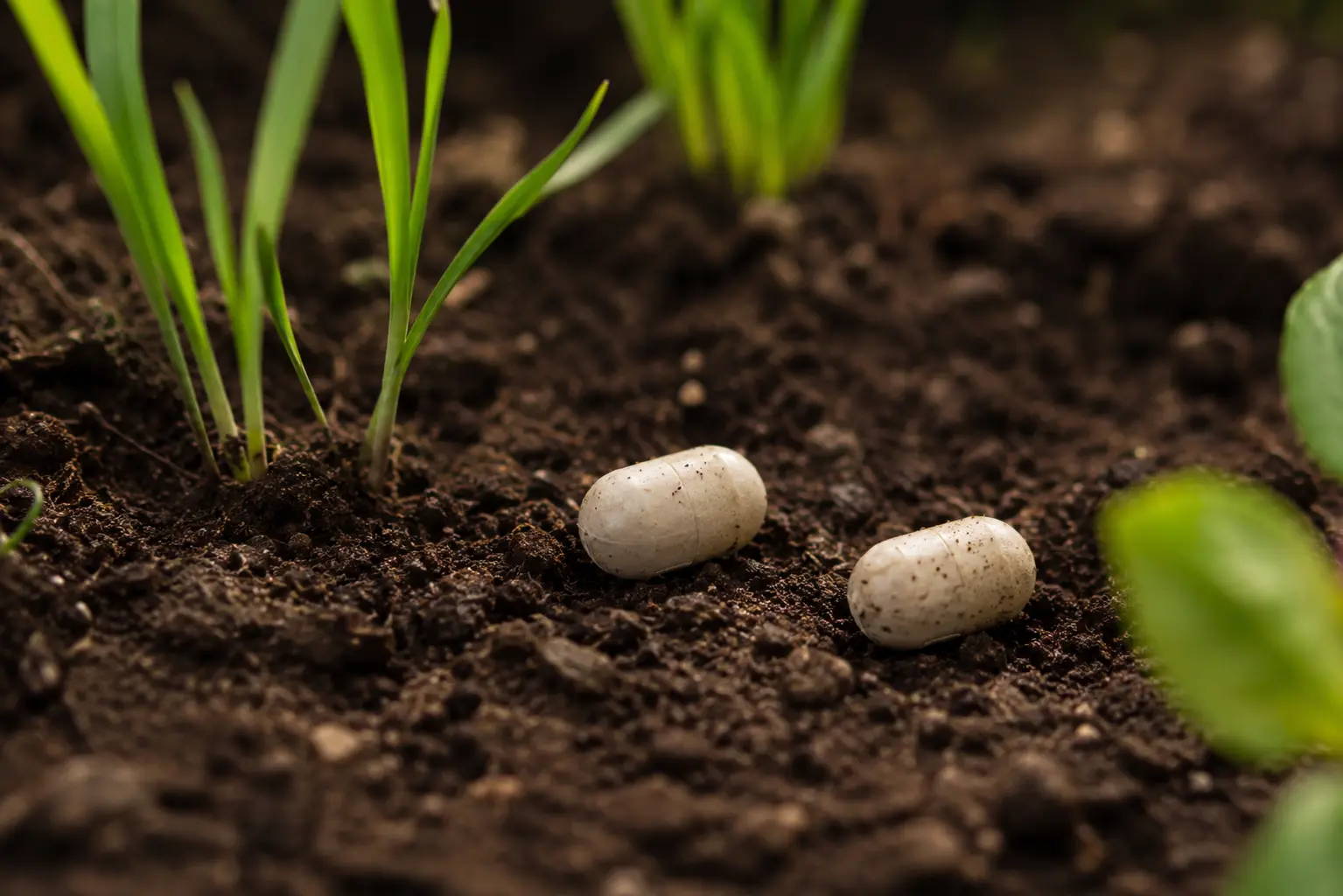
Muju Earth has built a fingernail-sized capsule that loosens soil without machinery or robotics. The startup, co-founded by CEO Ifeoluwa Afolayan and Wangyang Hu at Imperial College London, is one of 200 startups selected for Startup Battlefield at TechCrunch Disrupt in San Francisco in October. TechCrunch
Each Aeropod is dropped into soil alongside seeds using the same sowing equipment, with no advance tilling needed. Exposed to underground temperature, pressure and moisture, each unit bursts open. That action loosens the surrounding soil and creates channels for air, water and roots. No tractors. No robots. The capsule does the work in place.
The company describes the Aeropod as a biodegradable, patent-pending capsule that is planted like a seed and triggered by natural conditions. On its website, Muju Earth says the approach helps farmers move to regenerative agriculture, farming that rebuilds soil health, without reducing yields. Muju Earth
Afolayan puts a single tillage pass at around £250 to £400 per hectare, against a target of £100 per hectare for Aeropods to produce similar results. Muju Earth says the system can support better soil health while cutting farmers' tilling costs by half or more.
Validation to date is lab-based. The company is now starting paid field trials in the UK this fall. Nine farmers are taking part, with more than 30 on a waitlist. The initial target is onion growers in the UK.
Disrupt 2026 is scheduled for October 13-15 at Moscone West in San Francisco, where exhibiting startups get access to large numbers of operators and investors. TechCrunch Disrupt
The broader context here is a design trade. Most tillage alternatives add electromechanical complexity, meaning guidance, sensors, power systems and maintenance. Muju Earth moves that complexity into materials science and into a single-use capsule. That avoids upfront equipment cost, charging infrastructure and processing delays at the field edge entirely. It also fits no-till practice, where preserving soil structure and porosity, the small spaces that hold air and water, matters more than raw loosening force.
In my view, the questions to watch are common to farm inputs that get used up. Trigger reliability across soil textures, moisture levels and compaction layers will decide uniformity. Dose per area, placement relative to seed, breakdown time and residue chemistry will shape farm effect and the regulatory path. Unit economics at seed-scale volumes will decide whether the £100 target holds outside controlled conditions.
What makes the fall trials worth watching is practical use. If they show consistent crop emergence and soil porosity data, the model is easier to judge. A biodegradable input that fits existing planters, without new hardware or operator training, lowers friction in a sector where equipment cycles are long and margins are thin. That could allow less tilling, if the field results support it.


