WiCi One Is a Wireless eGPU Over Wi-Fi 7, Starting at $1,999
WiCi has opened preorders for WiCi One, a self-contained wireless external GPU that delivers graphics to compatible devices over Wi-Fi 7. The base model starts at $1,999 in preorder and will move to $2,599 at retail, with first shipments expected in the fourth quarter of 2026. Engadget
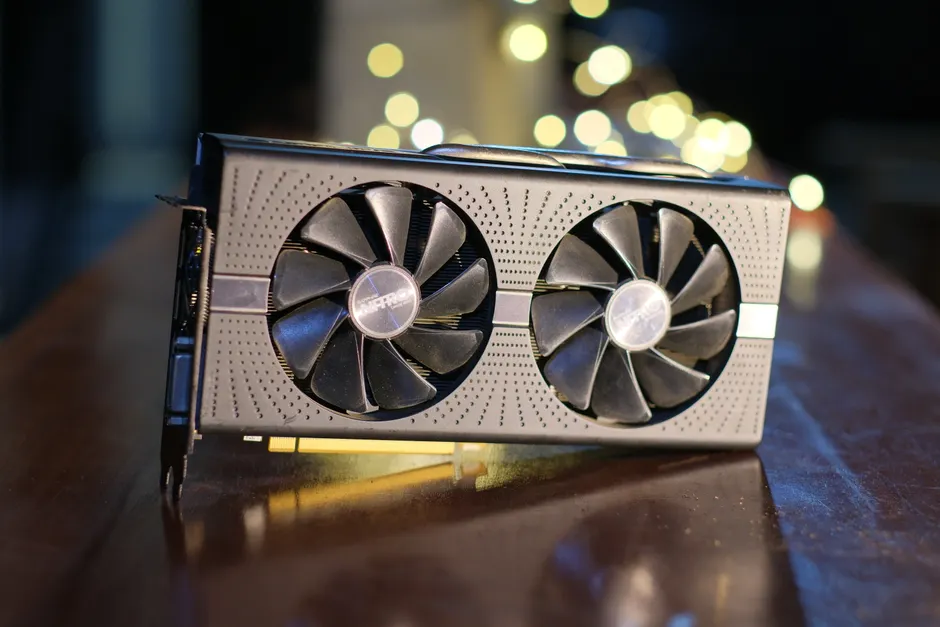
The preorder configuration centers on an Nvidia RTX 5060 Ti 16GB, paired with an Intel Core 3 100U processor and 1TB of NVMe storage, which is fast solid-state storage. All of it lives in its own enclosure with a dedicated graphics card, Wi-Fi 7 wireless module and cooling system.
The technical pitch is driver-level abstraction, meaning system software makes a distant part act as if it were inside the host machine. WiCi One uses the Wi-Fi 7 link to present its remote graphics card as a local card to the host, according to Tom's Hardware. The product connects the RTX 5060 Ti to laptops over Wi-Fi 7. The laptop sees a local GPU. The heavy rendering work happens on the external unit.
WiCi positions the system as the first wireless eGPU to feature an RTX 5060 Ti, and it ran Cyberpunk 2077 in a demo noted by VideoCardz. For performance, the company cites vendor-run figures, meaning numbers from its own tests, for the 5060 Ti configuration. WiCi said the system can run Cyberpunk 2077 at 4K Ultra with DLSS 4, Nvidia's AI-based image and frame boost, at 80 fps, or frames per second. It said the same configuration can run Black Myth: Wukong at 4K Cinematic with DLSS 4 at 60 fps.
A second configuration is planned for heavier workloads. WiCi plans a variant with an RTX 5090 32GB GPU, an Intel Core Ultra 7 225H CPU and 4TB of NVMe 5 SSD storage. The configuration with built-in 4TB SSD is intended for local AI use, where AI models run on the box itself rather than in the cloud.
The broader context here is the long friction around external graphics. Tethered eGPUs solved upgradeability but kept the cable, the desk clutter and the negotiation over ports and host support. Wireless removes the physical tether. It replaces it with a different set of constraints. Throughput becomes shared airtime. Latency becomes jitter and retransmission. Stability becomes coexistence with everything else on the network.
In my view, the decision to expose the remote GPU as local is the detail to watch. For developers and IT teams, that choice determines whether existing engines, runtimes and toolchains work unchanged, whether display, capture and inference frameworks list the device normally, and how failures surface. A clean abstraction lowers integration cost. A leaky one pushes complexity to the application. WiCi has not disclosed transport, compression or fallback behavior in the verified details, so independent testing will need to measure frame pacing, which is how evenly frames arrive, input latency and behavior under congestion, not just average fps.
Looking at what this means for buyers, the segmentation is deliberate. The 5060 Ti model addresses high-resolution gaming on thin portables that cannot house that class of GPU. The planned 5090 model with 32GB and 4TB addresses a separate bottleneck. Local AI work is often limited less by raw speed than by memory capacity and data locality, or keeping data close to the processor. Keeping AI weights and working sets close to ample video memory changes what can run without round trips to remote servers. That matters for privacy-sensitive work, for offline work and for iterative experimentation.
Worth flagging as a buyer consideration, the economics are workstation-like. Two thousand dollars buys independence from the host upgrade cycle. It also buys a second computer in practice, with its own CPU, storage, thermals and wireless dependency. Enterprises evaluating fleets of thin laptops as consoles will need to test density. What happens with multiple units and multiple clients in the same radio environment is a different question from a single isolated demo. Home users will need to weigh a dedicated high-end desktop against a portable plus wireless accelerator.
In my view, the direction is still easy to welcome. If wireless GPUs can hold up under real-world interference, they point toward a model where the heavy, hot and power-hungry parts of computing sit where they make sense, while the parts we touch stay light and quiet. My kids grew up assuming performance lived inside the device in their hands. The next assumption may be that it lives nearby, available on demand. WiCi still has to ship, and third-party measurements still have to confirm the claims. The test will be simple. Put the box in another room, load a demanding scene, and see whether the illusion of local holds.


