A Record-Breaking Heatwave Across the UK and Europe: What's Happening and Why It Matters
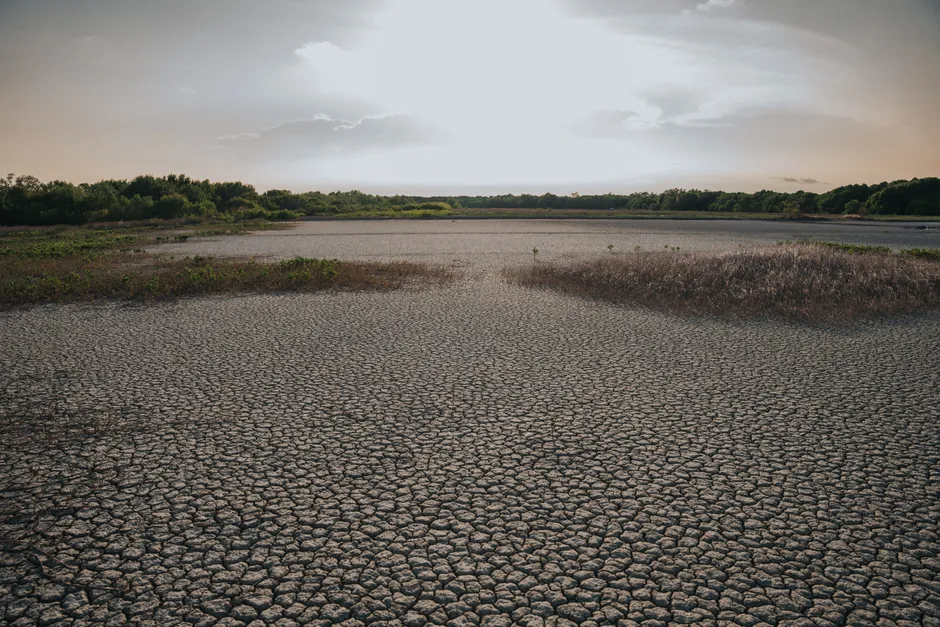
The UK's Met Office issued its highest heat warning level on 22 June 2026 for Wednesday 25 and Thursday 26 June, predicting temperatures up to 34°C across southern England — conditions that would break the country's June temperature record. The warning followed a sequence of lower-level Amber alerts that had been escalating since 19 June. The Red warning, which is the Met Office's most severe tier, covers southern England, Wales, and Cardiff.
A Red warning signals danger not just to vulnerable people but to the general population. When issued, emergency services shift to heightened readiness and public health officials give direct guidance to the public on how to stay safe. This is different from an Amber warning, which focuses on specific at-risk groups. Hospitals, schools, and rail operators across England and Wales were already preparing for service disruptions by the time the Red warning was announced.
Heat Across the Continent
The UK's situation is not isolated. Temperatures across much of Europe approached 40°C in mid-June, triggering heat warnings in multiple countries and disrupting transport and tourism services. France recorded its hottest day ever recorded in June during this period.
The human consequences in France have been immediate and serious. Around 20 people drowned over several days as residents sought cooling in rivers, lakes, and reservoirs. Most of the victims were swimming in unsupervised locations — places without lifeguards or safety measures. France's Civil Safety service responded by urging people to use only supervised swimming sites, a standard heat-response measure that highlights a recurring problem: when heat becomes extreme, people are drawn to informal water sources, and that creates a mass-casualty risk.
The Bigger Picture: An Infrastructure Problem
This heatwave lands at a moment when the UK's independent climate advisory body has delivered a sobering assessment. In May 2026, the Climate Change Committee published a report titled A Well-Adapted UK that made a direct claim: the country's buildings, infrastructure, and institutions were designed for a climate that no longer exists. That statement gains weight when you consider that June historically saw peak temperatures well below 30°C in most of England.
On the same day this heatwave peaked, 24 June 2026, the CCC also released its 2026 Progress in Reducing Emissions report to Parliament. This report tracks whether the UK is on course to meet its Net Zero emissions target — the goal to reach zero greenhouse gas emissions by a set date, typically 2050. The 2025 version of this report had already concluded that the UK would need additional policy changes to hit its near-term targets. The timing of these publications reveals how climate governance works now: the physical damage caused by greenhouse gases we've already released into the atmosphere, and the policy steps needed to prevent future damage, are increasingly being assessed side by side.
What a Red Warning in June Means
Red warnings in June are unusual enough to signal something has shifted. The most significant recent UK heat event — July 2022, when temperatures exceeded 40°C for the first time on record — also triggered a Red warning, and estimates of excess deaths (the number of people who died above what would normally be expected) ran into the hundreds. Research conducted since 2022 has confirmed a hard fact: UK buildings, hospitals, and public transport systems are not well equipped to handle sustained extreme heat. The CCC's recent adaptation report has now formally documented this vulnerability.
The way warnings escalated here — Amber to updated Amber to Red over three days — reflects how heat events actually develop and how weather forecasters gain confidence in their predictions as the event approaches. For hospitals, schools, and rail networks, the practical window between receiving a Red warning and the peak heat hitting is narrow. These institutions had days, not weeks, to reorganise staff, adjust schedules, and increase cooling capacity.
The Broader Context
Heat mortality is not straightforward to prevent. France's drowning deaths illustrate a point that public health systems across Europe are grappling with: heat kills not only through direct effects like heatstroke, but also through secondary behaviours it triggers — people diving into unsupervised water, overexertion in the heat, or medication problems that worsen in high temperatures. These are harder to plan for than a predictable surge in hospital admissions.
The parallel timing of the CCC's emissions-progress report alongside a peak heatwave period is revealing about how climate policy and climate impacts are now woven together in institutional calendars. Physical warming caused by past emissions and policy decisions that will shape future warming are increasingly being measured and assessed in the same timeframe. That overlap has become the new normal for how societies govern the climate transition.


