SiMa.ai Raises $150M to Bring AI to Robots, Cars and Drones
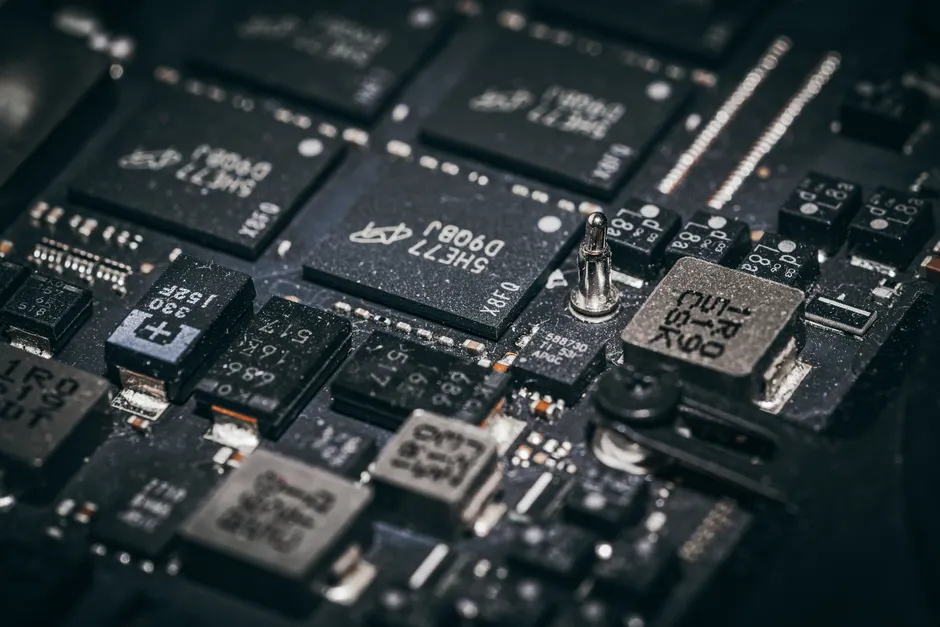
SiMa.ai Technologies Inc has closed a $150 million Series C that values the company at $1.45 billion. The company announced the financing on September 28, 2026, from San Jose, California. TechCrunch
The round was co-led by Fidelity Management & Research Company and Amplify. Alter Venture Partners, Dell Technologies Capital and StepStone Group took part.
SiMa.ai was founded in 2018 by Krishna Rangasayee, previously COO of chipmaker Groq. The company operates as a US-India AI platform company focused on Physical AI, a term for AI that controls machines in the physical world. Its approach pairs chips and software so robots, drones, cameras and other devices can run AI on the device itself, without sending data to the cloud for inference, the step where a trained model makes a decision.
The product stack covers both layers. Palette Neat is described as an agentic software development environment, meaning AI-assisted tools, for building physical AI applications. The Modalix DevKit is a system-on-module, a complete computer on a small board, that provides a full machine-learning pipeline with 50 TOPS, or 50 trillion operations per second, at under 10 watts. That low power use fits battery-powered devices that cannot shed much heat.
Total capital raised now exceeds $500 million. SiMa.ai raised an $85 million Series B in July 2025 at a $960 million valuation, so the Series C valuation is roughly 50% higher after just over a year.
Earlier financing included a $70 million round led by Maverick Capital, and an oversubscribed Series B1 extended to $67 million. MSD Partners invested at a point when total investment reached $187 million. The company also raised an additional $13 million from investors including Taiwan-based VentureTech Alliance. Bloomberg
The company said the new capital will be used to scale Physical AI in humanoids, automotive and drones. It issued the news as a Business Wire press release titled 'SiMa.ai Reaches $1.45B Valuation with $500 Million in Total Funding to Scale Physical AI in Humanoids, Automotive and Drones'. Business Wire
The broader context here is where AI work actually runs. Cloud training gets most headlines, but robots and vehicles depend on predictable response time, low power use, and the ability to run combined video, audio and sensor pipelines on device. A 50 TOPS, sub-10W module does not compete with data-center accelerators. It competes with sending camera frames and lidar returns off the device at all.
In my view, the investor list tells as much as the valuation. A co-lead from Fidelity alongside Amplify, with Dell Technologies Capital and StepStone involved, suggests the company is being backed less as a chip-only bet and more as a full edge platform. Chip startups often succeed or fail on software ease of use, toolchain maturity and how fast a customer gets a first working system. An agentic development environment addresses that bottleneck, and lowers integration cost for teams without in-house compiler engineers.
Worth flagging is what this does not change. Tapeouts, the final step to make a chip, plus qualification cycles and automotive design wins still run on multi-year timelines. Funding adds hiring capacity and runway. It does not shorten those cycles on its own. What it does enable is more deployment work in humanoids and drones, where size and battery limits leave little room for extra computers.


