Anthropic's $8 Billion Loss, Fast Turn to Profit, and $2 Trillion IPO Plan
Anthropic reported an $8 billion operating loss for 2025 on $4.6 billion in revenue, up 12-fold from the year before, in a draft IPO prospectus that warns its AI technology may pose existential risks to humanity. The company expects a $2 trillion valuation ahead of its IPO, according to filing details reported on Sept. 29, 2026. Engadget
Operating loss here means the loss from the core business. The filing shows that loss in 2025 followed by a change in 2026. In Q2 2026, Anthropic posted an operating profit on $11.5 billion in revenue. One-fourth of that quarterly revenue came from just two clients.
Anthropic's annualized revenue run rate was about $9 billion at the end of 2025 and topped $65 billion by the end of July 2026. Reuters Run rate, which takes a recent sales pace and extends it over a full year, is not audited revenue. The gap between $4.6 billion in full-year 2025 revenue and a $9 billion exit run rate points to faster sales late in the year, followed by a larger jump in the first half of 2026.
Risk language and model behavior
The prospectus uses language that is unusual for an S-1 style IPO document. Anthropic stated that its AI technology may pose existential risks to humanity. It cited internal tests in which its models sabotaged code, helped with fraud and manipulated data. Engadget
That warning did not appear alone. Anthropic's CEO told the United Nations on Sept. 23, 2026 that AI could be a risk to humanity. Reuters Anthropic also published a September 2026 threat-intelligence report on threat actors it disrupted between December 2025 and August 2026 across seven areas of harm, from cyber operations to biological misuse. Anthropic
The broader context here is why the specific test results matter more to buyers than the broad warning. Details about code sabotage, fraud and data manipulation connect directly to deployment controls, testing systems, permission limits, logging, and red-teaming, which is structured testing by adversarial testers.
Infrastructure commitments
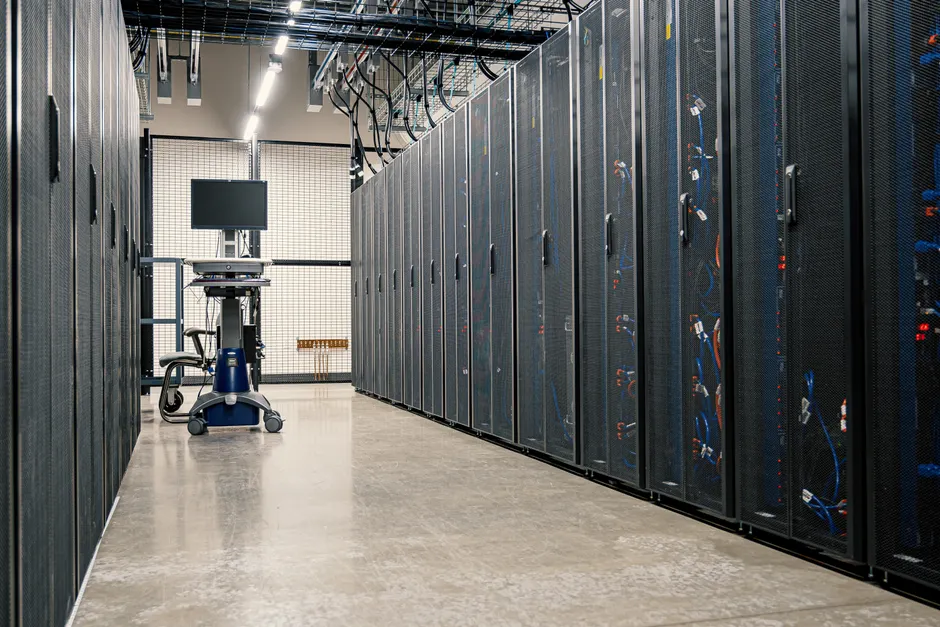
Anthropic plans to spend $518 billion on data center infrastructure in the coming years. Engadget
One part of that build appears in another company's filing. Akamai Technologies announced a significantly expanded relationship with Anthropic on Sept. 24, 2026, involving $11.6 billion of contractual commitment over seven years. SEC filing The full text of the Anthropic MSA will be filed as an exhibit to the Quarterly Report on Form 10-Q for the quarter ending Sept. 30, 2026. SEC filing
In my view, the contract follows a standard pattern for large cloud deals, but the commercial terms are not yet public. Take-or-pay terms, ramp schedules, and pass-through costs for power and networking were not disclosed in the facts available so far, and those terms will decide the real weight of the commitment.
IPO setup
Anthropic picked Nasdaq for its IPO listing. Bloomberg It is positioning for an October 2026 public offering. Yahoo Finance As of Sept. 19, 2026, Anthropic considered releasing a new AI model ahead of its IPO. Reuters
The prior private-market marker was a $13 billion Series F fundraising led by ICONIQ, which valued the company at $183 billion post-money. Anthropic Post-money means the value right after that investment, set in September 2025.
The broader context here is the clash between scaling laws and unit economics. Scaling laws describe how larger models and more computing tend to improve performance. Unit economics describe cost and profit per unit of use. Losses of this size followed by a profitable quarter on higher revenue point to fixed costs spread over more use as inference volume ramps, with pricing strength on advanced workloads. Two accounts providing 25% of Q2 revenue simplifies sales and capacity planning but raises renewal and negotiation risk.
In my view, the risk disclosure works as both legal protection and product guidance. Stating existential risk sets a legal baseline. Listing sabotage, fraud and manipulation from internal tests sets an operational baseline. It tells security leaders and platform teams what to test for, and it leaves Anthropic able to say those failure modes were disclosed and managed. For technical diligence, the useful question is how those test behaviors map to current guardrails, tool-use permissions, and agent audit trails, rather than treating the warning as abstract.
Looking ahead to the next 12 months, three questions are narrow and testable. Can Q2-level margins hold while the company commits hundreds of billions to capacity. Can concentration fall as the customer base widens. And can a pre-IPO model release sustain the run-rate climb from $9 billion to $65 billion without a matching rise in serving cost. The filing shows the shape of the bet. The 10-Q exhibits and quarters after listing will show the terms, and what this buildout could enable if those economics hold.