Yemen Accuses Houthis of Turning Air Defenses Into Heat-Seeking Cruise Missiles
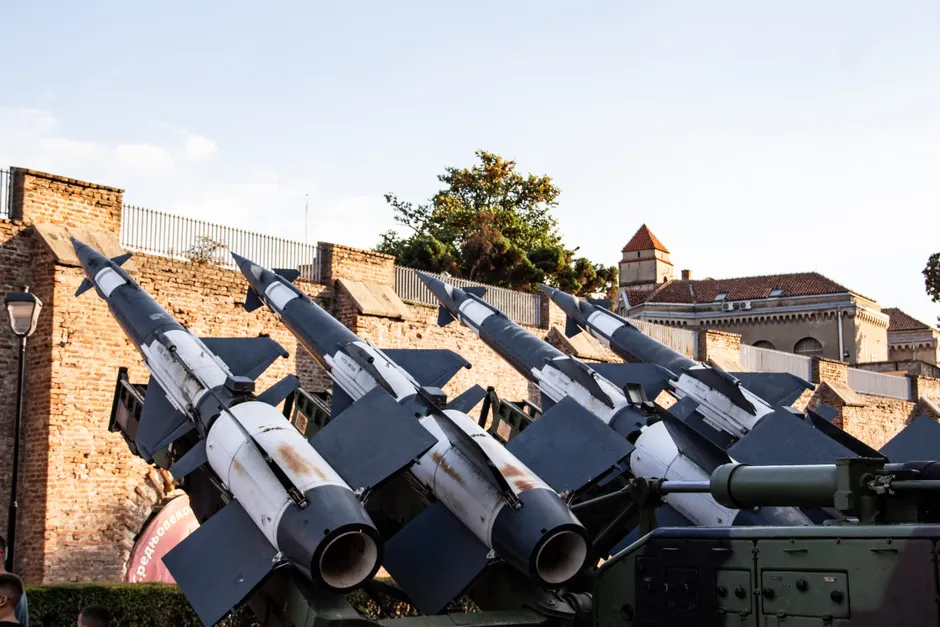
Yemen's Saudi-backed government accuses the Houthis of converting Iranian air-defence weapons into loitering cruise missiles with assistance from Iran's IRGC.
The IRGC is Iran's Islamic Revolutionary Guard Corps, a powerful military branch. The allegation centers on a conversion the government says produces a heat-tracking cruise missile that can wait in the air before striking. A ballistic missile arcs high and falls fast, while a cruise missile flies level and can change course.
Yemeni government forces spokesperson Brigadier General Majed al-Nazili said the modified missiles can loiter for up to 25 minutes per missile, according to a Sept. 29 report. Al Jazeera
Al-Nazili said the weapons operate using a thermal-tracking system and attack any heat source without distinguishing military or civilian targets. Yemen's government warned that the modified missiles operate on a heat-tracking system and threaten civilian air traffic over Yemen and the Red Sea.
The claim is unverified. It coincides with renewed cross-border strikes and a Houthi ground offensive along the Red Sea coast after years of relative halt.
Cross-border strikes
Riyadh said it intercepted six ballistic missiles aimed at Taif in western Saudi Arabia and the Yanbu port area on the Red Sea. The Houthis said they attacked a sensitive target in Riyadh and Saudi Aramco facilities in Yanbu. Al Jazeera
Houthi military spokesman Yahya Saree said the group used ballistic and cruise missiles as well as drones in the two operations against Saudi Arabia. The pairing of ballistic missiles, cruise missiles and drones matches the combination the Houthis have employed in prior strikes on Saudi territory.
To understand why Yanbu draws attention, Saudi Arabia's East-West Pipeline carries oil from its eastern oilfields to the western port of Yanbu and was restarting operations after damage from a drone attack in September 2026. A strike claim involving Yanbu therefore involves both a population center and export infrastructure.
Aided by Iran, the Houthi movement in Yemen is waging an intensifying campaign against civilian infrastructure targets in Saudi Arabia, according to a 2021 assessment. CSIS Riyadh has not detailed damage from the latest reported interceptions. The Houthis have not provided evidence for the effects they claimed in Riyadh and Yanbu.
Red Sea ground offensive
The Houthis fought Yemen's government and a Saudi-led coalition from 2014 until a UN-brokered ceasefire in 2022, and fighting reignited in recent weeks. In September 2026, Houthi fighters pushed to seize strategic heights in Yemen to cut off the Red Sea coast from remaining areas held by Saudi-backed forces. Reuters
In the month before September 21, 2026, Iran-backed Houthi militants in Yemen captured a swath of the Red Sea coastline and launched missiles and drones. CNN The Houthis have taken Yemen's Red Sea coast along with the city of Mocha and Mayyun Island in the Bab al-Mandeb strait, the narrow waterway linking the Red Sea to the Gulf of Aden.
In July 2026, the Houthis declared a naval blockade against Saudi Arabia in the Red Sea. On July 31, 2026, Houthi activists stood in front of a banner depicting Houthi missiles at an anti-Saudi Arabia rally in Sanaa, Yemen.
For context on what that coastal control could mean, control of Mocha and Mayyun Island would affect movement through the strait if sustained.
Yemen's military claimed its operations killed four Iranian drone and missile experts in Taiz Governorate. Institute for the Study of War That claim, like the IRGC-assistance allegation, attributes external technical support to the Houthi missile and drone effort.
Longer missile war
Missile exchanges around Yemen and the Gulf are not new. In October 2016, the US Navy launched five Tomahawk cruise missiles at three mobile radar sites in Houthi-controlled territory along Yemen's Red Sea coast. Al Jazeera
The United Arab Emirates said it intercepted and destroyed two ballistic missiles over Abu Dhabi that were fired by Yemen's Houthi rebels. Al Jazeera The Houthis revealed a new liquid-fueled ballistic missile named the Faleq. Iran Watch
Since 2015, the Houthi-Iran relationship has evolved and strengthened, enabling the Houthis to effectively threaten Yemen's government, according to a Defense Intelligence Agency assessment. DIA
The broader context here is a shift from a frozen front to parallel pressure: contested airspace, cross-border strike claims, and coastal ground gains. If loitering, thermal-tracking weapons were in use as described by al-Nazili, civil aviation authorities would face a different risk profile than from point-to-point ballistic fire, because loiter time extends the window for misidentification of heat sources.
Looking at what this means for diplomacy and operations, three questions carry weight. First, whether independent technical evidence emerges for the air-defence conversion. Second, whether interceptions over Taif and Yanbu deter further salvos or invite retaliation. Third, whether control of Mocha, the Red Sea coast and Mayyun Island hardens into a sustained blockade posture. Answers will shape civilian air-traffic guidance, pipeline restart calculations, and any renewed ceasefire effort.


