Gracie the Giraffe: How a Texas Ranch's Escaped Animal Was Found Alive

Gracie, a giraffe who escaped from Cedar Hollow Ranch near Leakey in Real County, Texas, has been found alive. She was located in a canyon corner of the property, near a gate enclosure and a steep rock face, according to News 4 San Antonio.
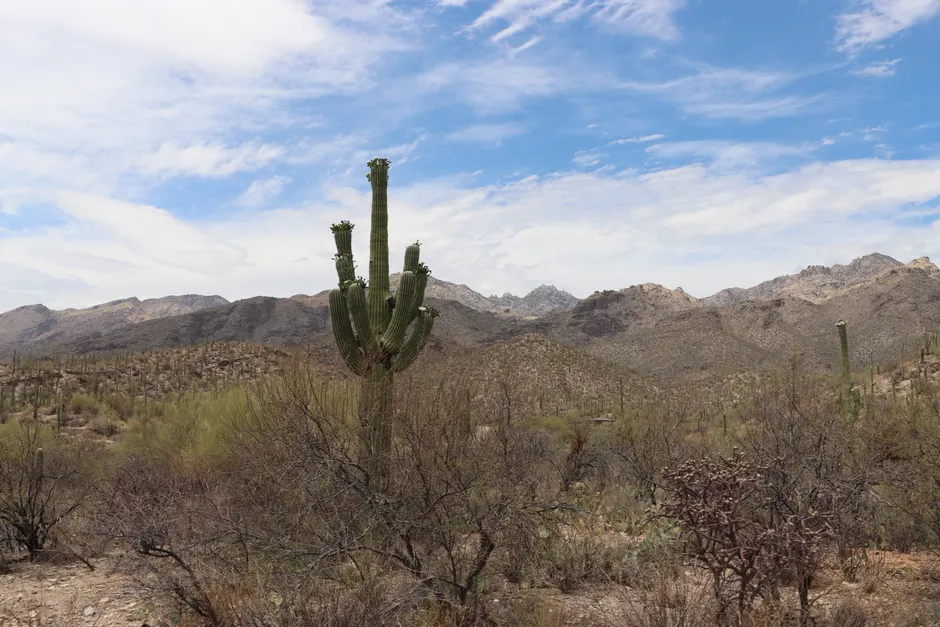
The animal disappeared on a Monday and was last recorded on a game camera west of Leakey before searchers expanded their efforts across the surrounding Hill Country terrain. Real County, a sparsely populated region of the Edwards Plateau in southwest Texas, is defined by rugged cedar-and-limestone landscape that supports native white-tailed deer and wild turkey. That same terrain—dramatic and broken—makes it difficult to spot a 15-foot-tall animal or for the animal itself to navigate safely.
The Real County Sheriff's Office coordinated public inquiries during the search, with ranch manager Vick Jones serving as the primary contact. The Real County Animal Rescue-Shelter shared alerts on social media, and a $5,000 reward was offered for information leading to Gracie's recovery, per the Houston Chronicle. As the story spread nationally through outlets including Yahoo News, ABC10, First Coast News, and FOX 7 Austin, Texas authorities coordinated a broader search across the Hill Country region.
The canyon location where Gracie was found—bounded by a gate enclosure on one side and a sheer rock face on the other—suggests that the terrain itself may have contained her for part of her time missing. Search descriptions emphasized rounded ears as an identifying feature, a detail revealing how seriously officials took the possibility that a member of the public unfamiliar with giraffe characteristics might spot her.
Private game ranches and exotic animal operations are established throughout the Texas Hill Country, where the Edwards Plateau's mild winters and open range create one of the densest concentrations of non-native wildlife outside sub-Saharan Africa. Giraffes fall under the federal Captive Wildlife Safety Act and require permits from the Texas Parks and Wildlife Department. They can cover significant distances when stressed or displaced. Their low-frequency vocalizations—infrasound, essentially—make them difficult to locate by sound alone in broken terrain. The canyon that contained Gracie may have functioned as both shelter and constraint.
The quick resolution—alert issued, reward posted, animal recovered within a short timeframe—reflects how effective multi-channel public alerts can be in rural Texas. The combination of sheriff's office outreach, social media, and local news reaches ranchers, hunters, and landowners with eyes on remote property. The $5,000 reward likely sharpened attention considerably.
No injuries to Gracie or to any persons were reported. The broader context here involves how Gracie escaped Cedar Hollow Ranch in the first place, and whether regulatory review follows. As of June 24, 2026, neither has been publicly addressed. It also raises a quieter question: how many similar escapes occur at private wildlife facilities across Texas, and whether the permitting system adequately accounts for containment risk in a landscape where distance and terrain can mask problems until they become public.