Samsung's Memory Chip Profits Skyrocket as AI Demand Strains Supply

Samsung's Memory Chip Profits Skyrocket as AI Demand Strains Supply
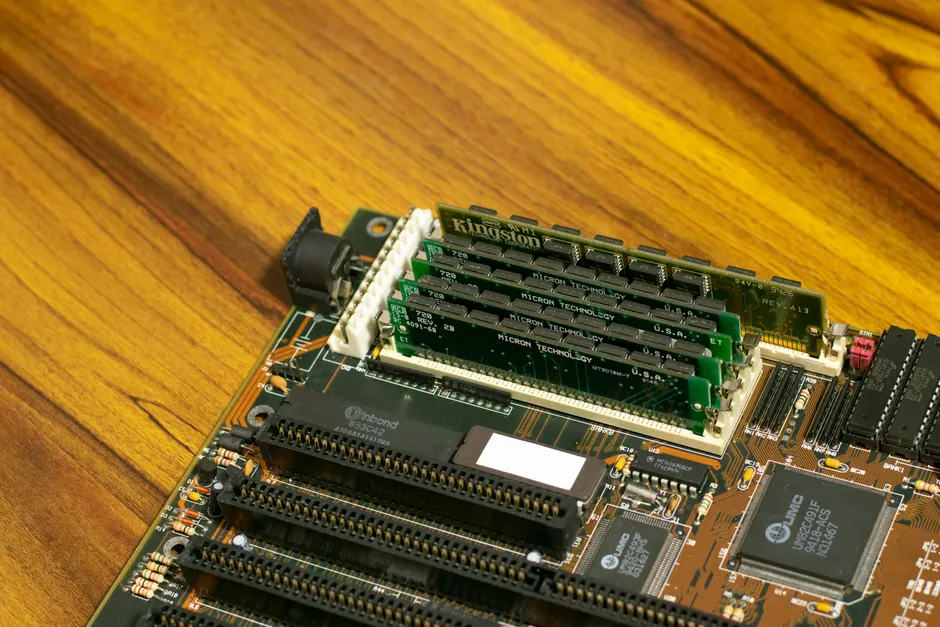
Samsung Electronics reported a 48-fold increase in semiconductor division profit for the first quarter of 2026, driven by a severe shortage of memory chips. Enterprise customers and large cloud providers are competing fiercely for available supplies to power AI systems. The South Korean company's memory division hit record earnings as server DRAM and NAND prices continued climbing following significant increases announced in late 2025.
Samsung warned that shortages will worsen through 2026 and into 2027 as companies rush to build AI infrastructure faster than factories can produce chips. The company raised server memory prices substantially in late 2025, and executives expect further increases as memory chip shortages raise costs across the entire electronics industry.
The Shortage Spreads Beyond Data Centers
The memory crunch is not limited to large cloud providers building AI servers. Chinese smartphone makers like Xiaomi and Realme have warned they may raise device prices due to soaring memory chip costs. Even Samsung's own mobile and network divisions are seeing declining profits as component costs rise faster than prices in the consumer market.
Samsung's co-CEO acknowledged in January 2026 that the company was not immune to the unprecedented memory shortage, despite being the world's largest memory manufacturer. This admission shows how rapidly AI demand has outpaced the industry's ability to plan and produce new capacity.
The shortage affects two main types of memory chips. DRAM (the faster memory used for active computing) and NAND (the slower storage that holds data long-term) are both in short supply. High-bandwidth memory, or HBM — a specialized chip type designed specifically for AI accelerators — commands especially high prices. Delivery times for these chips now stretch far beyond the typical three-month procurement window.
Large Customers Lock in Supply Early
Major cloud providers and enterprise customers are now signing long-term contracts months in advance to secure memory supplies. This shift away from spot-market buying — where companies could purchase chips as needed — reflects how serious the crunch has become. While these advance agreements limit flexibility, they guarantee inventory for companies building large AI systems.
Manufacturing plants are prioritizing expensive server and data center chips over consumer products, which bring in less profit per unit. This means smartphone makers and other consumer electronics companies are left competing for older, less advanced chip inventory at inflated prices.
We saw similar supply crunches before, most notably during the smartphone boom of the early 2010s, when suddenly everyone needed mobile processors and flash memory at once and factories could not keep pace. The parallel is useful but incomplete: today's AI buildout requires vastly more computing power per application than early smartphones did. The scale is categorically different.
Why This Matters for AI Infrastructure
The memory shortage exposes a fundamental weakness in how the semiconductor industry plans and builds new capacity. Even though Samsung, SK Hynix, and Micron are investing tens of billions of dollars in new factories, it takes years to build and qualify a new fab (factory). Supply relief will not arrive until late 2027 at the earliest, according to industry forecasts.
For any company trying to build AI infrastructure, this creates real problems. Organizations without the buying power of a hyperscale tech giant may struggle to secure enough memory chips, which could delay data center projects and slow their ability to deploy AI services. Smaller AI companies face the biggest challenges here, since they lack the negotiating strength of companies like Google or Meta.
The memory shortage also affects supporting components — the chips that manage power, the substrates that hold chips together, and cooling systems. When one critical part becomes scarce, ripples spread through the entire supply chain. It is also worth noting that advanced memory production is concentrated in just a few countries: South Korea, Taiwan, and select locations in Japan and the United States. That geographic concentration creates vulnerability.
Smartphone AI Push Continues Despite Rising Costs
Samsung plans to double the number of AI-enabled mobile devices to 800 million units in 2026, using Google's Gemini AI to run tasks directly on the phone rather than sending data to the cloud. The ambitious goal reflects strong consumer interest in AI features, even though rising component costs are shrinking the profit margin on each device.
Mobile AI has different memory requirements than traditional smartphones. These devices need more storage to hold AI models and user data. These added requirements compound the overall memory shortage while also creating new opportunities for memory makers willing to reserve supplies for the mobile market.
Looking ahead, the next couple of years will test which companies can navigate this supply squeeze effectively while investing for future growth. Those that secure adequate supplies and build capacity in time will be well-positioned as AI adoption spreads across business and consumer markets. Companies that cannot access the chips they need risk falling behind in a technology transition that shows no sign of slowing.
The broader context here is that AI has moved remarkably fast from a research curiosity to a core production system requiring enormous computational resources. In this author's view, how the industry manages this supply constraint over the next 18 months will shape the competitive landscape for AI deployment for years to come. Memory will remain the fundamental bottleneck determining how quickly and widely AI can be deployed across the technology industry.