How a Texas Battery Startup Is Bypassing the Grid's Biggest Bottleneck
How a Texas Battery Startup Is Bypassing the Grid's Biggest Bottleneck
Base Power, an Austin-based company, has expanded outside Texas for the first time, moving into northern Illinois. But the way it's doing so reveals a clever workaround to one of the electricity industry's most frustrating problems: the interconnection queue.
Most battery storage projects that want to sell power back to the grid have to wait years for approval. PJM Interconnection — the massive grid operator that covers most of the eastern United States — has over 3,000 projects waiting to be connected, with typical waits stretching past three years. Base Power is sidestepping that entirely.
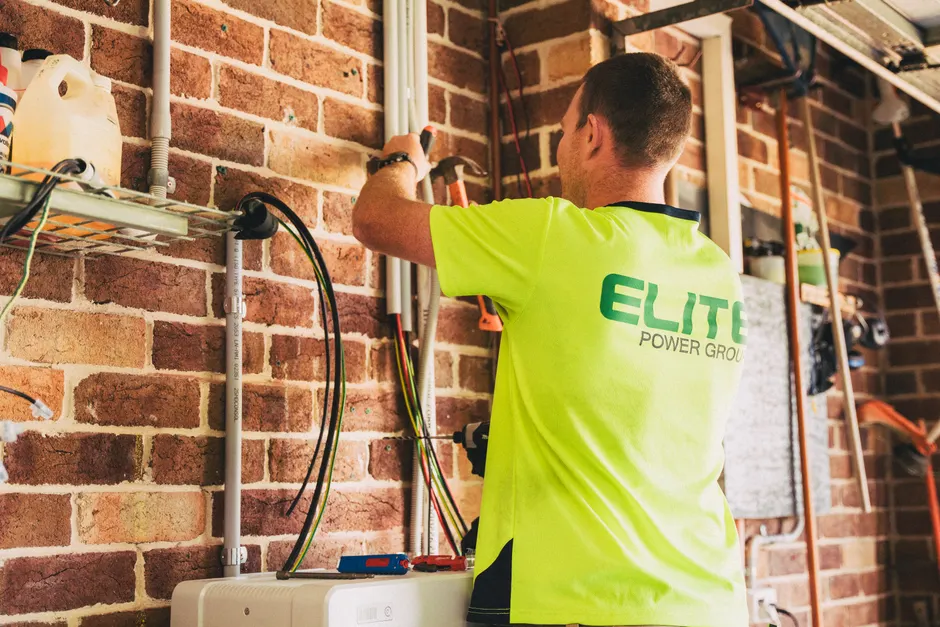
The trick: instead of installing a centralized battery storage system and waiting for grid approval, Base Power has secured a retail electricity license in the service area operated by Commonwealth Edison Company, according to Latitude Media reporting in April. This license lets the company place batteries inside individual homes — behind the meter, in industry terms. From a regulatory standpoint, these batteries look like customer equipment, not grid infrastructure, so they skip the long approval process entirely. Behind the scenes, those scattered home batteries link together into what's called a virtual power plant: a network that can collectively sell power back to the grid and respond to demand signals.
How It Works for Homeowners and the Company
The deal is straightforward. A homeowner gets a battery installed at home for a monthly fee. In exchange, they have backup power during outages — increasingly valuable as extreme weather makes blackouts more common. Base Power keeps the right to dispatch that battery's stored energy to the grid when prices are high or when the system needs it most.
The homeowner avoids the expense and hassle of owning and maintaining a standalone backup system. Base Power builds a fleet of thousands of distributed batteries across multiple states that can be controlled remotely, which it can then sell into electricity markets — generating revenue from capacity payments, energy trading, and grid services.
According to reporting by Reuters in October 2025, Base Power raised $1 billion in its latest financing round, led by the investment firm Addition, with participation from Andreessen Horowitz. The company is run by Zach Dell, son of Michael Dell. That scale of funding matters because deploying and maintaining batteries across thousands of homes is much heavier operational work than most software companies face. The $1 billion reflects investors' belief that this model — hardware deployment at residential scale — is worth the capital and operational complexity.
Why PJM, and Why Now
PJM operates the largest wholesale electricity market in the United States, serving roughly 65 million people across 13 states and the District of Columbia. It's under real strain. Its capacity markets — auctions where power suppliers bid to meet future demand — are clearing at much higher prices than a few years ago. Data centers and the transition to electric heating and vehicles are pushing electricity demand upward faster than new power plants are being built. That creates an opportunity for flexible, on-demand resources like batteries.
Base Power perfected its model in Texas, where the electricity market is deregulated and retail competition is normal. The February 2021 winter storm, which left millions without power, also created strong consumer appetite for backup systems. Illinois and PJM present different conditions: different rules, different utilities, different customer expectations. Translating a working Texas playbook to the East Coast is not automatic, but the retail license structure gives Base Power a faster path than it would have as a traditional grid developer.
The regulatory workaround here deserves attention. As virtual power plants grow larger and more sophisticated, the line between "retail electricity provider" and "grid resource" will eventually blur. FERC Order 2222, a federal rule issued a few years ago, requires grid operators to open their markets to aggregated customer-owned energy systems. But how each region implements those rules varies, and PJM is still writing its own playbook. Whether Base Power's retail license approach remains workable as its fleet in Illinois grows, and whether regulators might eventually require the company to follow the standard interconnection process anyway, remains an open question.
The deeper point: this model shows how companies can navigate regulatory constraints that were written before this type of technology existed. That's not unique to Base Power, and utilities and regulators are paying close attention. The company's Illinois expansion is a test case — it will tell us whether the approach scales, whether customer acquisition works outside Texas, and whether regulators ultimately accept it or tighten the rules.