A Moor Fire in Glossop Closes a Major Peak District Road

A Moor Fire in Glossop Closes a Major Peak District Road
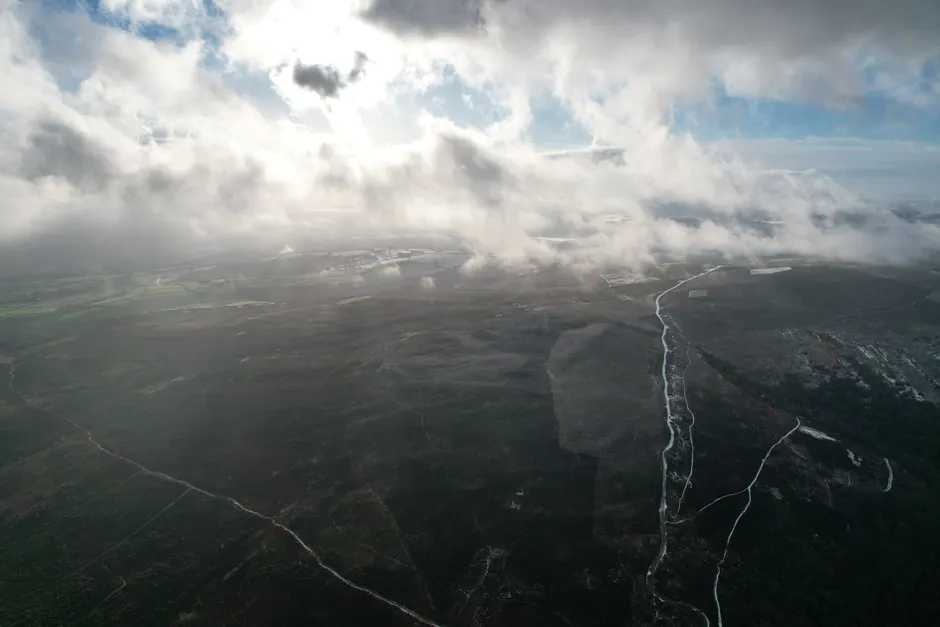
A wildfire broke out on Tintwistle Moor near Glossop late on 24 June 2026, prompting firefighters from two counties to mobilize and forcing the closure of a key route through the Pennines.
Derbyshire Fire and Rescue Service received the first call at 22:11 on 24 June. By 11:00 on Thursday 25 June, crews had established that the fire had burned through approximately 400 square metres of moorland and woodland. The fire was relatively contained at that point, though moorland fires can spread quickly in dry, windy weather when the peat and heather beneath the surface are desiccated — essentially dried out and primed to burn.
Both Derbyshire and Greater Manchester fire services deployed crews to the scene, backed by a water carrier vehicle. This cross-county response is typical for moorland fires in this area. Tintwistle sits in Tameside but borders the Derbyshire uplands; the terrain is steep, remote, and has limited road access, so firefighters need help from neighboring services and specialized equipment to respond effectively.
The closure of the A628 Woodhead Pass, in both directions between the A57 and A616 junctions, disrupted significant traffic. The A628 is the main route for heavy goods vehicles moving between Greater Manchester and South Yorkshire, threading through the Longdendale Valley at altitude. When both directions close, trucks get rerouted onto the A57 Snake Pass or the M62 corridor — adding considerable travel time for logistics operators.
The 400 square metre figure recorded at 11:00 on 25 June should be understood as a snapshot, not the final extent of the fire. Moorland wildfires are difficult to contain at night. Limited visibility from the air, uneven ground, and smoldering deep within peat layers can allow the fire to spread before dawn, with the visible edge understating what's burning beneath the surface. Whether the fire grew further after that 11:00 assessment remains unconfirmed in available sources.
The timing — late June, following a period of heightened wildfire risk across upland England — fits a familiar seasonal pattern for the South Pennines. The moors above Glossop and Tintwistle have experienced repeated fires in recent years. The dominant land cover here is degraded blanket bog and managed grouse moorland, both of which carry high fuel loads when dry. Restoration of Sphagnum moss — the spongy plant that naturally holds water — is being actively pursued by groups including Moors for the Future Partnership. Wet peat burns less readily, but this restoration work is a decades-long process, leaving large areas still vulnerable in the near term.
Fighting moorland fires poses specific challenges distinct from structural fires. Water supply is the critical bottleneck; access tracks limit where fire engines can position themselves; and the risk that crews could become trapped if the fire shifts unexpectedly means careful sector management. The dedicated water carrier deployed here reflects standard moorland protocols, where tanker shuttles to static water sources or streams substitute for the hydrant infrastructure that does not exist at altitude.
No casualties or property damage were reported in verified coverage of this incident.
From a wider view, this fire sits within a growing challenge for rural England. The South Pennines have shifted toward drier conditions in recent decades, and the mix of degraded bog, managed moorland, and limited restoration capacity means large acreages remain kindling-like during summer months. Each incident of this scale requires substantial cross-border coordination and diverts emergency resources from other duties. The closure of a trans-Pennine artery, even temporarily, ripples through regional logistics and commuter patterns — a reminder that wildfire risk, once thought of as a distant or exceptional threat, now shapes planning and response across upland Britain.