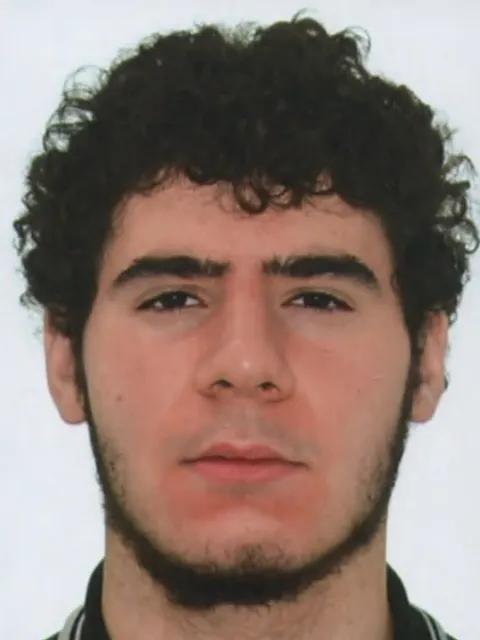
German Court Sentences Magdeburg Market Attacker to Life

A German court sentenced Taleb Al-Abdulmohsen to life in prison on Friday, 26 June 2026, for the car-ramming attack on the Magdeburg Christmas market that killed six people and injured hundreds more, Reuters reported.
Al-Abdulmohsen, a Saudi national and psychiatrist who had legally resided in Germany, drove a rented BMW into a crowded Christmas market on a December evening in 2020. The attack ranks among the deadliest on German soil in recent decades. The victims included four women aged 45, 52, 67, and 75, and André Gleissner, a nine-year-old boy, according to the BBC. Al-Abdulmohsen was arrested at the scene and remained in custody throughout the trial.
The Attack and Its Victims
Magdeburg's Christmas market, located in the eastern German state of Saxony-Anhalt, draws tens of thousands of visitors each December. Al-Abdulmohsen steered the vehicle through a pedestrian corridor filled with families and shoppers, inflicting mass casualties within seconds. The use of a rental car required no special preparation—a vulnerability that European security agencies have monitored closely since a 2016 truck attack at a Berlin market killed twelve people.
The victims' ages — from a schoolboy to a woman in her seventies — reflect the indiscriminate nature of vehicle-ramming attacks. Christmas markets concentrate vulnerable populations—children, families, elderly visitors—in open spaces with minimal barriers, making them susceptible to such tactics.
The Defendant and the Trial
Al-Abdulmohsen's profile complicated straightforward categorization. He was a licensed doctor with no prior criminal record and years of legal residence in Germany. In statements before and after the attack, he cited various political and ideological grievances. Prosecutors and the court examined this material throughout a trial that extended from 2025 into 2026.
Under German law, courts can impose Sicherungsverwahrung—preventive detention—alongside a life sentence when a defendant poses a serious ongoing threat. The court may also designate a sentence with besondere Schwere der Schuld, or particular gravity of guilt, which effectively extends the minimum prison term and makes early release unlikely. The scale of deaths and injuries in the Magdeburg attack typically satisfies the threshold for this designation.
In German criminal law, a life sentence carries a minimum of fifteen years before parole review. The breadth and severity of the Magdeburg attack—both fatalities and the hundreds injured—would ordinarily support a designation of particular gravity, effectively lengthening the minimum term.
Broader Context
The verdict arrives as Germany reassesses its approach to protecting public gatherings following multiple attacks on crowded spaces. The Magdeburg incident accelerated policy discussions about hardening Christmas markets and other large events, though security measures differ by state—a reflection of Germany's federal system, where individual Länder (states) lead on law enforcement.
The case also intersected with a political debate about residency, immigration, and how Germany manages individuals whose legal status changes over time. Al-Abdulmohsen had been a lawful resident for years before the attack. This fact appeared frequently in Bundestag debates afterward, though the specifics of his case—long-term legal residence—differ from cases involving asylum seekers who entered irregularly. That distinction did not always feature prominently in public discussion.
For victims' families and survivors, the life sentence concludes the criminal case but not the longer work of healing and compensation. German law provides structured state support and financial compensation for victims of politically motivated violence, processes that run parallel to—and extend well beyond—the criminal trial. André Gleissner was nine years old when he died. The four women who died spanned three generations. The sentence establishes legal accountability. It cannot restore what was lost that December evening.