Three Tankers Hit in Hormuz: Why This Narrow Waterway Matters
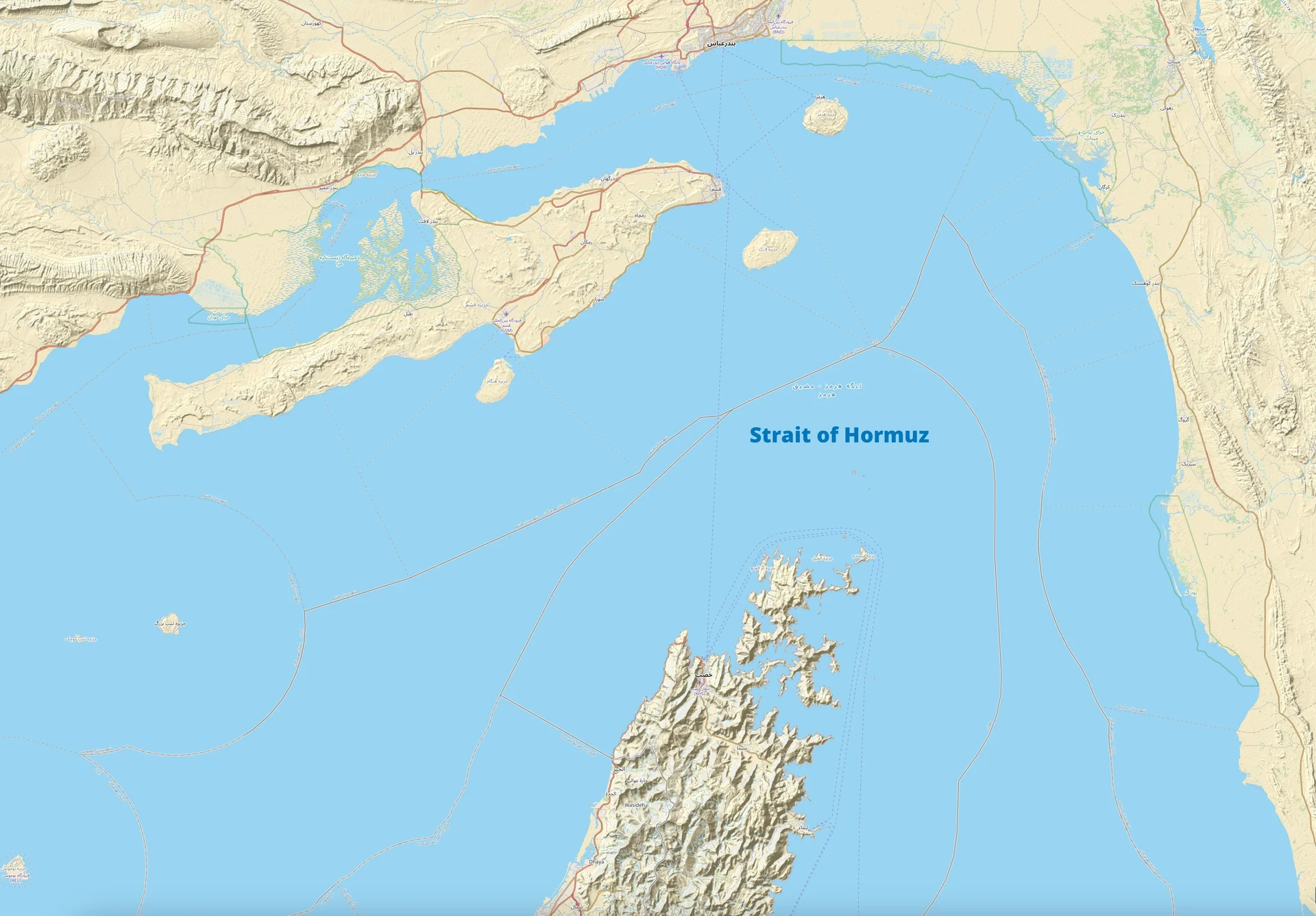
Three Liberian-flagged oil tankers were struck by unknown projectiles while transiting the Strait of Hormuz. The strikes were reported on 1 October by maritime security firm Marisks and cited by Reuters. It is the latest direct hit on commercial shipping in the waterway.
The United Kingdom Maritime Trade Operations (UKMTO), which monitors merchant traffic, logged a third-party report of a tanker struck by an unknown projectile during a Strait transit. It separately listed a suspicious activity incident dated 28/09/2026 involving a tanker struck within the Strait. The Joint Maritime Information Center (JMIC), which advises commercial operators, assesses the threat level as SEVERE in Advisory Note Update 101. Deliberate attacks are considered highly likely.
That reverses an earlier posture. Advisory Note Update 072, dated 16 July, reported no maritime attacks or hostile approaches and assessed the threat to commercial shipping as unlikely. The October update supersedes it. Iran has repeatedly threatened and attacked ships passing through the Strait, according to an Encyclopaedia Britannica chronology updated 1 October. The pattern in 2026 has combined claims of closure, selective targeting, and U.S. counter-strikes on Iranian-linked tonnage.
A chokepoint under pressure
About 60 commercial vessels of all types transited the Strait on a Wednesday reported in late September, per shiptracking data cited by Reuters. That compares with early spring, when only five cargo ships passed through on a Wednesday reported in April, none carrying oil, according to The New York Times. Like a narrow bridge that slows all traffic when part is blocked, the Strait keeps working at lower volume.
The distinction between crude and other cargo matters. Iranian crude continued to flow through the Strait even as Gulf neighbors' exports were shut, Reuters reported on 12 March. Tehran retains an ability to export while denying or deterring use by others.
September brought a sharp exchange of claims. Iran said it had attacked 10 ships near the Strait. The United States had sunk five Iranian oil tankers before that reported attack, according to Reuters. Days later, Iran said one person was killed and four crew were wounded aboard an Iranian commercial vessel struck off its coast, in reporting dated 13 September.
Closure declarations and blockade
The current phase began with effective closure in March. Iranian attacks on ships effectively closed the Strait on Iran's southern coast, a live briefing noted on 19 March. By 20 March, Iran had effectively closed the Strait to most Western ships, prompting U.S. attacks on Iranian targets intended to reopen it, under the headline 'U.S. Attacks Iranian Targets to Try to Open Strait of Hormuz' in The New York Times.
Washington later said it had fired on two Iranian-flagged oil tankers on a Friday reported in May. Tehran answered in July by opening fire on commercial vessels in the Strait after U.S. bombing, and by announcing closure of the Strait until further notice, according to Al Jazeera. The United States reimposed a naval blockade on Iran. A blockade is a naval effort to stop ships reaching a country. Oil prices climbed about 2% to a one-month high on a Tuesday reported in July as both sides stepped up attacks in the Strait, Reuters reported.
Closure, blockade, and interdiction describe different legal authorities. Interdiction means stopping and checking ships. In practice they converge on the same outcome for operators. Permission, flag, cargo, and destination affect risk. Flag here means the country where a tanker is registered, such as Liberia.
The broader context here is a shift from harassment to sustained denial mixed with selective use. Five transits in a day, with zero oil liftings, indicated deterrence had succeeded without a formal legal closure. The September figure of around 60 transits suggests adaptation by some owners and charterers, possibly smaller parcels, non-oil cargoes, or higher risk tolerance. It does not indicate normalization.
Looking ahead, three variables will determine the next phase. The first is attribution and flag pattern. The 1 October hits involved Liberian-flagged tankers and unknown projectiles. That profile complicates response decisions and war-risk pricing, the extra insurance cost for sailing in danger zones. The second is the U.S.-Iran tanker exchange ratio. Sinkings of Iranian-flagged crude carriers invite retaliation against third-party hulls, spreading cost beyond the belligerents. The third is enforcement of the U.S. naval blockade alongside Iran's declared closure. Two competing exclusion regimes create overlapping inspection, diversion, and targeting risks in confined waters.
Stepping back, the outlook for energy and insurance markets is volatility with a floor. A 2% rise in July was modest given the stakes. It reflected spare capacity expectations and reduced Gulf flows already priced in. Further strikes on laden crude carriers would test that assumption. For diplomacy, the Strait remains both lever and tripwire. Each side can calibrate pressure short of full closure while preserving escalation options. Commercial crews absorb the immediate exposure.


