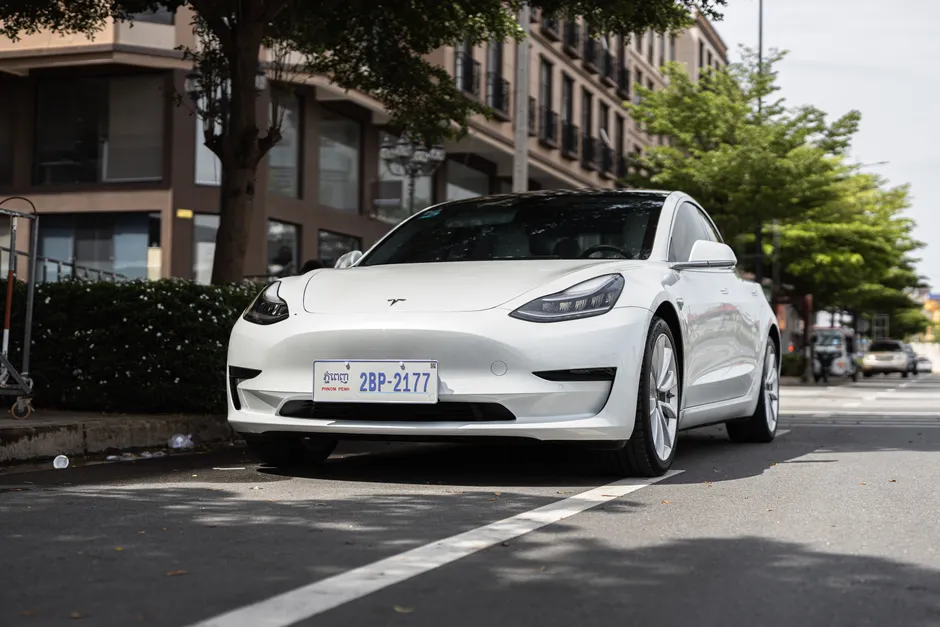
Tesla Holds Near Record Pace With 486,532 Deliveries in Q3

Tesla delivered more than 486,532 vehicles in the third quarter of 2026. The company built 464,391 vehicles in the same period, so sales ran ahead of factory output TechCrunch.
That total sits just below the 497,000 vehicles delivered in the third quarter of 2025. That quarter is still the company's best for sales. The year-over-year gap is about 10,000 units, keeping Tesla in the high-volume band it set last fall.
Deliveries were about 6,000 vehicles above the second quarter, and above build in both quarters. In the second quarter of 2026, Tesla produced over 450,000 vehicles and delivered over 480,000 Tesla Investor Relations. The fourth quarter of 2025 closed with over 418,000 deliveries. The first quarter of 2026 was the weakest delivery quarter in a year and missed Wall Street expectations Reuters.
Expectations for the third quarter ranged widely, from 421,758 to 482,000 vehicles Electrek. Barclays pointed to 475,000 deliveries. Goldman Sachs had cut its estimate to 435,000. Tesla Investor Relations listed a Q3 2026 Delivery Consensus dated September 29, 2026.
On scale, Tesla built its 10 millionth vehicle earlier in 2026. Third-quarter build of 464,391 compares with over 447,000 in the third quarter of 2025. Output has held above 440,000 across those quarters, while deliveries have cleared 480,000 in the last two.
Energy storage is the second line of the business. Tesla deployed 13.5 GWh of storage in the second quarter of 2026, with GWh meaning gigawatt-hours of battery capacity. Deployment was 12.5 GWh in the third quarter of 2025. No third-quarter 2026 storage figure was in the delivery disclosure.
The broader context here is stable throughput at high volume. Two quarters above 480,000 deliveries with production in the mid-400,000s means clearing finished cars rather than adding factory capacity. For operators, that build-to-delivery gap, the cars sold from inventory, matters more for transport, cash tied up in stock, and delivery-center load than for cell supply or line speed.
In my view, the forecast spread is as instructive as the headline. A range of more than 60,000 units, with major banks on opposite sides, points to models struggling with regional mix and timing of cars still in transit. Worth flagging for tech readers who use Tesla as an EV demand gauge: the data show volume holding at scale, not pushing past the prior peak. That distinction matters for suppliers, charging planners, and fleet buyers setting schedules.
Over the long arc, holding near-peak volume past 10 million cumulative vehicles gives Tesla continued leverage for software iteration, service learning, and cost reduction. The quarter did not raise the ceiling from 2025. It defended the floor rebuilt after a soft start to 2026.