Stability AI Is Rebuilding Itself Around Tools for Music Pros
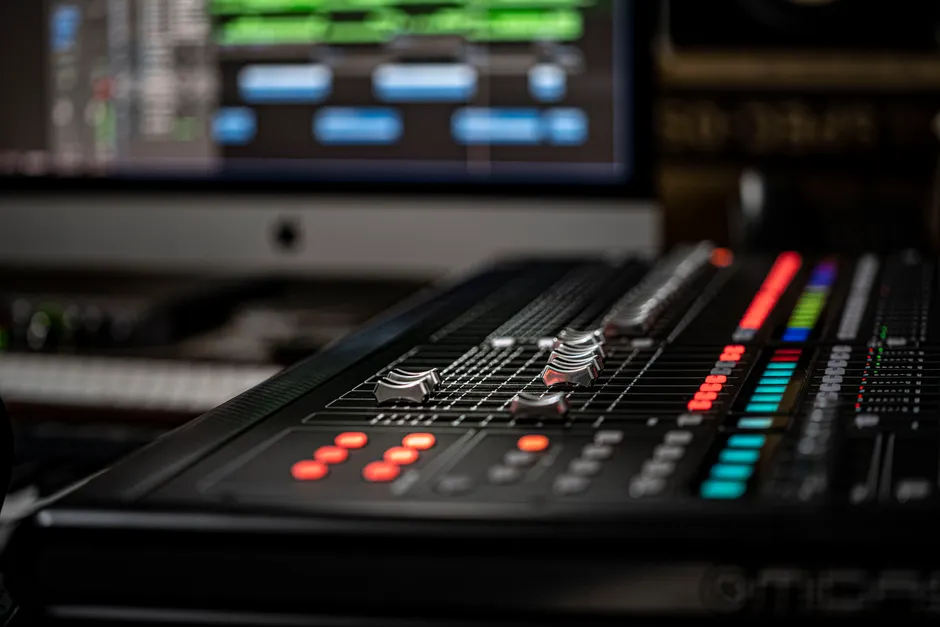
Stability AI aims to become the go-to AI toolmaker for music professionals.
That account, published Oct. 2, 2026, describes a company rebuilt around audio after two years of financial stress and leadership change.
Sean Parker, the co-founder of Napster, is driving the reset alongside CEO Prem Akkaraju TechCrunch. Parker joined an $80 million rescue after founder Emad Mostaque was ousted. Akkaraju then became CEO. Parker joined the board as Executive Chairman, according to a June 2024 company notice. Parker is a former President of Facebook. Akkaraju joined as CEO in 2024 Variety.
Stability AI is a British artificial intelligence startup. In May 2024, it was reported to be in talks with a group of investors for a large equity investment to inject funds Reuters.
The music strategy is tied to funding. Stability AI announced $76 million in funding in late August 2026. That round was a Series B, a later-stage startup round used to scale the business. Sony, Warner and Universal participated. Electronic Arts participated. Eric Schmidt participated. Total funding reached $232 million after the Series B closed Stability AI.
As part of the funding deal, Sony, Warner and Universal licensed their catalogs to Stability AI for training. For teams building generative audio, or AI that creates sound from learned patterns, the training material shifts from scraped, meaning collected from the open web, to contracted. Questions stay around outputs, likeness, and downstream liability, or who carries the legal risk for what the model produces.
On product, Stability AI released three new audio models and AI music-editing software. The system can generate whole instrumental tracks or short snippets from text prompts, or written descriptions. An upcoming update will let users hum a melody or beatbox a drum pattern to steer music generation.
There is a parallel entertainment thread. Robert Legato is joining Stability AI as Chief Pipeline Architect. Legato is a visual effects pioneer behind Avatar, Titanic, The Lion King (2019), and Jungle Book. James Cameron is a backer of Stability AI Variety.
The broader context here is a shift from foundation-model scale to vertical tooling, from big do-everything models to focused tools for one job. Stability AI first gained attention for open image generation. The current plan narrows that ambition. One vertical. Professional users. Paid data. Native editing.
In my view, that narrowing is pragmatic, like a workshop choosing one craft to do well. General audio generation is easy to demo and hard to ship in a studio. Studios need stems, the separate tracks for drums, bass and other parts, timing control, key and tempo adherence, and clean rights. A compelling 30-second clip still fails if an editor cannot cut it, extend it, or clear it. Licensed catalogs and an editor address clearance and workflow in the same move.
For practitioners, it is worth flagging what remains unspecified in the verified facts. There is no public detail here on sample rate, or audio quality level, stem separation, latency, or response delay, DAW integration, or how the tool plugs into standard recording software, or indemnification terms, or who pays if a rights claim arises. Those details will decide adoption. Music professionals tolerate experimentation. They do not tolerate missed deadlines or uncertain ownership.
My kids grew up with infinite music on tap. They never thought about where a track came from. Professionals cannot afford that indifference. If Stability AI can make licensed generation feel as fast as unlicensed generation, it will have solved a real bottleneck. That outcome is still to be proven. The structure, at least, is now legible. Capital, catalogs, and tooling are aligned around the same user.


