3D Movies Are Worth a Second Look on Video Glasses
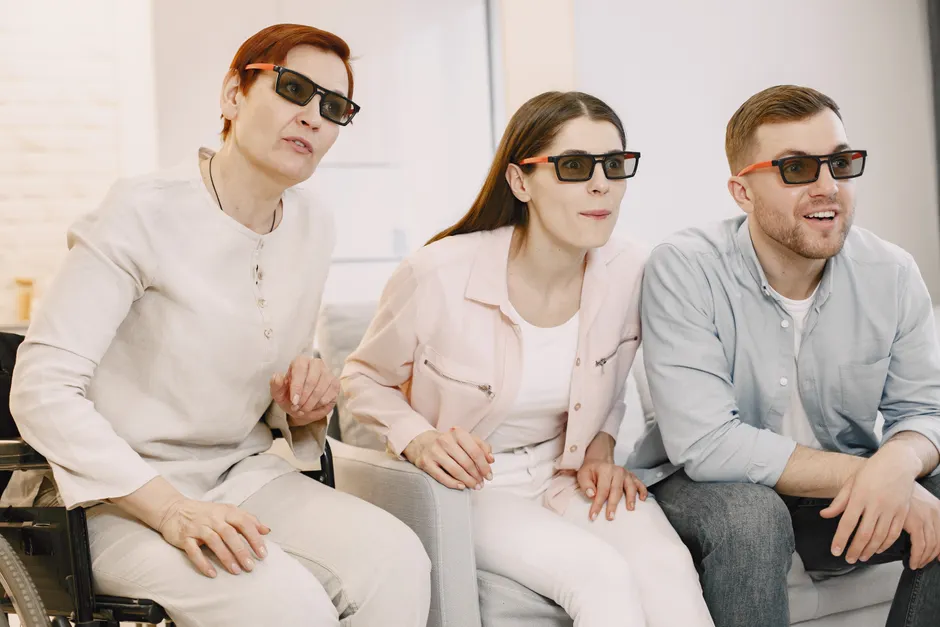
3D movies are worth watching again on video glasses and headsets, more than 15 years after James Cameron's Avatar. That is the argument of a feature published Oct. 3, 2026, which points to current headsets and tethered glasses as a private display for stereoscopic film, or film that feeds separate left and right images to create depth The Verge.
Avatar became the highest-grossing film worldwide and set the template for the last theatrical 3D cycle. The franchise retains box-office weight. The third Avatar film opened with $345 million at the global box office, topping charts in the United States and Canada with $88 million there according to Disney Reuters.
The display problem that sank living-room 3D is absent here. The Xreal One Pro provides a large flat private theater screen for plugged-in devices. The virtual image is specified as feeling like a 171-inch screen using micro-OLED, a display type that is very bright and switches quickly The Verge. For readers who follow specs, the parameters that count are brightness, pixel persistence, or how long each pixel stays lit, and binocular overlap, or how much the left and right views overlap, not raw diagonal size. A fixed large virtual plane with no crosstalk, or ghost light leaking between eyes, changes viewing comfort in a way shutter glasses on LCD TVs never solved.
Tethered glasses and side-by-side input
Xreal glasses must be plugged with USB-C into a source of 3D content such as a laptop, handheld, or phone. Pressing and holding the right button provides independent left and right views for side-by-side (SBS) 3D content, giving full 1080p per eye with proper content.
That implementation matters. SBS packs two 960x1080 halves into a 1920x1080 frame. The glasses split the frame and scale each half to its own microdisplay. There is no polarization loss, or dimming from filter glasses. There is no active shutter flicker. Input latency stays tied to the USB-C DisplayPort Alt Mode path, or video sent directly over USB-C, which keeps motion handling predictable for 24p film, the 24-frames-per-second cinema standard.
XREAL documents the same path across its lineup. The One Series includes REAL 3D, which converts any 2D content into real-time 3D stereoscopic visuals. The 1S is listed with a 500-inch spatial screen and the ability to turn 2D content into 3D. The operating menus expose a 3D Mode to watch 3D movies, and the XBX A01+ glasses support SBS content, in which left-eye and right-eye images are displayed side by side.
Depth estimated from 2D is not the same as native stereo pairs, or true 3D shot with two lenses. The distinction is visible in occlusion edges, where one object blocks another, and specular highlights, or bright reflections. Native SBS rips from 3D Blu-ray or downloads preserve director-timed parallax, the shift between left and right views. Real-time conversion is useful for casual viewing but introduces flattening and haloing on complex geometry.
Capture is moving downmarket in parallel. The Xreal Beam Pro has a dual camera rig that shoots 1080p 3D video and 50-megapixel 3D photos for playback in glasses The Verge. At the high end, Billie Eilish's concert film was shot by Cameron with 16 twin cameras including four remote-controlled AGITO camera rigs. The two setups differ. One uses baseline-spaced sensors, or two lenses set eye-width apart, for personal spatial clips. The other uses genlocked cinema pairs, or cameras locked in sync, with precision interaxial control, or exact distance between lenses.
VR headsets and native streaming
Video player apps on Meta Quest and Steam Frame include SBS 3D toggles, or on-screen switches, while Apple Vision Pro and upcoming Meta VR Glasses natively stream 3D films.
On Quest, Bigscreen is described as a VR movie theater that lets users watch 3D movies with friends in a virtual theater. It supports 3D movies in Side-by-Side 3D or Over-Under 3D formats, where halves are stacked top and bottom. Over-under trades horizontal resolution for full-width halves, which suits certain encodes and broadcast masters. SBS preserves horizontal detail at the cost of vertical downscale per eye. Having both toggles in player software removes transcoding, or converting files in advance, from the workflow.
Distribution is following. Bigscreen and Paramount Pictures announced a multi-year agreement to distribute 3D and 2D films in VR across 10 countries. Meta's VR entertainment page states users can stream creators in immersive 3D. The model is rental and purchase inside a social theater instance, not sideloaded files alone, or files you copy over yourself.
Apple's path is more integrated. Apple Vision Pro provides more pixels than a 4K TV per eye and lets users experience purchased or rented 3D movies with crisp motion and brightness. Apple TV offers a 3D Movies collection that includes titles such as Hoppers, Dune, and Gravity. In the Apple TV app on Vision Pro, users can watch Apple Immersive Video, described as 180-degree 8K recordings captured with Spatial Audio, or sound that stays fixed in space as you turn your head. That format is separate from frame-packed cinema 3D, or full-resolution 3D as stored for theaters and discs. It uses wide field of view and head-tracked audio to place the viewer inside the capture volume rather than in front of a virtual screen, like sitting inside the scene instead of looking at a large TV.
The broader context here is that 3D failed in the home because the delivery chain required new panels, glasses, and discs at the same time. This cycle inverts that. The displays are already purchased for other reasons: portable desktop replacement, gaming handheld companion, VR productivity and media. 3D becomes a software toggle and a file format, not a hardware upgrade.
In my view, that lowers the threshold for experimentation in a healthy way. I watched my own children ignore 3D on TVs and then sit through full features on headsets without complaint about weight or dimming, because the image was private, large, and stable. Comfort and optics still limit session length, and passthrough headsets, which show the real world through cameras, trade pixel density for immersion. Tethered glasses keep resolution per eye and text legibility higher for flat 2D plus occasional 3D, while full VR gives scale and co-presence, or the sense of being there with others, at higher system cost.
Looking at what this means for practitioners, encode discipline returns to importance. Proper SBS tagging, correct eye order, and matched color between views matter more than absolute pixel count. For creators, the viable outputs now span phone-shot spatial clips, headset-native immersive video, and full cinema stereo. For viewers, the choice is between a lightweight USB-C theater and a heavier standalone headset with store-based 3D and social screening. Either route avoids the old compromise of dark glasses on a bright living room.