Turkey Bans Jailed Rival's Book as Legal Pressure Widens
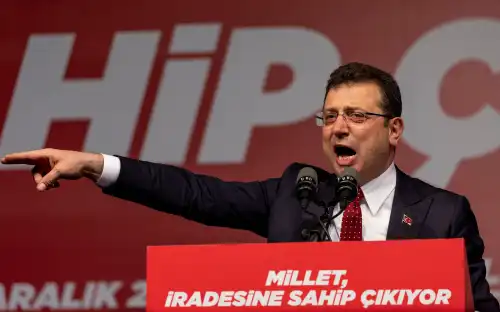
Turkey has banned "The Nation is My Witness," a book by former Istanbul mayor Ekrem Imamoglu. The ban was reported by the New York Times on Oct. 5, 2026, in a story titled "Turkey Banned a Book by a Jailed Presidential Hopeful. We Read It." New York Times
Imamoglu is President Recep Tayyip Erdogan's main political rival. He has been jailed for more than a year while awaiting trial on corruption charges. He denies the charges. Reuters
The case moved quickly in March 2025. His university degree was revoked on March 18, 2025. He was arrested the next day, March 19, 2025, on terrorism and corruption charges. DW In a separate case, he was sentenced to almost three years in prison and barred from politics for allegedly insulting judges on the Supreme Election Council (YSK), the body that runs elections.
Limits have since reached beyond jail to communication. An Istanbul court ordered X to restrict access to Imamoglu's candidacy account to protect national security. Reuters The account had about 225,700 followers. In August, the jailed mayor joined a new opposition party, a step reported as a response to turmoil inside the opposition.
According to the Times, the ban came nearly two years into a crackdown. Days earlier, Turkish police detained the opposition mayor of Mersin and 58 other suspects in a corruption investigation. Reuters
The broader context here is the narrowing of channels an opposition figure can use, like closing several doors one by one. Pretrial detention limits physical presence. Loss of a degree affects eligibility to run. A social media order limits online reach. A book ban limits longer argument. The sequence counts more than any single order.
Looking at what this means for Turkish politics, the question is whether the opposition can stay coordinated under court pressure. Detention removes experienced local officials. A detained leader changing parties tests whether supporters follow to a new group. Limits on books and accounts test whether lawyers and publishers can keep a defendant visible when he cannot campaign. None of this turns on the content of one book.
In my view, outside observers should watch procedure rather than rhetoric. Trial timelines, the scope of access bans, action against distributors and publishers, and who administers cities where mayors were detained will shape the field. Those legal and administrative steps get less attention than a banned book, but they decide whether opposition networks keep resources, candidates and ballot access.


