Fed Hike Lifts 2-Year Yield to 4.74%: December Test Ahead
Standard Chartered published its Global Market Outlook, "Earnings above all," on 25 September 2026, after weeks when its regional notes focused on the Federal Reserve rate hike and the market reaction. Global Market Outlook
On 17 September, its Brunei Market Watch was titled "Fed builds credibility with hike; one more likely in Dec". On 18 September, its Singapore outlook was titled "A Fed credibility – induced bounce". Brunei Market Watch Singapore Market Outlook
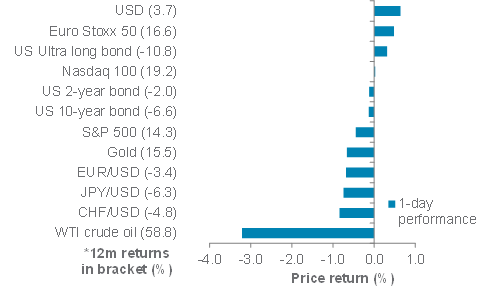
The 17 September note put numbers on the short-term repricing. The US 2-year government bond yield, the annual return on a two-year US government loan, jumped 7 basis points to 4.74%, the bank said. A basis point is 0.01 percentage points. Markets priced three more 25-basis-point hikes, or 0.25-point moves, by June 2027. The bank made another hike in December its base expectation.
The 18 September note described the Fed move as a moderately hawkish pivot that helped rebuild its inflation-fighting credentials. It noted the Bank of Japan raised rates in the same week as the Fed move covered in that Weekly Market View.
That hike was not treated as certain in advance. In its Weekly Market View on 11 September 2026, Standard Chartered noted residual risk the Fed could be reluctant to hike the next week, possibly due to pressure from the Trump administration. Kenya Weekly Market View Earlier CIO commentary had said US long-end yields had been pushed to cycle highs on rising term premia, the extra return for holding longer debt, and fiscal strain.
After the repricing, the bank shifted its view on duration, a measure of sensitivity to rate moves. In its Weekly Market View on 2 October 2026, Standard Chartered said the recent bond sell-off had created a compelling opportunity for investors with a 6-12-month horizon. It noted the long end had already sold off.
The broader context here is a two-part rates story. Think of short lets versus long leases. The front end repriced on near-term policy expectations, with three additional 25-basis-point moves priced through June 2027. The long end was described separately, with cycle highs linked to term premia and fiscal strain rather than the immediate policy decision alone. That split matters for curve positioning and for separating what was known from what was priced.
In my view, the credibility language is the part to question. A moderately hawkish pivot can steady front-end expectations without resolving duration supply or fiscal questions at the long end. For a 6 to 12 month horizon, the call turns on whether term premia compress, whether priced hikes materialise, and whether earnings can carry risk assets if rates stay elevated. The December expectation and June 2027 pricing give a clear path to test. If those hikes do not arrive, the 4.74% print on the 2-year will look like an overshoot. If they do, the bond sell-off thesis will need earnings strength to offset the discount-rate drag.