Mexico Wants U.S. Evidence for Reported Border Shooting
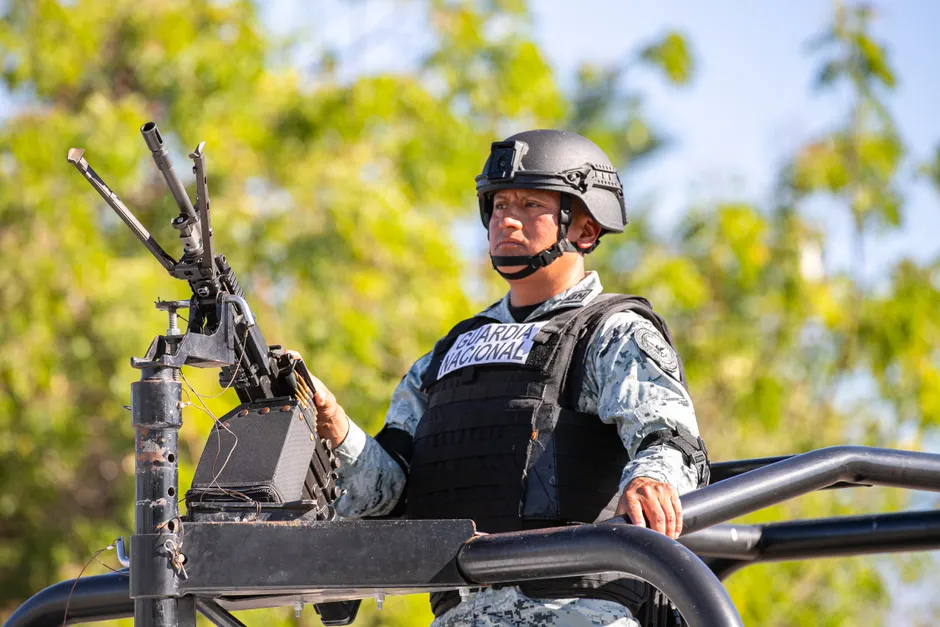
Mexico asked the United States for all evidence behind a reported late-September shooting across the border, saying its own forces recorded no such attack. President Claudia Sheinbaum made the request public at her daily press conference on October 5, 2026. She said Mexico's National Guard, Army and Navy detected no shots fired from Mexican territory toward the United States. Al Jazeera
The claim came from U.S. Ambassador to Mexico Ronald Johnson, who said U.S. Coast Guardsmen were fired upon in Texas, across from the Mexican state of Tamaulipas, in late September. Johnson said the U.S. Embassy in Mexico is helping coordinate with Mexican forces sending units to the area where the shooting allegedly happened. After the alleged shooting, Washington sent about 500 U.S. troops to the border, along with helicopters, drones and anti-drone equipment. Al Jazeera
Both countries are already running a joint border effort called Operation Mirror. Reuters reporters Ana Isabel Martinez and Raul Cortes reported on October 5, 2026 that Sheinbaum demanded evidence after Johnson's comments. Al Jazeera published a report the same day titled 'Mexico seeks evidence of border shooting that prompted US troop deployment'. Reuters Al Jazeera
Johnson has been U.S. Ambassador to Mexico since May 2025. He is a former U.S. Army Green Beret, soldiers trained for special missions, who later served in the CIA. Sheinbaum previously objected when Johnson announced an international police academy in the state of Queretaro without informing her federal government.
The 500-troop deployment is part of a larger stated U.S. presence. U.S. Northern Command, the command in charge of defense in North America, says more than 10,000 service members are deploying or have deployed to the southern border under Operation Ardent Vanguard, in addition to about 2,500 already there. U.S. Northern Command Sheinbaum has repeatedly rejected unilateral U.S. military action inside Mexico, meaning action taken without Mexico's approval, a position documented in November 2025 reporting. Reuters
The broader context here is a gap between fast military response and proof. One government sent troops and aircraft based on an attack claim. The other says its three services saw no incident and wants to see the file. Operation Mirror gives both sides a joint channel for follow-up deployments, but it does not settle which account is correct.
Looking at what this means for managing the relationship, how information is shared may matter as much as the incident itself. The Queretaro academy dispute showed how announcements outside federal channels create political friction even when the work is described as cooperative. A similar pattern now applies to incident data. Whether U.S. authorities share sensor data, incident reports or other underlying material, and whether Mexican authorities release their own patrol findings, will shape whether the episode turns into a joint review or hardens into competing public narratives.
In my view, the next test is not statements. It is paperwork. Joint operations need agreed facts. Without a shared after-action account for the Texas-Tamaulipas sector, future claims will be harder to handle, and objections about sovereignty — Mexico's right to control what happens on its territory — will carry more weight in Mexico City.


