Three Major Moves in AI Infrastructure: What They Mean for Developers
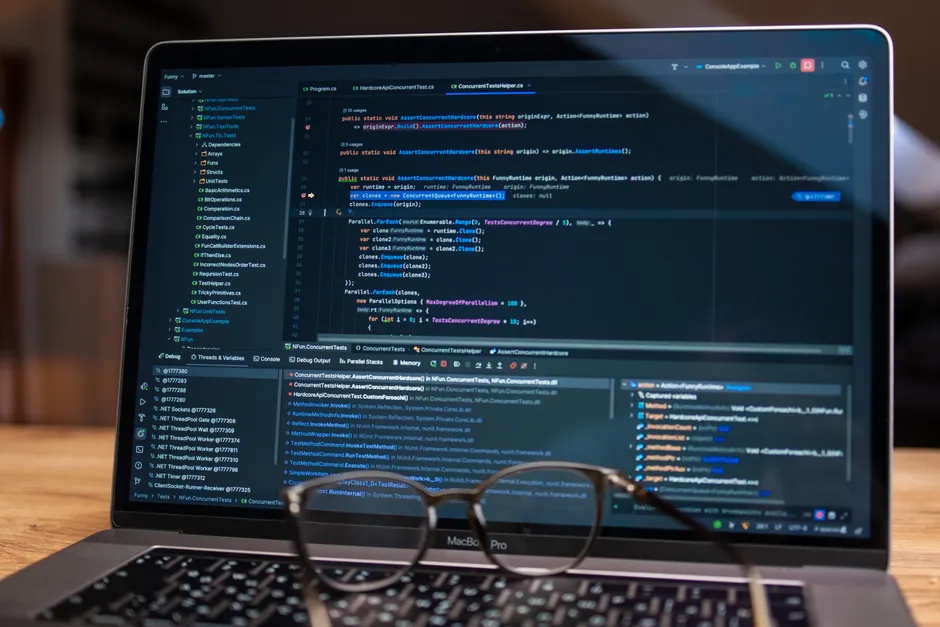
Replit has closed a $97.4 million funding round and released its own coding-focused large language model, which the company claims outperforms OpenAI Codex on certain benchmarks. This move signals a shift: Replit is no longer just reselling AI inference capacity from larger vendors. Instead, it is building the underlying model itself — giving the company direct control over response speed, how often it updates the model, and profit margins. For a platform running millions of concurrent developer sessions, those details matter.
The Codex comparison deserves scrutiny. Winning on a selected set of benchmarks does not establish overall superiority, and Replit has not yet published its full evaluation methodology. That qualifier aside, the structural change is real. Building your own model, rather than licensing inference from OpenAI or Anthropic, is a different business — one with tighter margins and longer-term strategic independence.
Anthropicmovement into messaging platforms is similarly significant, though less clearly defined in available reporting. The company is moving agentic capabilities — AI agents that can take actions across systems — out of standalone chat interfaces and into the communication tools where teams already work. This is a distribution strategy, not just a feature upgrade. Agents embedded in Slack or similar platforms inherit context from the conversation thread itself — who participated, what decisions were made, the history of the thread — without having to be told separately. A standalone app would have to reconstruct all of that.
OpenAI made two distinct announcements. First, new embedding models with better search accuracy and lower per-token pricing. Embeddings are the mathematical fingerprints that databases use to find relevant documents quickly; they power nearly every production retrieval system in enterprise AI deployments today. When the cost per token drops, teams can afford to re-index their document libraries more often, which is a practical win if those documents change frequently. Second, OpenAI refreshed its GPT-4 Turbo preview model. OpenAI uses preview labels to roll out behavioral changes in stages, letting teams test before switching their production systems. The company has been updating previews more frequently lately, which creates operational overhead — engineering teams have to stay alert to changes in how the model behaves.
Zooming out, these moves follow a pattern. Replit is building its own models. Anthropic is pushing into distribution channels where teams already operate. OpenAI is adjusting both the cost structure of foundational components and the ceiling on its flagship model. None of these companies coordinated this timing, but the direction is the same: each is extending deeper into the software stack than it was a year ago. For developers and platform teams, that expansion creates more options but also more surface to evaluate. Choosing an AI inference provider now requires assessing not just benchmark numbers but also model roadmap, where and how the company distributes its tools, and pricing direction.
One caveat worth noting: the reporting on these developments lacks firm publication dates. That makes it unclear whether these announcements arrived within days of each other or weeks apart. If you are making product decisions based on any of these specifics — especially Replit's benchmark claims or OpenAI's pricing — check directly with the companies for current documentation before committing.
Historically, AI infrastructure has followed a familiar pattern: a period where multiple players expand rapidly in parallel, followed by consolidation around the providers who capture sufficient distribution and stable margins. OpenAI's embedding price cut, even though it looks modest on its own, fits a playbook of using commodity-layer pricing to deepen developer dependence while protecting margins on higher-value services. Replit's move to own its model is a defensive bet against that same dynamic — a way to avoid being locked into another vendor's pricing and roadmap.


