France's School Blockades Escalate Into Nationwide Marches
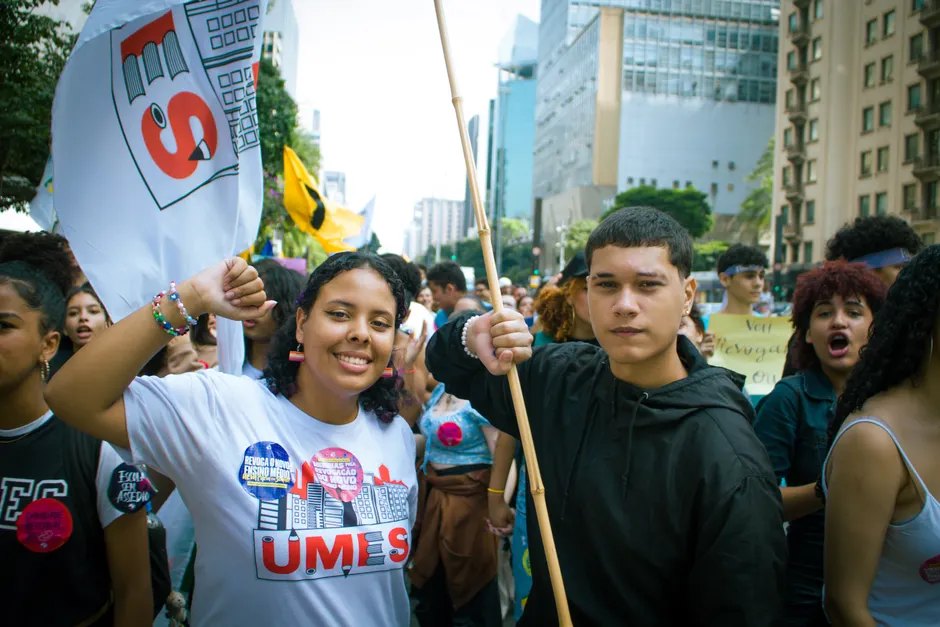
Police fired tear gas at protesters blockading French high schools on Oct. 6, 2026, as student-led education protests spread into coordinated street marches across France. Al Jazeera
Student demonstrations began that morning in Marseille, Nantes and Lyon. By midday, protests in Strasbourg, Lyon and Rennes had turned violent. Police fired tear gas while protesters lit street fires and hurled projectiles.
The movement started about two weeks before Oct. 6 in the disadvantaged suburbs around Paris. The government described it as urban violence and deployed riot police, units trained for public-order clashes, to some rallies. On Oct. 1, anti-riot police faced protesting students outside Le Corbusier secondary school in Aubervilliers, in northern Paris. Teenagers set fire to rubbish bins and threw projectiles at police during school blockade protests, and police responded with batons and tear gas.
Oct. 6 was organized as a national day of action, with students, teachers and parents marching in cities across France. Reuters called it the largest mobilization so far. A blockade here works like a picket line, with students physically blocking entrances so classes cannot run. The High School Students Union said nearly 2,000 high schools were blockaded or closed on Oct. 6. A separate live tally put at least 589 schools as disrupted. Hundreds of schools had stayed closed on Oct. 5 ahead of the nationwide protests.
On Oct. 5, a 15-year-old lost his hand during clashes between high-schoolers and police in northern France. La Voix du Nord reported the boy lost his hand and part of his arm after picking up a police grenade.
Protesters said the demonstrations were over under-investment in high schools. BBC Students, parents and trade unions cited teacher shortages, dilapidated school buildings and overcrowding in classrooms. Prime Minister Sebastien Lecornu ordered ministers to address student demands including replacing underskilled teachers, making lunch breaks longer and changing the length of the school day. He demanded proposals by the end of October 2026, including plans to repair old campuses.
The Interior Ministry said 6,100 people had been arrested since the beginning of the protests, the majority under age 18. The Justice Ministry announced over 1,800 people will be prosecuted, including 1,483 minors. Lecornu put the wounded at at least 215 teenagers and 715 police officers. Security forces detained over 600 people as protests escalated around Oct. 1, with dozens of police and gendarmes wounded. Police officials later reported 1,954 arrests on Oct. 1 and 1,747 arrests on Oct. 2, and 190 students injured as of Oct. 5. Education Minister Edouard Geffray had estimated 400 to 500 high schools would suspend classes on Oct. 5.
The broader context here is a contest over definition with operational consequences. Officials treat blockades accompanied by bin fires and projectiles as public-order threats to be met by riot units, while unions and student organizations describe a school-conditions movement rooted in staffing and infrastructure. That divergence explains why the same street confrontations produce parallel counts of injured students and injured officers, and parallel demands for protection and for discipline.
Looking at what this means for the government, Lecornu's end-of-October deadline creates a narrow window. Ministers must produce concrete offers on teachers, school hours, lunch breaks and campus repairs while prosecutors process more than 1,800 cases, most involving minors. Whether negotiations on material conditions can proceed separately from criminal proceedings and policing tactics will shape the next phase. The movement has already shown capacity to call successive days of action, including the Act III mobilization for Oct. 6, after lighter participation days.


