Arturia AstroLab 2.0 Adds On-Keyboard Sound Editing and 67 New Sounds
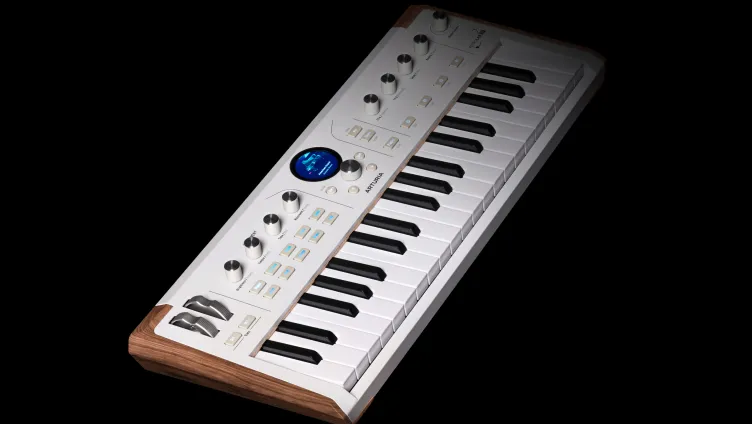
Arturia has released AstroLab 2.0, a free firmware update for all AstroLab keyboards. The details were published on Oct. 6, 2026 The Verge.
The main addition is a Sound Edit menu for adjusting individual parameters inside any instrument. Previously, players could make only light tweaks using four macro controls, which are shortcut knobs that move several linked settings at once, plus effects. Full sound design was not possible on the hardware itself.
Users can now tweak a patch, which is a saved sound, and store it as a new sound directly on the keyboard. Editing is done with the four macro knobs, paging through the available settings four at a time.
AstroLab 2.0 also adds 67 new patches to the factory library, including multisampled pianos, strings, and brass sections. Multisampled means the sounds were recorded note by note from acoustic instruments. The update is free.
Two playability changes are included. The octave LEDs now show transposition, and aftertouch responsiveness has been adjusted. Aftertouch is the keyboard's response to extra finger pressure applied after a key is pressed.
Arturia instructs users to install the latest "AstroLab update" from Analog Lab, its companion software Arturia Support. Arturia states that AstroLab receives new sounds, features, and performance improvements through regular updates Arturia.
Arturia states that AstroLab is compatible with a wide range of presets, but some Sound Banks might not be 100% compatible Arturia Support. Update 1.3 added six new and updated instruments along with additional new sounds. Arturia describes update 1.5 as bringing deeper creative control and smoother integration to performance rigs. The line includes an AstroLab 88 model described as "future-proof," which was scheduled to receive a major firmware update by 17 July MusicTech.
In my view, the shift here is from curated control to direct access for players who work away from a studio computer. Four macros are efficient in performance, but they are a limited substitute when a sound needs to change in rehearsal and stay changed for the show. Paging through settings four at a time will not match a large editor for speed. It removes a dependency, since a tweak made on the instrument can now be kept on the instrument. That persistence matters more than any single addition, useful as the new acoustic material will be for set-list coverage. Instruments that gain editing depth and library after purchase tend to stay in rigs longer.