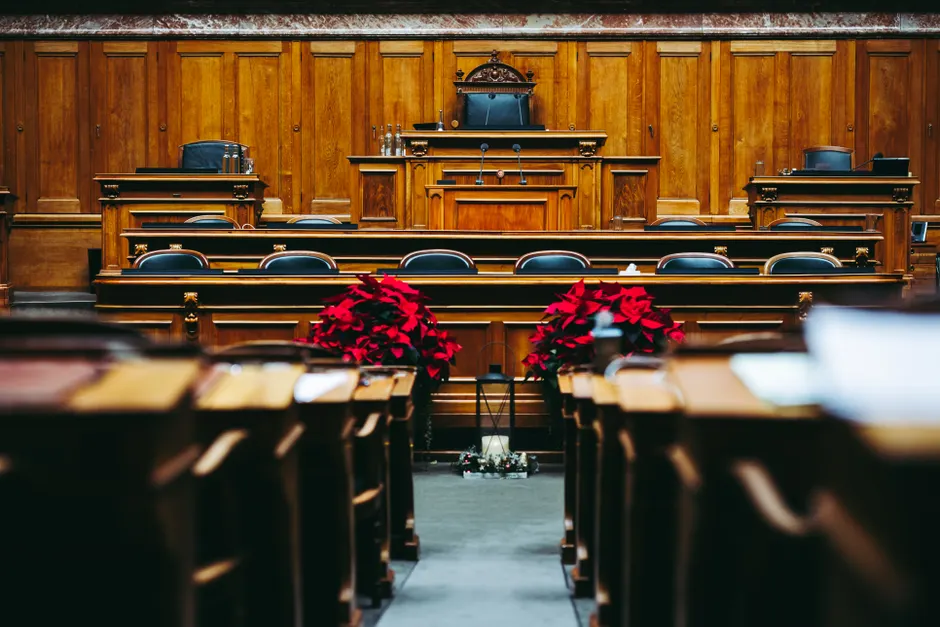
Man Charged with Two Murders in London Tried in Absence at Central Criminal Court

Simon Levy, 40, of Tottenham in North London, faced trial at the Old Bailey — England's principal criminal court — without appearing in person after being charged with murdering two women in London and raping a third. The charges reflect one of the more serious criminal cases to reach the Central Criminal Court recently.
Levy was charged with the murders of Sheryl Wilkins, 39, and Carmenza Valencia-Trujillo, 54, according to BBC News. He was additionally charged with rape. The Metropolitan Police confirmed the charge relating to Valencia-Trujillo on 20 November 2025, with one alleged crime scene in Walworth, South London — roughly ten miles from Levy's registered address in Tottenham, North London.
Levy was scheduled to appear via video-link at Westminster Magistrates' Court on 25 November 2025 but did not attend. The case was then transferred to the Old Bailey, where proceedings continued in his absence, as BBC News reported.
Trial in absentia — where a defendant is tried without being present — is legally permissible in England and Wales under section 11 of the Magistrates' Courts Act 1980 and under the Criminal Procedure Rules at Crown Court level if a defendant has voluntarily absented themselves. Courts may proceed when the defendant had reasonable notice of the hearing and offers no adequate explanation for non-attendance. This mechanism prevents defendants from delaying trials by simply refusing to appear, though convictions secured in this manner can face later legal challenge on grounds that the absence itself undermined fair process.
The two victims present starkly different profiles of London life. Sheryl Wilkins was 39; Carmenza Valencia-Trujillo was 54 and, based on her surname, likely of Colombian or broader Latin American heritage — though no further biographical detail has been verified in available sources. The geographic spread of the alleged offences, spanning Walworth in Southwark and connecting to a suspect based in Haringey, suggests investigators tracked activity across a considerable portion of the city before bringing charges.
The Metropolitan Police's public appeal for further information following the Walworth discovery is standard practice in homicide investigations where detectives believe additional witnesses or evidence remain outstanding. It signals that, at the point of charging, the evidential picture — while sufficient to charge — may not yet have been fully developed.
The rape charge adds legal and investigative complexity. Under English law, prosecutors can bring both homicide and serious sexual assault charges in a single indictment when the alleged conduct forms part of a connected sequence of behaviour. Whether the prosecution will argue a pattern of predatory conduct — and what weight a jury will place on it — remains a matter for trial.
Levy's failure to appear is now part of the court record. Judges routinely instruct juries that they may draw no adverse conclusion from a defendant's absence alone, though the circumstances of that absence and any explanation offered will be scrutinised. If Levy remains at large, a warrant for his arrest will have been issued. Whether he could be extradited depends entirely on his whereabouts, which have not been publicly confirmed in any available sourced material as of 29 June 2026.
The Old Bailey's role here is procedurally unremarkable but underlines the Crown Prosecution Service's assessment of case gravity. Two murder counts and one rape charge, tried in absentia, with a defendant whose location remains unconfirmed — the case carries procedural and human complexity that rarely moves swiftly through the courts.