The 2026 Chemistry Nobel for Controlling Mirror-Image Molecules
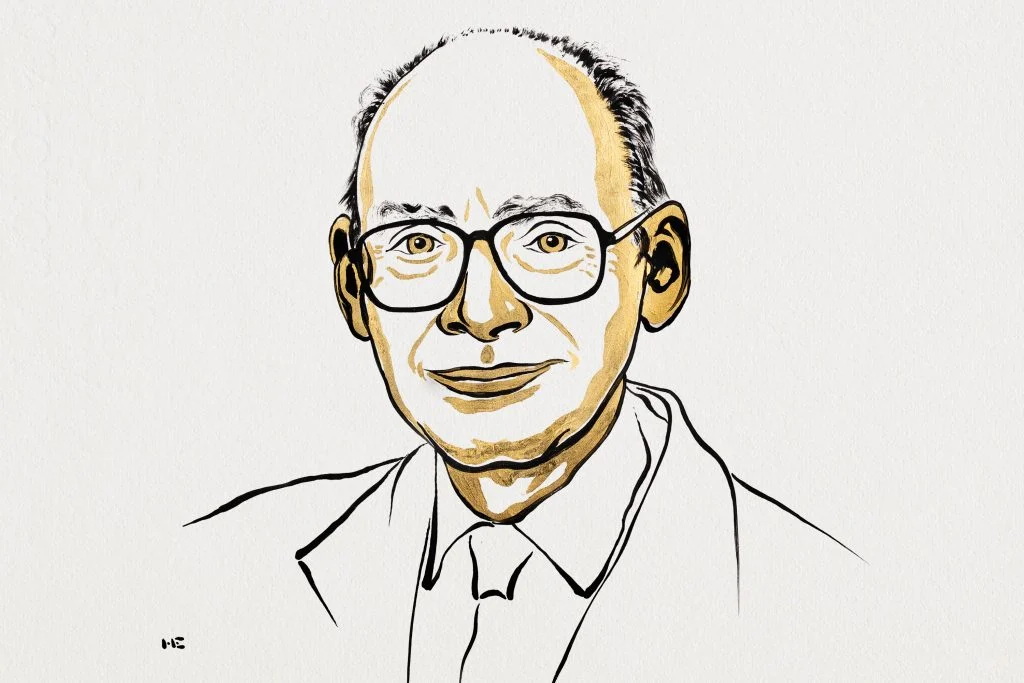
Henri Kagan and Kenso Soai won the 2026 Nobel Prize in Chemistry for the discovery of nonlinear effects and autocatalysis in asymmetric organic synthesis. The Royal Swedish Academy of Sciences announced the award on October 7, 2026. Al Jazeera
The prize was awarded for discoveries showing how chemical reactions can be driven to favour a single molecular mirror image. U.S. News Kagan discovered a method for manipulating chemical reactions to create a greater excess of one mirror image than previously thought possible. Soai designed the first chemical reaction that formed only one of the potential mirror images. Nobel Prize
Kagan's work advanced reactions used for the manufacture of pharmaceuticals, flavours, scents and new materials. That application domain defines the practical reach of the award. Like left and right gloves, many molecules have mirror-image forms. Asymmetric organic synthesis controls which mirror-image product dominates. Nonlinear effects describe departures from proportional transfer of stereochemical information from chiral auxiliary or catalyst to product.
Kagan is 95 and from France. He was born on 15 December 1930. Soai is 76 and from Japan. He was born in 1950 in Hiroshima, Japan, and his affiliation at the time of the award was Tokyo University of Science in Tokyo, Japan.
The broader context here is what this means for asymmetric synthesis. The two contributions address distinct control problems. Nonlinear effects concern enantioenrichment behavior, the increase in dominance of one mirror image. A small enantiomeric excess, a small starting imbalance, in a chiral source can translate into a larger product excess. The target was homochirality, where only one mirror image remains. The starting imbalance can be tiny.
In my view, the pairing matters because autocatalysis adds a kinetic mechanism for that translation. In autocatalytic asymmetric induction, chiral product acts as chiral catalyst for its own formation. Initial asymmetry propagates. Selectivity amplifies through successive turnovers rather than remaining fixed by the initial catalyst loading and its optical purity. For practitioners, the conceptual shift is from stoichiometric control of configuration to catalytic amplification of configuration, with implications for route design where enantioselectivity, catalyst efficiency and isolation of a single mirror-image isomer constrain development.