Leaked Renders Show Apple-LG Smart Lock, Thermostat and Sensor

Leaked renders published on October 7, 2026 show three smart home devices reportedly developed by Apple with LG: a deadbolt lock, a thermostat and a temperature sensor. The images, attributed to a leaker, offer the first hardware-level look at a collaboration said to span seven devices in total. 9to5Mac
The renders identify the three as the LG Smart Deadbolt Lock, the LG Smart Thermostat and the LG Temperature Sensor. That naming matters. The gadgets would reportedly launch under LG branding, not as Apple products. Engadget
The lock has the most detail so far. Its keypad assembly rotates open to expose the mechanism underneath. Reported unlock methods include automatic unlocking and tap to unlock. The unit also has integrated emergency power and support for master codes. According to the leaker, it ships with two mechanical keys.
To understand why those details matter, consider everyday use in a home or small rental. A rotating keypad cover gives physical protection against tampering and weather. Automatic unlocking usually means proximity detection from a phone or watch. Tap to unlock means short-range radio, similar to the tap used for payments. Emergency power and a physical key provide backup if the battery dies. Master codes allow an owner or manager to administer multiple users.
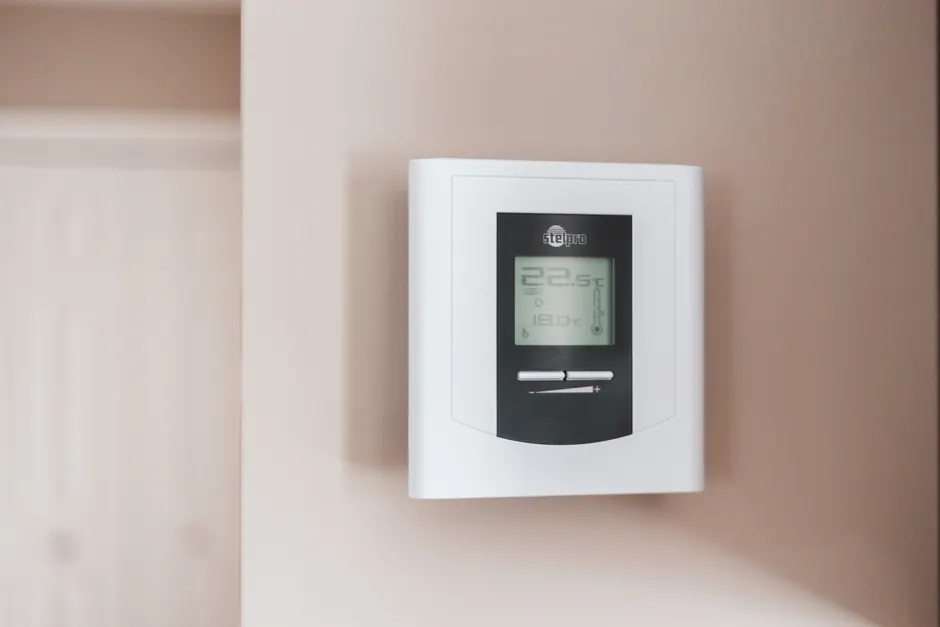
The thermostat render shows on-device settings for humidity, brightness and language. The temperature sensor is the smallest of the three. It also measures humidity and has a magnetic back for attaching to metal surfaces. It ships with a replaceable battery.
Beyond those three, the reported lineup includes a video doorbell, an indoor camera, an outdoor camera and a floodlight camera. Together with the lock, thermostat and sensor, that makes up the seven-device figure cited in current reporting. The doorbell is described as a wired model. MacRumors
The reporting chain is compact. 9to5Mac reported on October 6, 2026 that Apple's smart home push includes an LG-made doorbell, lock, thermostat and more. It followed on October 7 with the leaked images of the lock, thermostat and related hardware. Yahoo's account of the lock, thermostat and sensor attributes the information to 9to5Mac. Bloomberg also published video on October 7, 2026 titled "Apple to Launch Doorbell, Lock and Thermostat Developed With LG."
One regulatory detail is worth noting. The filings for the LG devices make no mention of Apple's involvement, according to Yahoo's report. Yahoo That fits an OEM arrangement, where LG is the applicant of record and handles certification, even if joint development is reported. The filings alone do not confirm or rule out Apple's role.
The broader context here is go-to-market rather than radio protocols or industrial design. Apple working through LG branding would separate design and system integration from manufacturing, certification, distribution and first-line support. For technology professionals, that separation shows where to watch for friction. Setup steps, account boundaries, update timing and access to diagnostics all become joint-system problems.
In my view, the lock and sensor choices show attention to installer and maintainer concerns. Replaceable batteries, emergency power, mechanical keys, magnetic mounting and master codes reduce service calls. They do not make installation trivial. Locks still require door prep, backset and strike alignment. Wired doorbells still require transformers and chime compatibility. Thermostats still require HVAC wiring and humidity calibration. The hardware can lower operational overhead only if software setup and lifecycle management are equally disciplined.
Looking at what this enables if the reports hold, a full LG-built accessory set would let Apple-centered households put together door entry, climate sensing and video coverage without mixing vendors for each function. Buying and troubleshooting across seven devices from one manufacturing partner is simpler. It also concentrates dependency. A single partner controls availability, firmware quality and long-term parts support for mechanical parts that wear out.
No launch dates, pricing or compatibility specifications are included in the verified reports. The devices remain reported and rendered, not announced.