Trump's Birthright Citizenship Order Heads to Supreme Court: What's Actually at Stake
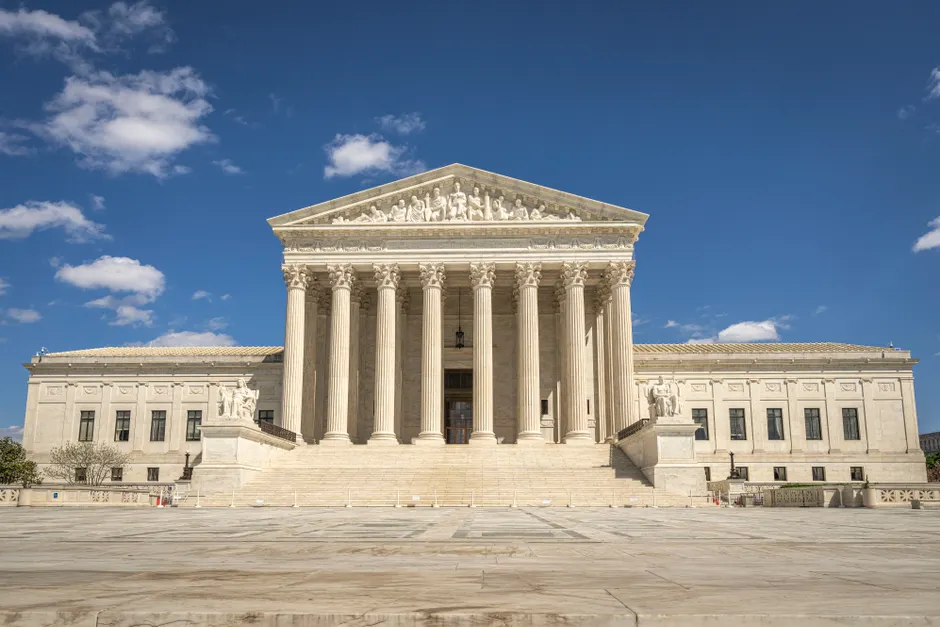
President Donald Trump signed an executive order on January 20, 2025, directing federal agencies to stop recognizing birthright citizenship for children born in the United States to parents who are neither citizens nor lawful permanent residents. This directly challenges a constitutional interpretation that has governed U.S. nationality law for over a century.
Lower federal courts quickly blocked the order, and the case has now reached the Supreme Court. The core question echoes a decision the Court made in United States v. Wong Kim Ark (1898): whether the Fourteenth Amendment's Citizenship Clause — "All persons born or naturalized in the United States, and subject to the jurisdiction thereof" — applies to children born on U.S. soil regardless of their parents' immigration status.
In Wong Kim Ark, the Court held that a child born in San Francisco to Chinese nationals — who were themselves barred from naturalization under the Chinese Exclusion Act — was nonetheless a U.S. citizen by birth. The majority based that ruling on English common law's tradition of birthright citizenship and the plain wording of the Fourteenth Amendment, ratified in 1868 partly to overturn the Dred Scott decision's denial of citizenship to Black Americans. For over 125 years, no administration attempted to reverse this precedent through executive action until now.
The legal argument behind Trump's order centers on a stricter reading of "subject to the jurisdiction thereof." Supporters claim this phrase was meant to exclude not only foreign diplomats and enemy combatants — categories everyone agrees should be excluded — but also anyone present in the country without legal authorization, and by extension their U.S.-born children. This narrower interpretation has appeared in academic work, particularly from scholars at the Claremont Institute, but it has never persuaded a Supreme Court majority.
What matters procedurally is how the Court frames its review. Beyond the citizenship question itself, justices must consider whether district courts can issue nationwide injunctions that block executive policy across all fifty states. If the Court addresses that broader question alongside the citizenship question, the ruling could reshape how federal courts limit executive power well beyond this specific case.
The citizenship implications are significant. The United States and Canada are among the few wealthy democracies with unrestricted birthright citizenship. Narrowing the Fourteenth Amendment would affect not only future births but raise immediate questions about the status of hundreds of thousands of U.S.-born children of undocumented parents currently living as citizens. No existing administrative process could retroactively revoke citizenship at that scale; any attempt would face litigation under the Fifth Amendment's Due Process protections and potentially violate international human rights standards.
The deeper constitutional tension here deserves attention. The executive order does not simply test immigration policy — it tests whether a president can reinterpret a self-executing constitutional provision through administrative order. The Fourteenth Amendment grants citizenship through the Constitution itself, not through a law Congress passed, which means Congress cannot simply change the outcome by statute either. A durable change would require either a Supreme Court ruling departing from Wong Kim Ark or a constitutional amendment approved by three-quarters of the states — a threshold no modern amendment has cleared in decades.
How the current Court applies stare decisis — the doctrine of honoring precedent — will draw close attention. The Roberts Court has overturned long-standing precedent before; Dobbs v. Jackson Women's Health Organization (2022), which eliminated the constitutional right to abortion, is the clearest recent example. But the justices have also signaled in other cases that precedents with deep roots in constitutional text and long reliance carry weight. Wong Kim Ark is older, more firmly rooted in the Constitution's language, and more deeply woven into how the government operates than Roe v. Wade was when Dobbs arrived. That difference does not decide the outcome, but it shapes the legal terrain the Court must navigate.
A decision is expected before the Court's term closes.


