US Accused of Unlawful Deportations to African Third Countries
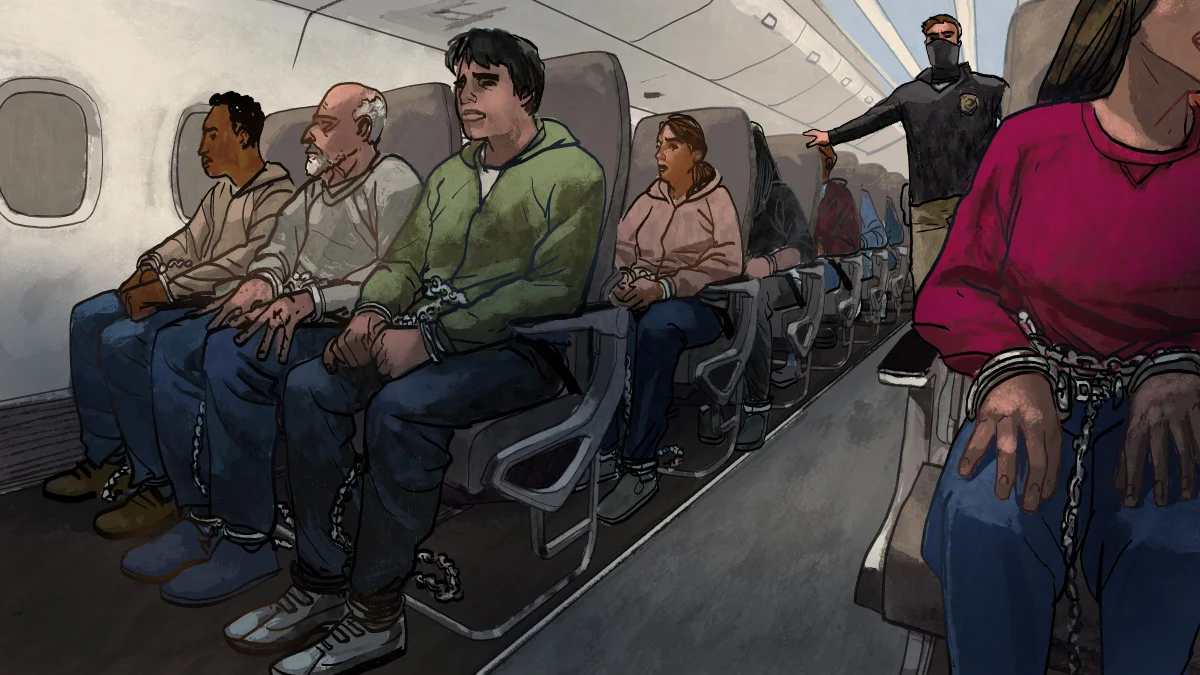
Human Rights Watch accused the United States on 8 October 2026 of unlawfully expelling migrants to African countries where they hold no citizenship, saying Washington is exploiting their suffering to deter migration.
More than 500 people have been sent to African countries where they are not citizens since Donald Trump returned to the White House in 2025, according to Human Rights Watch citing US data BBC. The allegation is detailed in a new report, To Scare People: US Expulsions of Third-Country Nationals to Countries in Africa, published the same day Human Rights Watch.
The group also issued a news item titled 'US: Deportations to African Countries Not Their Own'. It called on the United States to stop deporting asylum seekers and refugees to third countries that lack the capacity to provide full and fair asylum. Third-country nationals means people sent to a country that is not their own. Asylum seekers are people asking for protection from persecution.
The report draws on interviews with 24 third-country nationals in Cameroon, Central African Republic, Democratic Republic of Congo, Equatorial Guinea, Eswatini and South Sudan. Detention followed quickly after arrival. Human Rights Watch says people sent to Eswatini, Ghana and South Sudan were arbitrarily detained and faced ill-treatment while in detention.
Cameroon, Equatorial Guinea, and Ghana sent some U.S.-expelled people onward to risk of persecution or torture in their home countries, according to the October report. Human Rights Watch says "many, if not most" deportees have no practical option but to return to their home countries regardless of harm they face there. The total of more than 500 comes from US data.
Detention, onward transfer and heightened vulnerability
Eswatini provided the clearest country numbers in the latest accounting. It received 32 deportees from the United States and says three people from Yemen, Belize and Laos "voluntarily departed" to their home countries. In separate reporting published 20 February 2026, Human Rights Watch found Cameroonian authorities are arbitrarily detaining non-Cameroonian nationals deported from the United States.
At least a dozen people who identified as lesbian, gay, bisexual or transgender were sent to African states that criminalise same-sex relations, according to Human Rights Watch. Reuters documented 40 cases involving LGBT migrants deported to hostile African countries in reporting published 5 October 2026 Reuters.
The findings follow earlier warnings. On 23 September 2025 Human Rights Watch published 'US/Africa: Expulsion Deals Flout Rights', reporting that recent U.S. expulsions of third-country nationals were sent to Eswatini, Ghana, Rwanda, and South Sudan. On 9 May 2025 it stated the United States should not forcibly transfer migrants to Libya, citing documented inhumane detention conditions including torture.
Washington response and a widening transfer network
The US Department of Homeland Security said "third country removals are an essential public safety tool that remove the most dangerous criminal illegal aliens from our streets".
Sierra Leone agreed to take in hundreds of West African migrants deported by the United States, according to its foreign minister in May 2026 Reuters. United Nations experts called for a halt to the Trump administration's policy of deporting migrants to third countries, in a call reported 28 September 2026.
The broader context here is the legal architecture governing transfer and non-return. Under international refugee and human rights law, third-country expulsion is allowed only with procedural safeguards, access to fair asylum determination, and guarantees against refoulement, arbitrary detention and ill-treatment. Refoulement means forced return to persecution or torture. Human Rights Watch contends those conditions were absent in these cases, pointing to detention without legal basis, exposure to abuse in custody, and onward transfer without risk assessment.
In my view, the operational logic deserves close attention from policymakers and practitioners. Transfers to states with limited reception capacity shift the work of hearing claims and providing protection outward while the deterrent effect stays inside the United States. It is like passing a heavy caseload to a smaller office with fewer staff. That can create leverage for Washington in bilateral migration diplomacy. It also creates liability exposure for receiving governments if detainees are held arbitrarily or returned onward without checks. For asylum systems, the precedent matters beyond Africa. If third-country removal without effective protection becomes routine, it weakens incentives for individualized screening and complicates monitoring by UN agencies, counsel and courts.
What to watch is enforcement and redress. Documentation now spans multiple receiving countries, repeated allegations of arbitrary detention, and specific cohorts facing criminalization, including LGBT people. Scrutiny will likely focus on access to lawyers and UNHCR in places of detention, judicial review of removal orders in the United States, and whether onward returns are tracked after handover. The Sierra Leone arrangement suggests additional agreements may surface. Each will test whether assurances on treatment and non-return are written, verifiable and enforceable.


