Kiwibit Bird Feeder 2 Pro: Sharp 4K Bird ID, Same Old Pest Problem
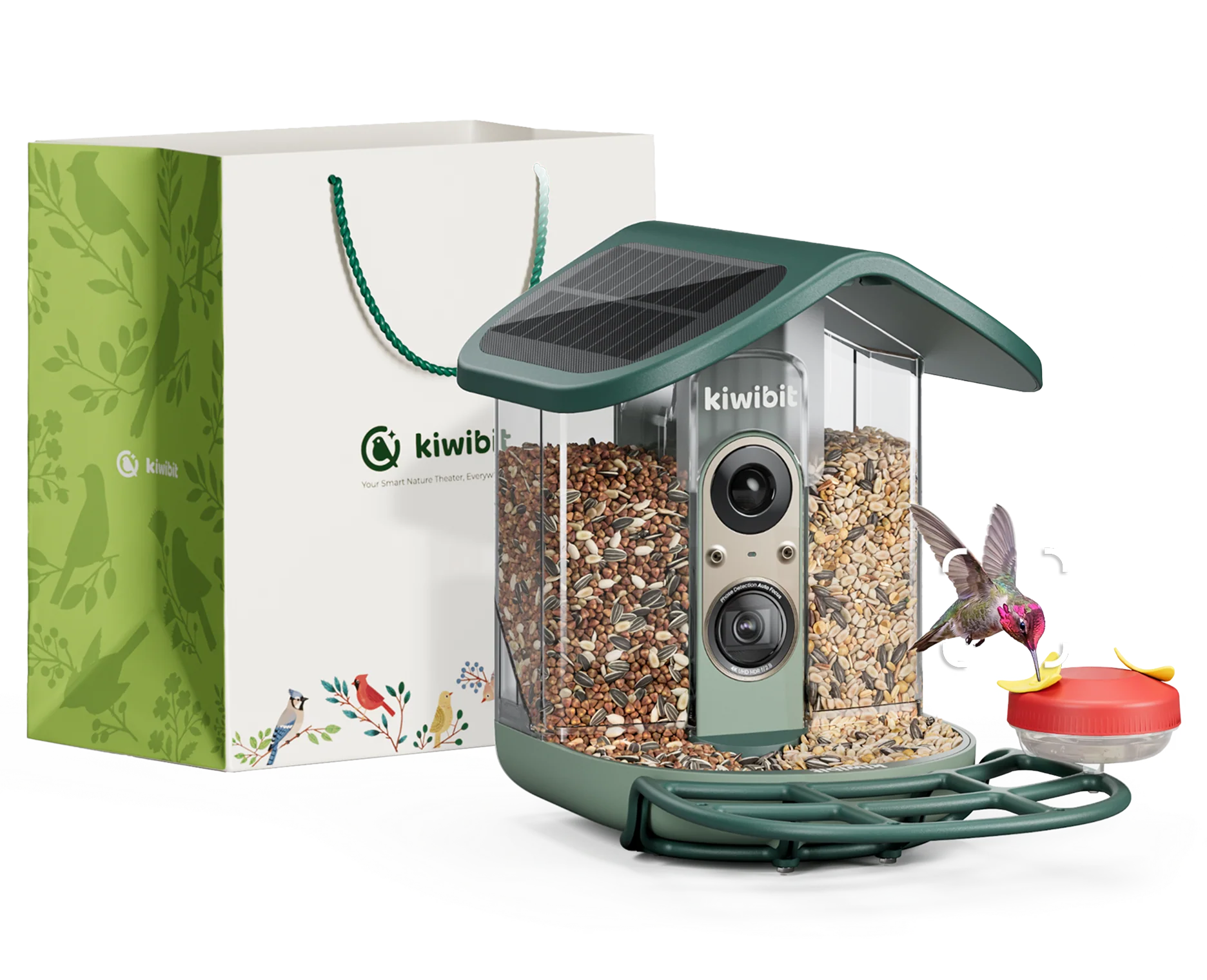
The Kiwibit Bird Feeder 2 Pro 4K AI Camera with Solar Panel, with lifetime AI included, sells for $269. The unit evaluated by The Verge pairs a conventional seed feeder with a 4K HDR camera, solar power and software that sends species identifications to a phone The Verge.
On hardware, Kiwibit lists dual solar panels, PDAF autofocus (phase-detection autofocus, the fast focusing system used in phones and cameras) and slow-motion capture, plus tracking that keeps a perched bird sharp and centered in frame. Recognition runs under the FeatherPal name, bundled as lifetime AI with no subscription Kiwibit. The related Bird Feeder 2 is listed as working with the Kiwibit app to identify over 10,000 species. PDAF and slow motion are positioned as differentiators against competing smart feeders Kiwibit.
In use, the system sends phone alerts that name the visitor. During the test period those alerts included Great Tit, Eurasian Blue Tit and Common Wood Pigeon, with 4K HDR clips attached. 4K HDR means very detailed video that holds up in harsh daylight. The companion app adds reference material for each identification, covering migration habits, nesting locations and diet.
Kiwibit also includes a Nuisance Animal Alarm feature for squirrels and similar animals. It is a software deterrent layered on top of the feeder, not a physical baffle or weight-sensitive perch. The intent is to discourage non-target species without manual intervention.
That held for a while. Then the pigeons arrived.
In The Verge's first-hand test, common wood pigeons took over the feeder. The reviewer describes larger birds monopolizing the perch and spilling seed. Mice then arrived below to eat the spilled seed. The deterrent did not resolve the problem. The reviewer dismounted the feeder and stored it in a closet.
The broader context here is familiar from outdoor sensors. Accuracy was not the failure point. Identification worked. Video quality worked. Power, at least in the test window, did not become the story. The failure point was ecological. A feeder is an open system. Food draws the target set and the non-target set at the same time, and a classifier that correctly labels a pigeon does nothing by itself to remove the pigeon. It is like a spam filter that labels junk mail correctly but cannot stop it arriving.
Looking at what this means for buyers and builders, deterrence deserves as much engineering attention as recognition. A push alert is useful for a hobbyist who wants a life list without binoculars. It is less useful for access control. Squirrels, corvids, pigeons and rodents are persistent, adaptable and largely indifferent to sound cues once food is reliably present. Physical design, perch geometry, seed selection and placement still do most of the work. Software can supplement that, but it cannot replace it.
In my view, the specifications that matter most in this category are the unglamorous ones. PDAF and tracking that hold focus at close range improve label accuracy and make clips worth keeping. 4K HDR helps with small, fast-moving subjects in harsh daylight. Lifetime AI with no subscription changes total cost of ownership in a way that is easy to underestimate at purchase. None of those solve the pest problem, but they determine whether the device remains useful once the novelty fades and the owner starts curating which visitors are welcome.
The longer view here is still positive if expectations are set correctly. Continuous, labeled video from a garden creates a personal dataset that was impractical five years ago. Migration and diet notes turn a notification into something closer to field education. For tech-literate households, that combination of sensing and reference data is genuinely enabling, provided the feeder is mounted where spillage can be managed and where larger birds and nocturnal visitors are acceptable. Put it in the wrong spot and the best model in the world will simply document, in high resolution, why you took it down.


