Coventry Cathedral's Precious Glass Screen Damaged Again—and It Raises Hard Questions About Protecting Heritage in Active Buildings
Coventry Cathedral's Precious Glass Screen Damaged Again—and It Raises Hard Questions About Protecting Heritage in Active Buildings
A panel of glass in Coventry Cathedral's West Screen has been damaged during setup for a music event, The Guardian reported on 1 July 2026. This is the second time in six years that John Hutton's hand-engraved masterpiece—one of Britain's most significant post-war artworks—has suffered harm, and the circumstances expose a real tension for heritage buildings that need to earn money by hosting events.
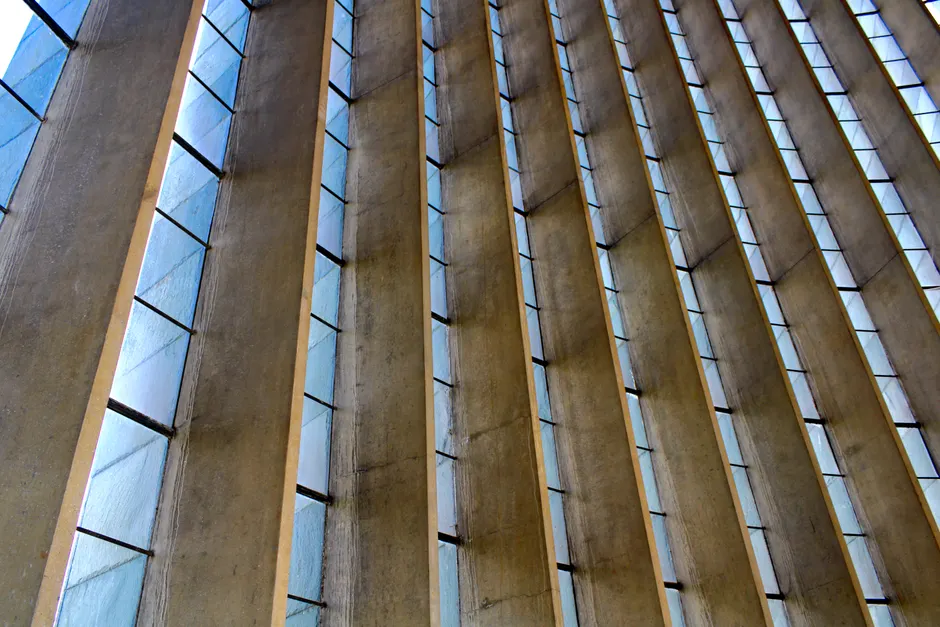
The West Screen is a floor-to-ceiling wall of glass that marks the entrance to the cathedral. Hutton spent ten years carving 66 figures of saints and angels directly into the glass using a wheel-engraving method, creating images with remarkable depth and clarity. More than decoration, the screen carries symbolic weight: it separates the modern cathedral, designed by Basil Spence, from the ruins of the medieval church that stood there until it was bombed in November 1940. The screen tells the story of survival and renewal.
This is not the first emergency. In January 2020, someone deliberately smashed a panel showing 'The Angel of the Eternal Gospel'—damage so severe the piece could not be fully restored. The cathedral brought in specialists from Recclesia Stained Glass to do conservation work that was still being documented in July 2023. Rather than simply board up the gap, the cathedral launched an open call for local artists to create temporary works to fill the void, an initiative covered by the BBC in April 2022. The gap itself became a way to involve the community, reflecting Coventry's broader identity as a place of reconciliation after wartime destruction.
The cathedral has not yet released full details about the current damage—where exactly it is, how extensive, or whether it can be repaired. What we do know is the pattern: an irreplaceable artwork from the mid-20th century, sitting in an actively used public building, harmed twice under very different circumstances.
The practical challenge here is real and runs deeper than this one cathedral. Hutton died in 1978, and no one working today has his specific skills—wheel-engraving on glass at architectural scale is a lost craft. Engraved glass is harder to repair than leaded stained glass, because damage affects the surface integrity of the material itself rather than a discrete panel that can be replaced. Conservators and venue managers will need to figure out whether the glass is structurally compromised, whether the engraved surface can be stabilized, and what, if anything, can be done to restore it.
The good news is that Recclesia already knows Hutton's work from the 2020 restoration, so there is continuity of expertise if repairs are needed.
What Coventry Cathedral faces is a version of a problem that echoes across Britain. Hundreds of listed and scheduled buildings—churches, manor houses, museums—rely on hosting concerts, exhibitions, and events to pay for their upkeep. The economics make sense; the practical risks are harder to solve. How do you set up temporary stage infrastructure, run cables, move equipment, and bring crowds through a building without endangering fragile, unrepeatable artworks? There is no perfect answer, and the cathedral's situation shows why venue managers and conservators across the country will now be looking closely at what safeguarding measures are actually possible—and what trade-offs they are willing to accept.
Whether the cathedral will frame this latest damage through the same lens of reconciliation and community healing that shaped its response to the 2020 attack remains to be determined by how the institution chooses to move forward.