Anbernic RG DDS Puts Two Different Screens in a Folding Handheld
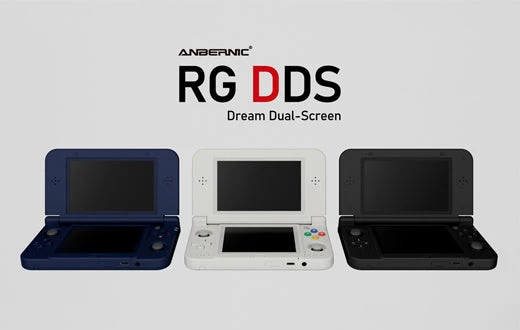
Anbernic has revealed the RG DDS, a dual-screen clamshell handheld. DDS stands for "Dream Dual-Screen".
The company titled its announcement "ANBERNIC RG DDS: Two Screens, One Experience" and published it on Oct 9, 2026. As of Oct 11, 2026, Anbernic had not disclosed pricing or release dates Engadget.
The display configuration is asymmetric by design. The main panel is a 4.7-inch custom IPS display at 1200 x 720, a 5:3 aspect ratio. The secondary panel is a 4-inch custom IPS display at 960 x 720, a 4:3 aspect ratio Engadget. IPS is a common LCD type that holds color when viewed at an angle. Anbernic describes the pair as custom IPS dual screens with active cooling, meaning fan-assisted heat control, for the system Anbernic.
Compute comes from Qualcomm's Snapdragon G2 Gen 2, a processor line aimed at handheld gaming. Power comes from a 6,000mAh battery. The panels do not match. They share a 720-pixel vertical resolution but differ in width, diagonal size, and aspect ratio.
Input includes an extendable capacitive stylus, a touch-sensitive pen that tucks into the chassis for storage. The RG DDS also includes a dedicated AI button. Anbernic has not detailed the function mapping for that button.
Pricing is missing. Availability is missing. The reveal covers industrial design, displays, silicon, battery capacity, cooling, stylus storage, and the presence of the AI button, without commercial terms.
The broader context here is power and heat with two live displays. Two backlights and two display pipelines raise idle and load power compared with a single-panel device of similar size. Active cooling and a 6,000mAh cell fit that choice and extended load on a G-series Snapdragon.
In my view, the split resolution is the detail to watch. The shared 720-pixel height helps alignment across the hinge, but different widths mean software must use letterboxing, scaling, or per-screen layouts. That puts more weight on firmware and launcher behavior than on panel quality, and the stored stylus points to touch on at least one screen as a primary input.
Worth keeping in mind is how much software will decide. Button behavior, single-screen modes, suspend and resume with two panels, and thermal policy under load will shape battery life and feel more than specs alone. If Anbernic gets that layer right, a compact clamshell with a handheld-focused Snapdragon, heat headroom, and integrated stylus storage opens up portable play and touch tasks that are awkward on a single screen.